Cycling Power Zones Calculator
Updated:Calculate your 7-zone Coggan, 3-zone Polarized, or 5-zone Sweet Spot training zones from FTP
What are Power Zones?
Power zones are specific wattage ranges that correspond to different training intensities and physiological adaptations. Unlike heart rate, power provides instant, objective feedback that is not affected by fatigue, temperature, or caffeine. Training with power zones allows cyclists to precisely target specific energy systems and track fitness improvements over time.
Understanding FTP (Functional Threshold Power)
FTP represents the maximum power output you can sustain for approximately one hour. It corresponds closely to your lactate threshold, the point where lactate accumulates faster than your body can clear it. FTP is the cornerstone of power-based training because all zones are calculated as percentages of this value.
If your 20-minute average power is 280 watts:
280 x 0.95 = 266 watts FTP
Your estimated FTP is 266 watts.
How to Test Your FTP
The most common FTP testing protocol is the 20-minute test:
- Warm-up (20 min): Easy spinning for 10 minutes, then 3 x 1-minute high cadence spin-ups, followed by 5 minutes easy.
- Blow-out (5 min): Ride hard for 5 minutes to pre-fatigue your legs. This helps ensure the 20-minute effort reflects threshold, not VO2max power.
- Recovery (10 min): Easy spinning to recover before the main effort.
- 20-Minute Test: Ride as hard as you can sustain for exactly 20 minutes. Start conservatively and build, aiming for even or negative splits.
- Calculate FTP: Multiply your average power for the 20 minutes by 0.95 to estimate your hour power (FTP).
Training with Power Zones
Power zones provide precise training targets for different workout objectives:
Long, easy rides in these zones build aerobic capacity, improve fat oxidation, and allow high training volume without excessive fatigue. Most training time (70-80%) should be spent here.
Tempo and threshold intervals improve your ability to sustain high power outputs. Sweet spot training (84-97% FTP) offers an efficient balance of stimulus and recovery.
Short, intense intervals in these zones develop VO2max, anaerobic capacity, and neuromuscular power. These zones create significant fatigue and require adequate recovery.
Coggan vs Polarized vs Sweet Spot Models
Different training philosophies use different zone models:
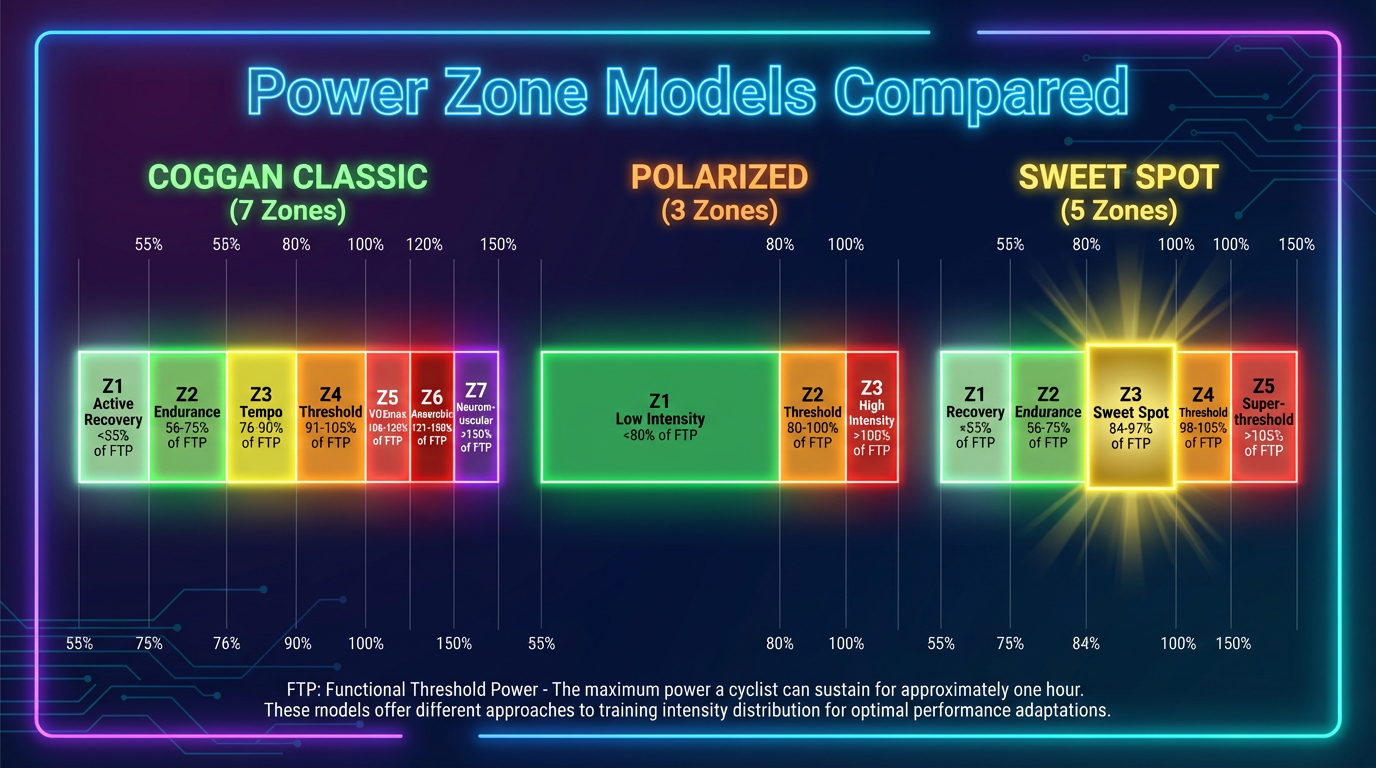
- Coggan Classic (7 Zones): Developed by Dr. Andrew Coggan, this is the most widely used model. It provides granular intensity targets from active recovery through neuromuscular power, making it ideal for structured training plans.
- Polarized (3 Zones): Based on research showing elite endurance athletes spend 80% of training time at low intensity and 20% at high intensity, avoiding the middle. This model emphasizes staying either easy (Zone 1) or hard (Zone 3).
- Sweet Spot (5 Zones): Popularized by TrainerRoad, this model emphasizes training at 84-97% FTP (the "sweet spot") which provides high training stimulus while being sustainable and allowing faster recovery than threshold work.
Zone 2 Training: Why It Matters
Zone 2 has become the most discussed training zone in endurance sports, popularized by Dr. Iñigo San Millán (coach to Tour de France winner Tadej Pogačar) and widely promoted through Dr. Peter Attia's podcast reaching millions of listeners.
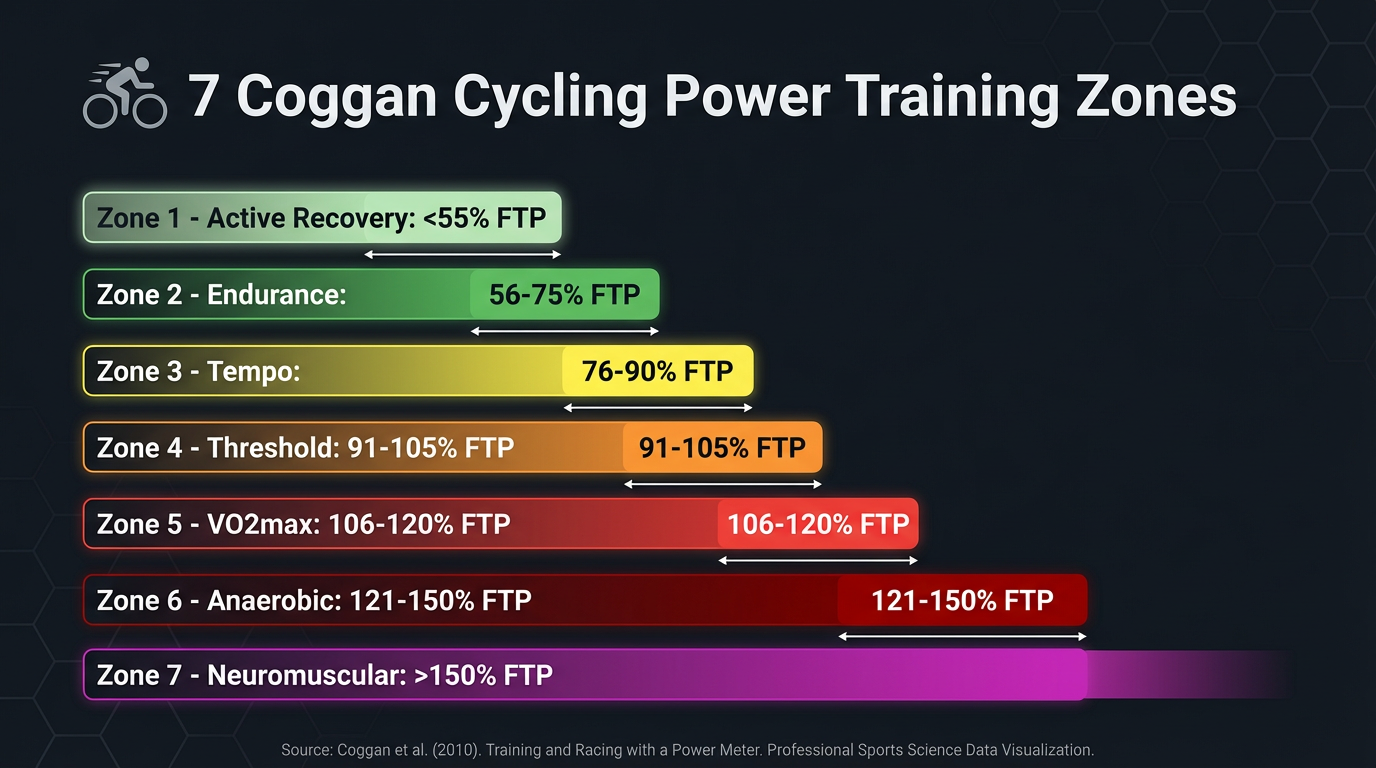
Zone 2 represents your aerobic endurance zone, typically 56-75% of FTP in the Coggan model. At this intensity, you can maintain a conversational pace—able to speak in full sentences without gasping. It feels almost too easy, which is precisely why many athletes undertrain this zone.
Training in Zone 2 maximizes mitochondrial density and fat oxidation efficiency. Your body learns to produce more energy aerobically, building the foundation that supports all higher-intensity efforts. Elite endurance athletes spend 70-80% of their training time in Zone 2, a pattern validated by decades of research on Olympic and professional cyclists.
The key physiological marker for Zone 2 is staying below your lactate threshold—the point where lactate accumulates faster than your body can clear it. Using power zones calculated from your FTP provides more reliable Zone 2 targeting than heart rate, which can drift due to heat, fatigue, caffeine, or stress.
Power Zones vs Heart Rate Zones
While both power and heart rate can guide training intensity, they measure fundamentally different things:
- Power zones measure your actual work output in watts—objective and instant. If you produce 200 watts, that's 200 watts regardless of conditions.
- Heart rate zones measure your body's response to work—subjective and delayed. The same 200 watts might produce different heart rates based on fatigue, temperature, hydration, sleep, and caffeine.
For structured interval training, power zones are superior because they provide instant feedback and consistent targets. However, heart rate remains valuable for monitoring recovery and ensuring Zone 2 rides stay truly easy—if your heart rate is high but power is low, you may need more rest.
Frequently Asked Questions
What is FTP (Functional Threshold Power)?
FTP is the maximum power output you can sustain for approximately one hour. It represents your lactate threshold and is the foundation for calculating power training zones. A higher FTP indicates greater aerobic fitness and cycling performance.
How do I test my FTP?
The most common method is the 20-minute FTP test: after a proper warm-up, ride as hard as you can sustain for 20 minutes. Multiply your average power by 0.95 to estimate your FTP. Alternatively, you can perform a 60-minute all-out effort or use ramp tests on smart trainers.
What percentage of FTP is Zone 2?
Zone 2 is typically 56-75% of FTP in the Coggan model. For example, if your FTP is 250 watts, Zone 2 is 140-188 watts. This is your aerobic endurance zone where you can maintain a conversational pace, building mitochondrial density and fat oxidation efficiency.
What is the difference between Coggan, Polarized, and Sweet Spot training?
Coggan Classic uses 7 zones for precise intensity targeting. Polarized training focuses on spending most time in Zone 1 (easy) with some in Zone 3 (hard), avoiding the middle. Sweet Spot training emphasizes Zone 3 (84-97% FTP), which provides high training stimulus with manageable fatigue.
What is the difference between power zones and heart rate zones?
Power zones measure actual work output in watts—instant and objective. Heart rate zones measure your body's response to work—delayed and affected by fatigue, temperature, caffeine, and stress. Power zones are preferred for structured training because they provide consistent, reliable targets regardless of external conditions.
How often should I retest my FTP?
Retest your FTP every 4-8 weeks or whenever you notice your current zones feel too easy. FTP typically improves with consistent training and should be updated to ensure your zones remain accurate and effective for training adaptations.