Homemade Sports Drink Calculator
Updated:Free DIY electrolyte drink recipe maker for cycling, running & endurance sports
Why Make Homemade Sports Drinks?
Commercial sports drinks like Gatorade and Powerade serve a purpose, but they come with significant drawbacks: high cost per serving, artificial colors and flavors, and often excessive sugar content. A homemade sports drink can cost as little as $0.10 per serving compared to $1-2 for commercial options - a potential savings of hundreds of dollars per year for serious athletes.
Beyond cost, making your own drink allows you to customize the formula for your specific needs. Endurance cyclists may need higher sodium content, marathon runners might prefer a specific carb concentration, and those with dietary restrictions can avoid problematic ingredients entirely.
The Science of Sports Hydration
During exercise, your body loses water and electrolytes through sweat while burning carbohydrates for energy. An effective sports drink addresses all three needs simultaneously: hydration (water replacement), energy (carbohydrate replenishment), and electrolyte balance (primarily sodium).
The key to an effective sports drink lies in the osmolality - the concentration of dissolved particles. When the drink's osmolality matches your blood plasma (isotonic), absorption is optimized. Too concentrated, and water is drawn into the gut; too dilute, and energy delivery suffers.
Understanding Carbohydrate Concentration
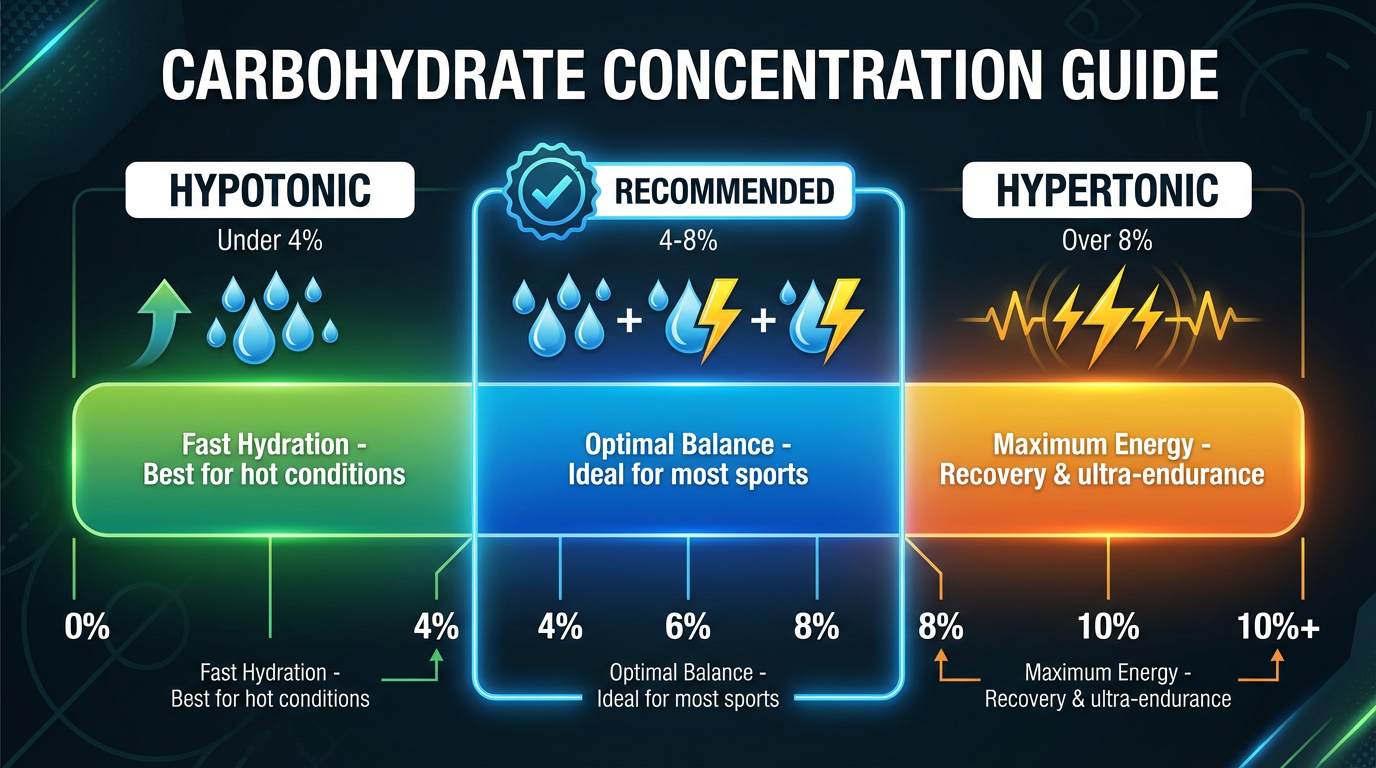
Sports drinks are classified by their carbohydrate concentration relative to body fluids:
- Hypotonic (under 4% carbs): Fastest absorption, best for pure hydration in hot conditions or shorter activities. Examples: diluted fruit juice, coconut water.
- Isotonic (4-8% carbs): The sweet spot for most endurance activities. Balances fluid absorption with energy delivery. This is what most commercial sports drinks aim for.
- Hypertonic (over 8% carbs): Maximum energy, slower absorption. Best for post-exercise recovery or ultra-endurance events where energy is prioritized over rapid hydration.
Research shows that using a 2:1 ratio of maltodextrin to fructose (or glucose to fructose) increases carbohydrate oxidation rates by up to 40% compared to single-source sugars. This allows athletes to absorb up to 90g of carbs per hour instead of the typical 60g limit.
Electrolytes Explained
While sweat contains multiple electrolytes (sodium, potassium, magnesium, calcium), sodium is by far the most important for exercise performance. The average athlete loses 500-1500mg of sodium per liter of sweat, with some "salty sweaters" losing over 2000mg.
- Sodium: Critical for fluid balance, nerve function, and muscle contraction. Low sodium during exercise causes hyponatremia - a dangerous condition that can be fatal in extreme cases.
- Potassium: Important for muscle function but rarely depleted during exercise. Adequate dietary intake typically covers needs.
Table salt is approximately 40% sodium by weight, so 1 gram of salt provides about 400mg of sodium. This calculator uses this conversion to provide accurate salt measurements.
Sample Recipes
Here are starting-point recipes that you can customize using the calculator:
60g sugar or maltodextrin (6% solution)
1/4 teaspoon salt (about 500mg sodium)
2 tablespoons fresh lemon juice
Approximately 240 calories
70g sugar (7% solution)
1/3 teaspoon salt (about 700mg sodium)
30ml orange juice
Approximately 280 calories
Homemade vs Commercial Sports Drinks: Cost Comparison
The economics of homemade sports drinks are compelling. DIY electrolyte drinks cost a fraction of commercial alternatives while delivering equivalent or better performance:
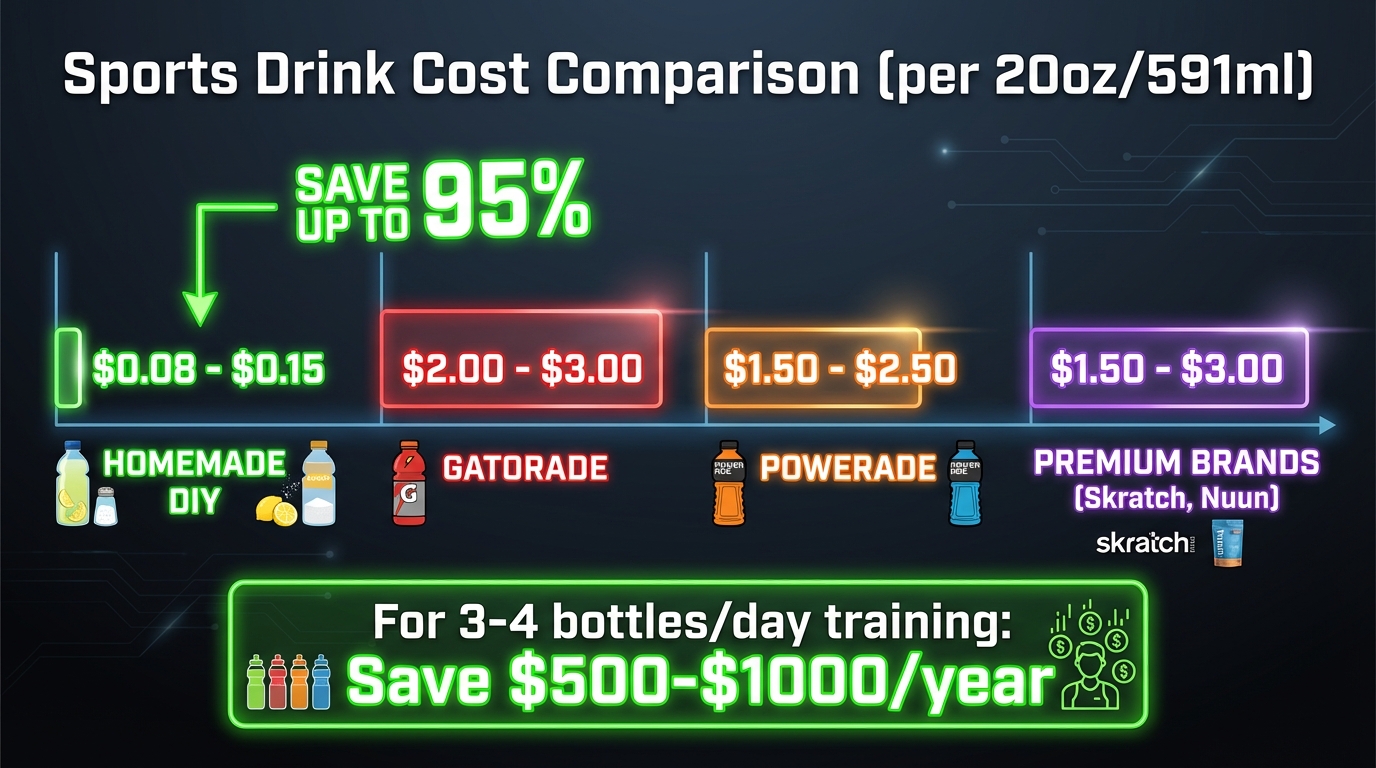
- LMNT (per packet): $1.30-$1.50 — DIY alternative: $0.08-$0.12
- Liquid IV (per packet): $1.00-$1.25 — DIY alternative: $0.10-$0.15
- Gatorade (20 oz / 591ml): $2.00-$3.00 — DIY alternative: $0.05-$0.08
- Skratch Labs (per serving): $1.50-$2.00 — DIY alternative: $0.10-$0.15
- Homemade (20 oz / 591ml): $0.05-$0.15 per serving
For an athlete consuming 3-4 bottles per day during training, switching from LMNT or Liquid IV to homemade sports drinks can save $500-1500 annually while getting a customizable, additive-free product.
Frequently Asked Questions
Why make your own sports drink?
Homemade sports drinks are significantly cheaper (often 10x less expensive), allow you to control sugar content and avoid artificial ingredients, and can be customized to your exact hydration needs. Commercial drinks often contain excessive sugar, artificial colors, and flavorings that many athletes prefer to avoid.
How much sodium should I put in my sports drink?
Most athletes need 500-700mg of sodium per liter of sports drink. Light sweaters can use 300mg/L, while heavy or "salty" sweaters may need 700-1000mg/L. You can identify if you're a salty sweater by white salt stains on your workout clothes or a gritty feeling on your skin after exercise.
What is the best ratio of glucose to fructose?
A 2:1 ratio of glucose (or maltodextrin) to fructose is optimal. This ratio uses two different intestinal transporters (SGLT1 and GLUT5), allowing absorption of up to 90g of carbs per hour instead of the 60g limit with single-source sugars. This is the same ratio used by premium brands like Maurten and SIS.
Is homemade Gatorade as effective as store bought?
Yes, homemade sports drinks can be equally or more effective than Gatorade. The key ingredients are the same: water, carbohydrates (sugar), and sodium. Homemade versions actually let you customize the formula—more sodium for heavy sweaters, different carb concentrations, and no artificial colors or flavors.
What is the ideal carbohydrate percentage for sports drinks?
The optimal concentration is 4-8%, with 6% being ideal for most endurance activities. Lower concentrations (4-5%) are better for shorter, less intense workouts, while higher concentrations (7-8%) benefit ultra-endurance events. Concentrations above 8% can slow gastric emptying and cause stomach distress.
What is the difference between hypotonic, isotonic, and hypertonic drinks?
Hypotonic drinks (under 4% carbs) are absorbed fastest and best for pure hydration. Isotonic drinks (4-8% carbs) balance hydration with energy and are ideal for most sports. Hypertonic drinks (over 8% carbs) provide maximum energy but slow hydration and are typically used post-exercise or during ultra-events with slower pacing.
How do I know if I'm a salty sweater?
Signs you're a salty sweater include: white salt stains or residue on dark workout clothes, a gritty or salty taste on your skin after exercise, stinging eyes from sweat, and muscle cramps despite adequate hydration. Salty sweaters should use the high sodium option (700mg/L) in this calculator.
Do electrolytes break a fast?
No, zero-calorie electrolyte drinks do not break a fast. Sodium, potassium, and magnesium contain no calories and won't trigger an insulin response. However, if you add sugar or carbohydrates to your sports drink, it will break your fast. For fasting, use the calculator with minimal carbs or just salt water.