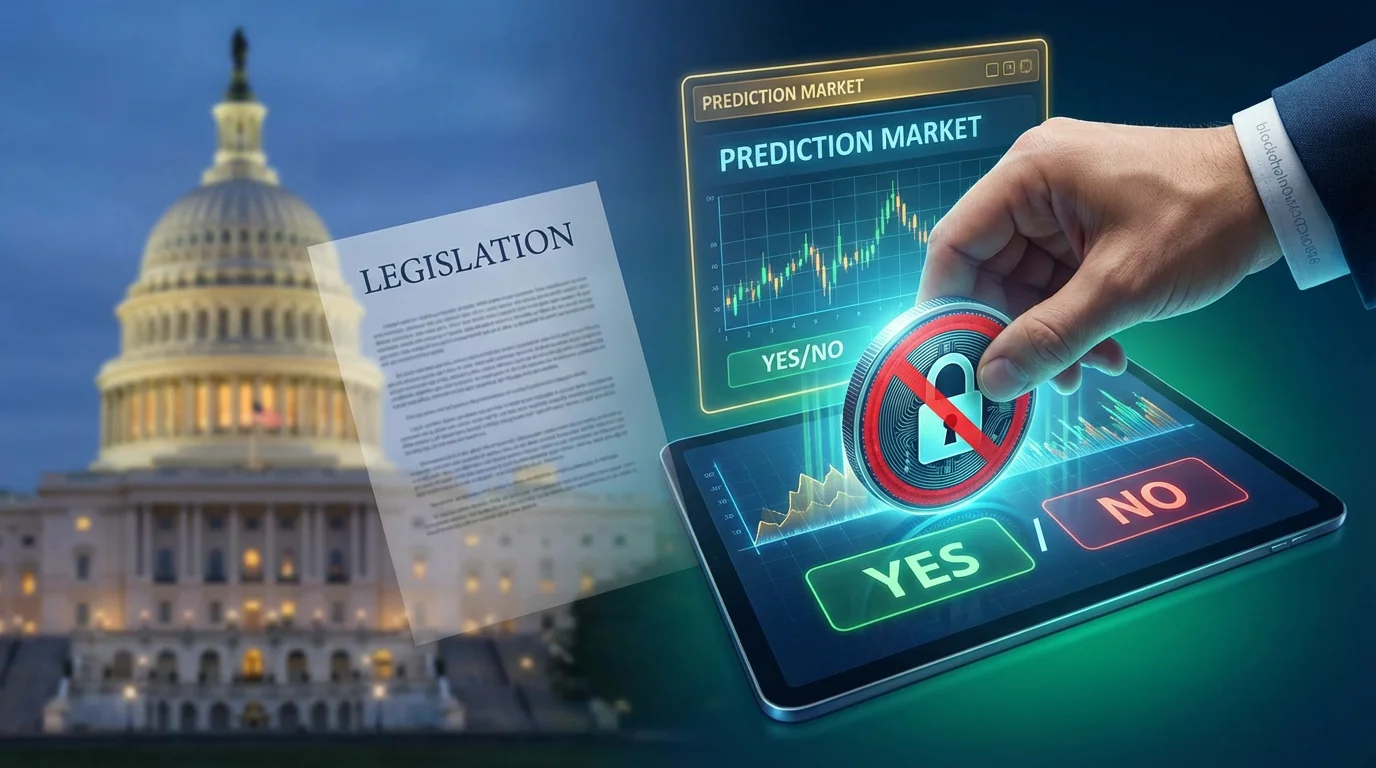
Rep. Torres Introduces Bill to Ban Insider Trading on Prediction Markets
Torres introduces prediction market insider trading bill after $630K Maduro scandal. But can US law regulate offshore blockchain platforms?
Just two days after we exposed the three wallet addresses that collectively made $630,000 betting on Maduro’s capture—0x31a5…, 0xa72D…, and SBet365—Congress is responding.
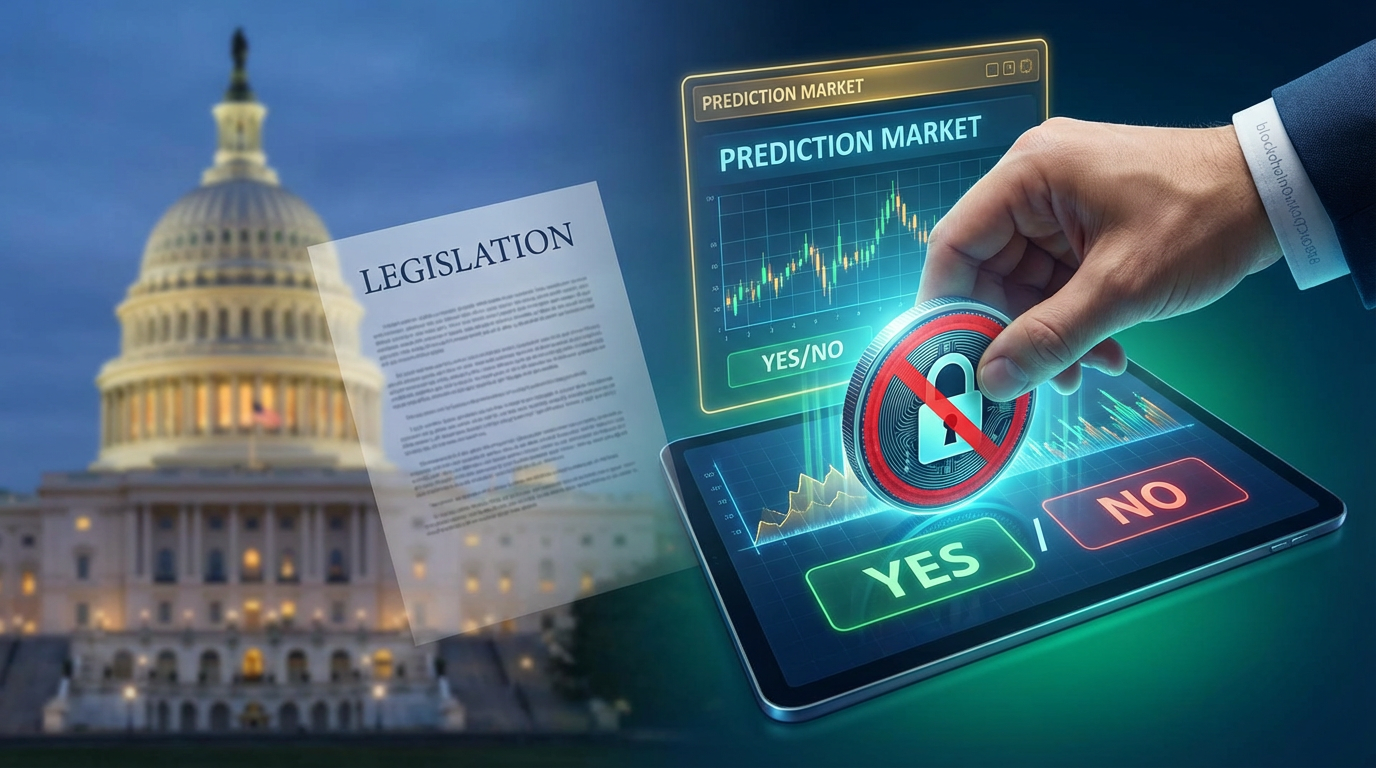
Rep. Ritchie Torres (D-NY), co-chair of the Congressional Crypto Caucus, has introduced the Public Integrity in Financial Prediction Markets Act of 2026, legislation that would ban federal officials from profiting on prediction markets using classified or nonpublic government information.
KEY FACTS AT A GLANCE
- Bill Name: Public Integrity in Financial Prediction Markets Act of 2026
- Sponsor: Rep. Ritchie Torres (D-NY), Congressional Crypto Caucus Co-Chair
- Introduced: January 5, 2026
- Trigger: $630,000 in suspicious Polymarket profits from Maduro capture bets
- Covers: Federal elected officials, political appointees, executive branch employees
- Industry Response: Kalshi says its rules already prohibit insider trading
What the Bill Does
The three-page legislation would prohibit federal officials from trading prediction market contracts when they possess material nonpublic information obtained through their official duties. The restriction applies to buying, selling, or exchanging contracts tied to government policy, government action, or political outcomes on platforms engaged in interstate commerce.
WHO THE BILL COVERS
Elected Officials
All federal elected officials including members of Congress
Political Appointees
Cabinet members, ambassadors, and other appointed positions
Executive Branch Employees
Federal workers with access to sensitive government information
The bill defines prohibited trading as acting on information “that is not publicly available and that a reasonable investor would consider important in making an investment decision.” This mirrors the materiality standard used in traditional securities law—but that’s where the similarities end.
How This Compares to SEC Insider Trading Rules
There’s a massive gap between how insider trading is treated in stock markets versus prediction markets. Understanding this disparity is key to understanding why Torres’ bill exists—and why it may not be enough.
SEC vs. CFTC: ENFORCEMENT COMPARISON
SEC (Stock Markets)
- Legal basis: Section 10(b) + Rule 10b-5
- Civil penalties: Up to 3x profits gained
- Criminal fines: Up to $5 million (individuals)
- Prison: Up to 20 years
- Track record: Hundreds of prosecutions annually
- Enforcement: Aggressive, well-funded
CFTC (Prediction Markets)
- Legal basis: Commodity Exchange Act
- Insider trading task force: Formed 2018
- Prison: Theoretically possible, rarely used
- Track record: Minimal enforcement history
- Enforcement: Limited resources, unclear authority
- Current admin: Discouraged enforcement
A former SEC attorney put it bluntly: “Traditional insider trading laws, as in, what is enforced by the SEC, definitely do not apply” to platforms like Polymarket. The CFTC’s insider trading task force—formed only in 2018—has nowhere near the enforcement infrastructure or legal precedent that the SEC has built over decades.
Torres’ bill attempts to bridge this gap by extending STOCK Act principles to prediction markets. The Stop Trading on Congressional Knowledge (STOCK) Act of 2012 made it illegal for members of Congress and their staff to trade stocks based on nonpublic information—the same concept now being applied to platforms like Polymarket and Kalshi.
The Offshore Problem: Does This Even Affect Polymarket?
Here’s where things get complicated. Polymarket operated offshore from 2022 to December 2025 specifically to avoid US regulatory jurisdiction. The platform settled with the CFTC for $1.4 million in 2022 after being accused of offering over 900 unregistered event-based binary options markets—and then promptly geoblocked US users.
THE JURISDICTION PROBLEM
Polymarket runs on the Polygon blockchain with self-custodial wallets. Users control their own keys. Bets are placed in USDC through smart contracts. The platform’s Markets Integrity Committee and UMA Optimistic Oracle handle resolution. How exactly does a US law regulate a decentralized protocol where trades happen on-chain?
Yes, Polymarket received CFTC approval in late 2025 to return to the US market through its acquisition of QCEX, a licensed derivatives exchange. The Trump administration eased the regulatory environment, and in July 2025, the CFTC and DOJ ended their probe into the platform.
But here’s the catch: the US version of Polymarket remains invite-only with a waitlist. The three wallets we identified—0x31a56e9E690c621eD21De08Cb559e9524Cdb8eD9, 0xa72DB1749e9AC2379D49A3c12708325ED17FeBd4, and SBet365—were trading on the offshore version. Even if Torres’ bill passes, enforcing it against anonymous wallet addresses on a decentralized protocol is a different challenge entirely.
Cross-border regulatory arbitrage, where platforms operate from permissive jurisdictions while serving customers globally through VPNs, creates fundamental challenges for national regulators. What can companies that geofence the US practically do to prevent Americans from accessing their services? And what does the government expect firms to do?
The Maduro Trading Scandal
As we detailed in our coverage of the Maduro insider trading scandal, blockchain analytics firm Lookonchain identified three wallets that collectively profited $630,000 by betting on the “Maduro in U.S. custody by January 31?” contract hours before the classified “Absolute Resolve” operation.
The wallets were created and pre-funded on December 27—two days after military officials reportedly first discussed the Venezuela operation. They bet exclusively on Venezuela-related outcomes with no prior trading history. When Trump announced the capture on January 4, those 6-7 cent shares resolved near $1 each.
A Torres spokesman said the bill had been “in the works for a bit,” but the Venezuela incident “underscored the urgency of introducing it immediately.”
Industry Response: Kalshi vs. Polymarket
The two dominant prediction market platforms have starkly different approaches to insider trading.
PLATFORM POLICIES COMPARED
Kalshi’s Position
- Rules already prohibit insider trading
- Bars insiders and decision-makers from trading on MNPI
- Trading surveillance tools in place
- Compliance team investigates violations
- CFTC-regulated as Designated Contract Market
Polymarket’s Position
- Philosophy favors information aggregation
- No explicit insider trading prohibition
- Decentralized, built on Polygon
- Recently received CFTC approval for US return
- US version still invite-only
“Our compliance and legal teams investigate these issues when pursuing disciplinary and enforcement actions against traders.”
— Kalshi spokesperson on the company’s insider trading policies
Real Regulation or Political Theater?
Let’s be direct: insider trading in prediction markets isn’t new. It has always existed and will continue to exist. The question isn’t whether it happens—it’s whether there are meaningful guardrails to prevent it.
And right now, there aren’t.
The timing of Torres’ bill is telling. This isn’t proactive regulation—it’s reactive damage control after a scandal that made headlines. Congress has struggled for years to agree on cryptocurrency and AI regulations. There’s little indication prediction markets will be any different.
THE BIGGER PICTURE
Since Trump took office, insider trading concerns have become rampant across markets—not just prediction platforms. In April 2025, Trump posted “THIS IS A GREAT TIME TO BUY!!!” on Truth Social hours before announcing a tariff pause that sent markets soaring. A White House aide then posted video of Trump praising billionaire friends for how much money they made on the spike. Senate Democrats called for SEC investigation. Charles Schwab reportedly made $2.5 billion in a single day. No periodic transaction reports have been posted for White House officials since January 2025.
Torres’ bill currently has no co-sponsors. Even if it passes, enforcement against anonymous blockchain wallets operating through offshore protocols presents fundamental challenges. The CFTC lacks the resources and precedent that the SEC has built over decades of insider trading prosecutions.
Unless there are strict guidelines, clear amendments, and actual enforcement mechanisms—not just bills that look good in press releases—prediction markets will continue to make insiders rich. The $630,000 Maduro trade wasn’t the first. It won’t be the last.
The real test isn’t whether Congress can pass a bill. It’s whether anyone will be prosecuted when the next scandal breaks.
KEY TAKEAWAYS
- New legislation — Rep. Torres’ bill would ban federal officials from trading prediction markets using nonpublic information, extending STOCK Act principles
- Enforcement gap — SEC can fine up to 3x profits and imprison for 20 years; CFTC’s prediction market enforcement is virtually nonexistent
- Offshore challenge — Polymarket’s decentralized, blockchain-based structure makes US enforcement against anonymous wallets extremely difficult
- Platform divide — Kalshi already prohibits insider trading; Polymarket’s model lacks explicit restrictions
- No co-sponsors — Bill faces uncertain path in Congress that has struggled to regulate crypto and AI
- Pattern of inaction — Broader insider trading concerns across Trump administration remain unaddressed

Aevan Lark
Aevan Lark is a gambling industry veteran with over 7 years of experience working behind the scenes at leading crypto casinos — from VIP management to risk analysis and customer operations. His insider perspective spans online gambling, sports betting, provably fair gaming, and prediction markets. On Dyutam, Aevan creates in-depth guides, builds verification tools, and delivers honest, data-driven reviews to help players understand the odds, verify fairness, and gamble responsibly.
Related coverage
The 2022 FanDuel Withdrawal Lawsuit: Must You Bet Your Deposit First?
A recirculated 2022 lawsuit raises questions about unused FanDuel deposits, current New Jersey rules and an unverified case outcome.

New York’s AI Proposal Would Make Sportsbooks Prove Why Your Bonus Is Different
New York’s AI proposal would put data-linked betting offers under scrutiny, with public criteria, regulatory records and narrow exceptions.
Kick Florida Lawsuit: The August Ban Request and the Seizure Claim
Florida’s August complaint targets Kick with operating-ban and forfeiture requests, but does not expressly seek seizure of its domain.