Duel.com Controversy: Fake-Volume Claims and the Sneako Clip
Conflicting wager records and an unconfirmed AI label: what the evidence establishes about Duel.com’s volume dispute and the Sneako clip.
The Duel.com controversy now involves disputed wagering totals and a Sneako clip whose AI label remains unconfirmed. Public records reviewed through September 16, 2026, document the arguments, but do not establish fabricated betting volume or how the clip was made.
KEY FACTS AT A GLANCE
- Volume dispute: A Korra-posted account screenshot and Gamstat’s capture show different figures for player 6qq6. Neither is an independent financial audit.
- Operator position: Duel says its wagers use real money. That assertion does not independently verify the disputed account.
- Influencer clip: Sneako publicly objected to the circulated video; its production method remains unconfirmed.
- Apology limitation: A Duel-branded graphic circulated through a third-party account. Its original corporate publication was not authenticated.
What the public evidence establishes
Times in this article are UTC. Embedded posts may display a different date or time in the reader’s time zone.
The September 14 volume argument concerned whether unusually large betting totals reflected genuine customer play. The following day, attention also turned to a video depicting Sneako praying at a blackjack table. Reposts described the clip as AI-generated, but that description needs evidence of its own.
These are distinct questions about records, funding and media provenance. A screenshot can establish what an account display showed. A repost can establish what circulated. Neither automatically establishes the truth of the underlying claim.
The conflicting 6qq6 volume figures
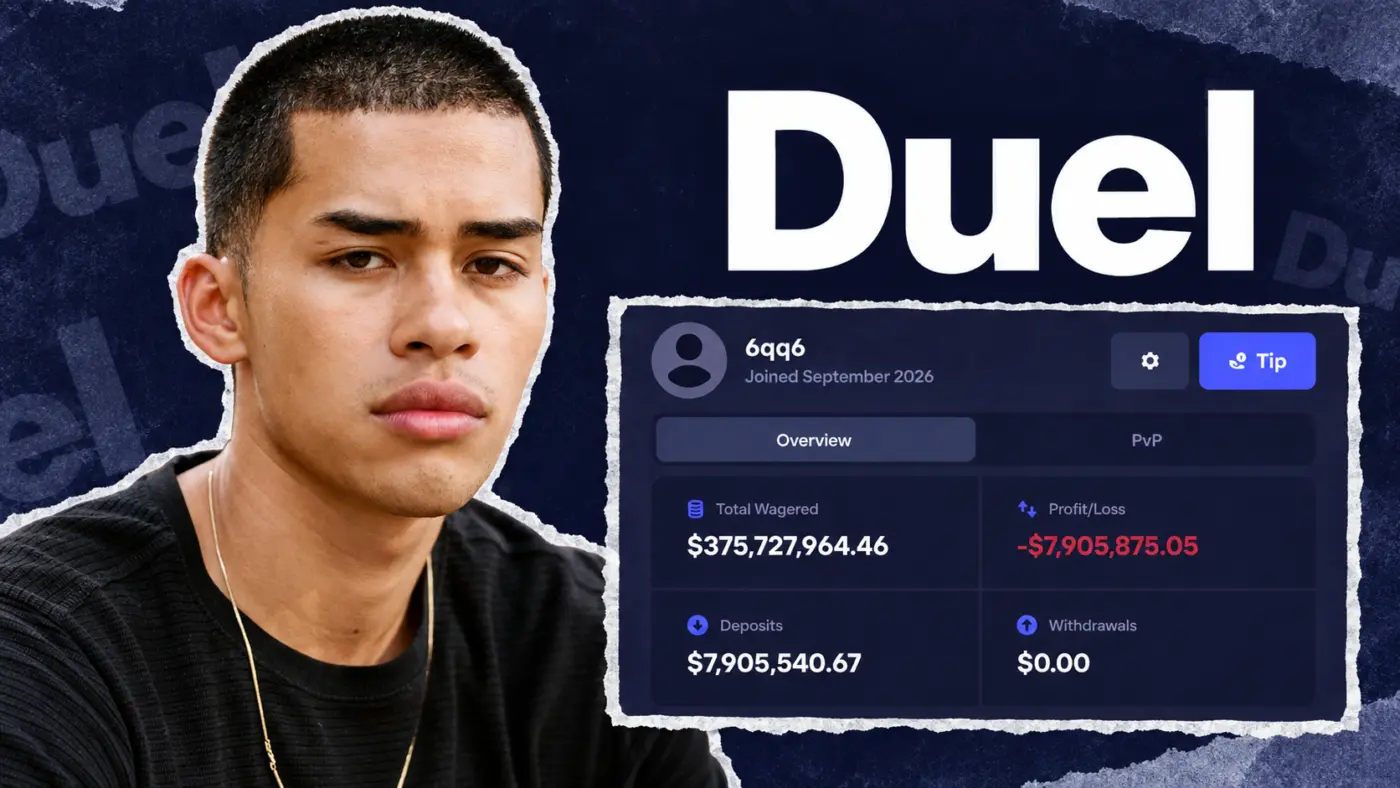
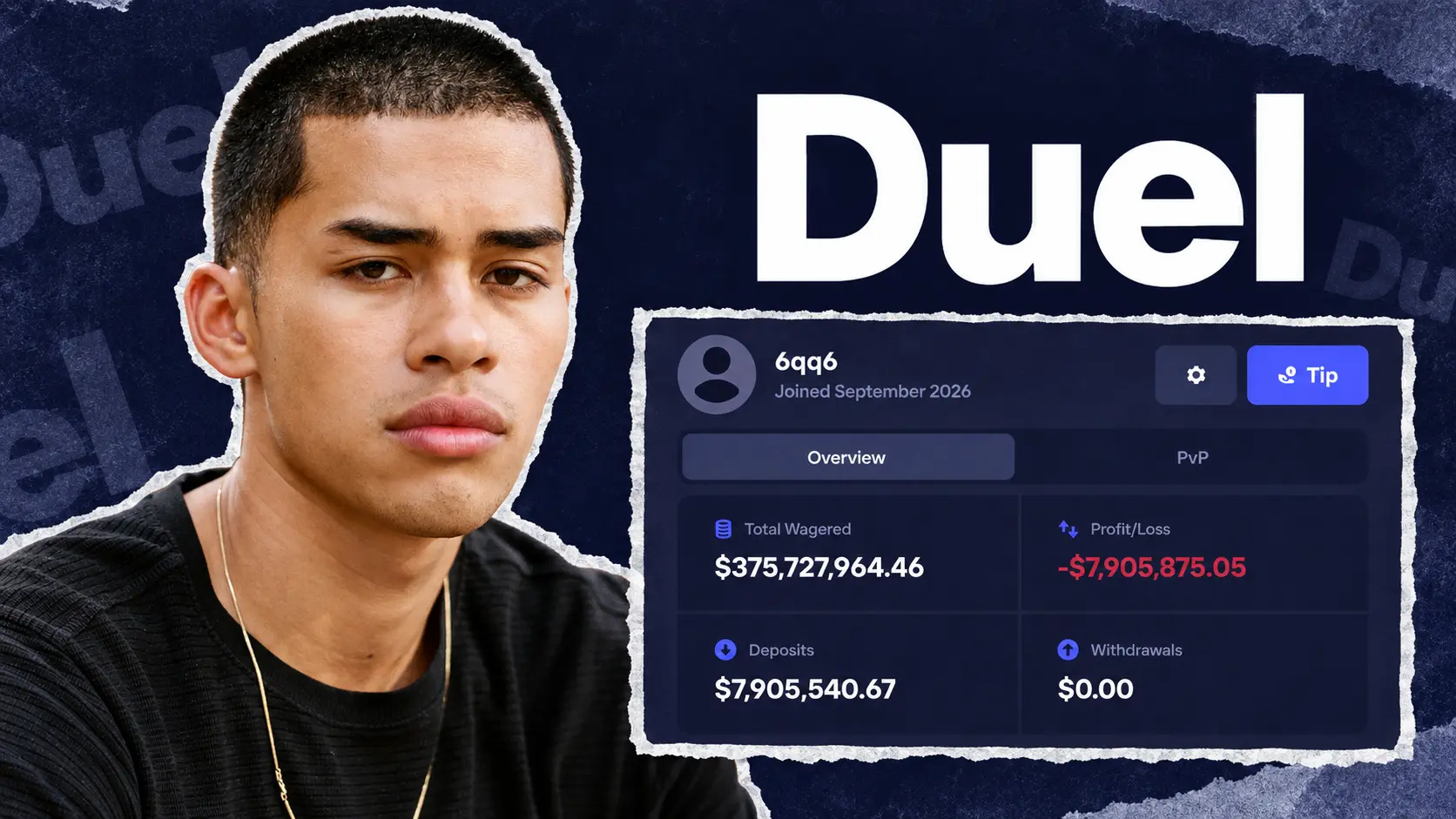
On September 14 at 11:52 UTC, the Duel-linked X account Korra posted a screenshot of player 6qq6’s account. It displayed $375,727,964.46 wagered, $7,905,540.67 deposited, a loss of $7,905,875.05 and no withdrawals. Those are figures from the posted casino interface, not independently verified account balances.
View Korra’s September 14 post with the unaudited 6qq6 account screenshot.
Gamstat’s player page, inspected on September 16, displayed approximately $370.3 million wagered and approximately $9.0 million in negative net profit over its displayed seven-day window. Its last captured bet was timestamped September 14 at 11:48 UTC. The tracker explicitly describes these player records as casino-feed data.
Korra-posted screenshot
Published September 14, 2026, 11:52 UTC. Screenshot coverage period not independently established.
- Total wagered
- $375,727,964.46
- Player profit / loss
- −$7,905,875.05
- Deposits
- $7,905,540.67
- Withdrawals
- $0.00
Gamstat captured record
Displayed seven-day window. Last captured bet September 14, 2026, 11:48 UTC. Inspected September 16.
- Wagered
- ≈ $370.3m
- Player net profit
- ≈ −$9.0m
- Deposits
- Not established by this player record
- Withdrawals
- Not established by this player record
Different captures of casino-published data; neither is an independent financial audit. The timing, coverage and measurement definitions have not been reconciled.
The discrepancy cannot responsibly be reduced to a rounding error or a percentage of allegedly fake volume. The publication time of a screenshot is not necessarily the time its balance was recorded, and the two records have not been matched bet by bet. Timing, capture coverage and calculation definitions remain unresolved.
The missing deposit and withdrawal fields on the reviewed Gamstat player record should also stay missing. They cannot be filled with zeroes or borrowed from the screenshot. Doing so would create an apparently complete account statement that neither source provides.
Wagers, deposits and public feeds measure different things
Total wagering adds up stakes, including money played again after a payout. It therefore can exceed deposits without an equal amount of new cash entering the casino. It is also different from casino revenue, which depends on what remains after payouts. The relationship between repeated stakes and expected losses is explained in Dyutam’s RTP and house-edge guide.
That mechanism explains why a large wager total is possible; it does not authenticate this account. Low-edge games can allow extensive turnover, but whether a particular record reflects real stakes still requires reliable transaction and betting records.
Gamstat’s methodology makes another distinction: its player profit-and-loss data depends on bets the casino chooses to publish. Selective feeds can distort the picture. The player page states, “None of this is on-chain data.” A separate website collecting that feed supplies another view of casino-origin information, not a separate financial audit.
Blockchain transfers answer a different question. Even a verified movement between addresses does not, by itself, establish beneficial ownership, customer independence or the balance credited inside a casino. Funding routes cited in the discussion were not independently tied to the owner of 6qq6 in this review. Reposting those routes does not complete that verification.
A small visible hot-wallet balance is similarly incomplete evidence of an operator’s total funds. Gamstat warns that its treasury coverage can exclude unlabelled cold storage. That limitation prevents a tracked wallet balance from serving as a standalone solvency test.
Korra’s reward offer does not resolve the allegation
Duel’s own fake-bets page states that “every dollar wagered on Duel is real, 1:1.” It also rejects fake balances and lossback arrangements. This is the operator’s published position; the page is not an audit of the disputed September activity.
Korra escalated the defense in a September 14 post at 14:06 UTC, offering $1 million for evidence that Duel fabricates volume. The post described a six-month window and sought evidence comparable to material acceptable in court or independent arbitration, including internal records showing nonexistent deposits.
Korra identifies with Duel, but the reviewed material did not independently authenticate authority to bind the company to that offer. No funded escrow or named adjudicator was established. The post documents a public challenge, not a verified payout mechanism or a conclusion about the betting data.
View Korra’s September 14 public reward offer.
Later that day, hairlessEV alleged that house-game concentration, reported winners and wallet balances pointed to fake volume. Korra disputed the tracker-based winner figures and pointed to Duel’s High Scores page. Comparing those claims requires the same period, definition of profit and capture coverage; the reviewed records did not establish that alignment.
View Korra’s September 14 rebuttal of the tracker-based winner figures.
Both the accusation and the rebuttal therefore leave the central verification task unfinished. A reconciled ledger, evidence connecting deposits to account credits, and checks on who controlled the funds would be more probative than either a reward offer or a leaderboard comparison.
The Sneako clip and the unconfirmed AI label
Barragers circulated the prayer-at-blackjack clip on September 15 at 17:50 UTC.
View Barragers’ September 15 repost of the circulated clip.
Sneako condemned it in a post at 21:13 UTC. His reaction establishes that he objected to the circulated material; it does not identify the software or production process behind it.
View Sneako’s September 15 response to the clip.
At 22:19 UTC, Barragers reposted a Duel-branded apology graphic with a caption describing an AI video and an official statement. The image itself referred to a “tone-deaf edit.” That wording does not specify AI generation, and an original publication by Duel was not authenticated in the reviewed material.
View the September 15 third-party apology repost; operator authorship and AI production remain unverified.
The distinction matters twice. The repost’s caption cannot establish the video’s production method, and the branding on a graphic cannot authenticate corporate authorship. The public evidence supports reporting a circulated clip, an objection and a purported apology. It does not support presenting an admission of AI generation as settled fact.
Determining whether the clip was an authorized promotion would also require evidence of commissioning, distribution or approval. Calling it an AI casino ad collapses those questions into a label before they have been answered. Original media and an attributable account of its production would help resolve them.
This September prayer-clip dispute should remain distinct from earlier controversies over impersonation and casino promotion. Dyutam’s coverage of the fake Roshtein Kick channel provides background, not evidence of how this video was made.
Game verification has a narrower role
Duel’s provably fair documentation describes verification using game inputs such as seeds and a nonce. That process concerns how an outcome is calculated. It does not identify the economic owner of a bankroll or establish whether an influencer authorized a video.
Readers can examine the math behind provably fair systems while keeping those limits in view. The same discipline applies to separate incidents, including the Freakbob hack claim: an unresolved allegation in one dispute is not proof in another.
For this controversy, the outstanding evidence is specific: comparable betting records, attributable funding and authenticated media provenance. Until those gaps close, both the volume allegation and the AI label need their qualifications wherever they appear.
FAQs
The evidence reviewed through September 16, 2026, does not establish that conclusion. Duel denies fake wagering, but its public statement and account displays are not an independent audit either.
Wagering totals count repeated stakes. Money returned after a bet can be staked again, so cumulative wagering can exceed the original deposit without requiring an equal amount of fresh cash.
They show different captured totals and have not been reconciled for timing, coverage or calculation rules. Gamstat describes a seven-day window and casino-feed data; the posted account screenshot does not establish a matching measurement period.
A transfer can document a movement between addresses. Establishing who controlled the funds, whether the customer was independent and how the casino credited the account requires additional evidence.
No independent confirmation was established in the reviewed material. Sneako’s reaction did not identify a production method, and the AI description appeared in repost framing. A circulated graphic referring to an edit is not proof of AI generation.
A Duel-branded apology graphic circulated through a third-party account, but its original corporate publication was not authenticated in this review. The reviewed material also did not establish a court filing; no filed lawsuit is reported here.
It checks aspects of a game’s outcome calculation using disclosed inputs. It does not establish ownership of account funds, independence of customers or the authenticity and consent behind influencer marketing.
KEY TAKEAWAYS
- The figures conflict — the 6qq6 records need reconciliation, not averaging or a fabricated-volume estimate.
- Statements have limits — Duel’s denial and Korra’s public offer do not constitute independent verification.
- The AI label remains unconfirmed — Sneako’s objection and a third-party apology repost do not establish production technique or corporate authorship.
Sources
- Fake bets policy — Duel; operator statement, not an independent audit
- 6qq6 player record — Gamstat; casino-feed capture inspected September 16, 2026
- Data methodology and limitations — Gamstat
- High Scores — Duel; operator leaderboard
- Provably fair documentation — Duel
- 6qq6 account screenshot, September 14 — Korra on X; unaudited account display
- Public reward offer, September 14 — Korra on X; statement and terms as posted
- Fake-volume allegations, September 14 — hairlessEV on X; disputed claims
- Leaderboard rebuttal, September 14 — Korra on X; disputed response
- 6qq6 discussion and funding-route replies, September 14 — sebviceversa on X; ownership claims not independently verified
- Circulated prayer-at-blackjack clip, September 15 — Barragers on X; third-party repost
- Reaction to the clip, September 15 — Sneako on X; evidence of his reaction, not production technique
- Duel-branded apology graphic, September 15 — Barragers on X; original operator publication unverified

Aevan Lark
Aevan Lark is a gambling industry veteran with over 7 years of experience working behind the scenes at leading crypto casinos — from VIP management to risk analysis and customer operations. His insider perspective spans online gambling, sports betting, provably fair gaming, and prediction markets. On Dyutam, Aevan creates in-depth guides, builds verification tools, and delivers honest, data-driven reviews to help players understand the odds, verify fairness, and gamble responsibly.
Related coverage
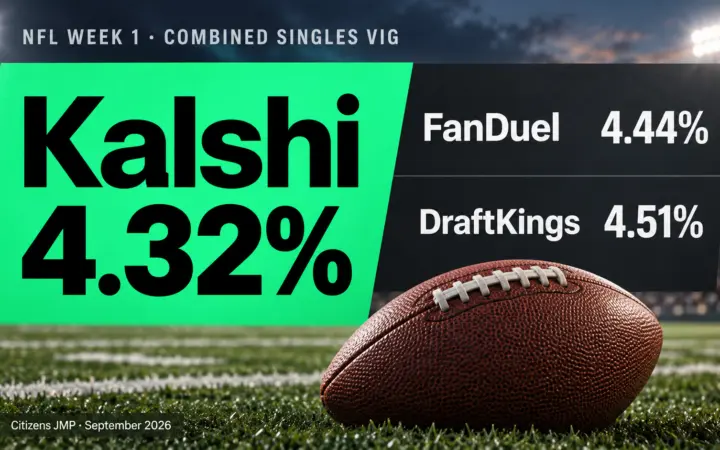
Kalshi NFL Week 1 Vig: Totals Drive Its Pricing Lead
Citizens' NFL pricing snapshot gives Kalshi a narrow overall lead, while FanDuel wins moneylines and sportsbooks lead sampled combos.

Mark Locke: Prediction Markets Can Outlast Today’s Rules
Mark Locke expects enduring wagering demand, while taxes, court disputes and settlement questions test the structure of sports prediction markets.

Stake Blocked Ireland After GRAI Pressure, Eyes License
Stake has closed Irish registrations and intends to seek a license, while prediction-market restrictions and customer refund questions remain distinct.