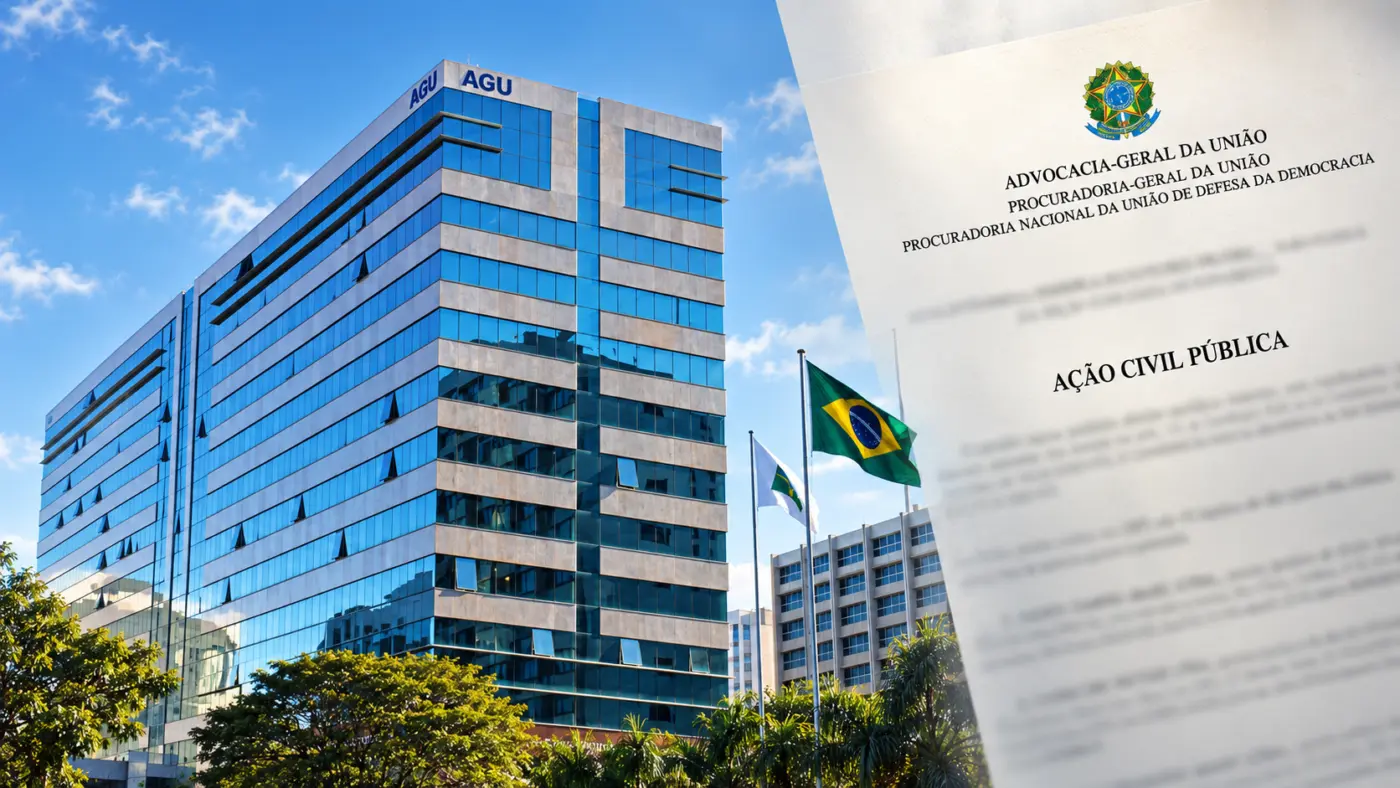
Brazil Sues 17 Betting Firms for at Least R$1bn in Damages, Plus Healthcare Reimbursement and Gambler Compensation
Brazil seeks collective damages, healthcare reimbursement and conditional gambler restitution from 17 betting firms. Here is what the complaint requests.
Brazil has sued 17 betting companies for at least R$1 billion in collective moral damages, alongside separate demands for public healthcare reimbursement and compensation for qualifying gamblers. The Brazil betting lawsuit, filed by the Advocacia-Geral da União (AGU) on September 28, 2026, asks the court to determine liability and payments; the filing itself does not establish either.
KEY FACTS AT A GLANCE
- Case: 0074433-17.2026.4.05.8300, filed in the 6th Federal Court of Pernambuco.
- Plaintiff: Brazil’s federal government, represented by AGU, its federal legal office.
- Damages request: At least R$1 billion for alleged collective moral harm, separate from healthcare reimbursement and individual restitution.
- Refund conditions: The complaint targets defined circumstances involving diagnosed gambling disorder; eligibility and amounts would be assessed later.
- Status: The reviewed documents establish the filing and requests. A subsequent ruling could not be independently verified.
What the AGU betting lawsuit seeks
The public civil action separates its financial demands into three categories. Understanding those categories matters because the R$1 billion minimum is only one part of the requested relief.
Collective moral damages: AGU asks for at least R$1 billion to compensate for alleged harm to society. This is a requested civil damages award. It is separate from the government’s proposed recovery of healthcare expenses and from any payments to individual gamblers.
Healthcare reimbursement: AGU seeks repayment of federal expenditure attributable to gambling-related harm within the Sistema Único de Saúde (SUS), Brazil’s public health system. The demand covers the five years before filing and qualifying continuing costs. The amount would be calculated in later proceedings.
Individual restitution: AGU also seeks double restitution for qualifying gamblers diagnosed with gambling disorder, with winnings deducted. That request carries specific conditions about the operator’s knowledge or conduct and would require later assessment of each person’s eligibility and amount.
At least R$1 billion requested for alleged harm to society.
This requested minimum is separate from healthcare reimbursement and individual restitution.
Amount to be calculated. AGU seeks repayment of attributable federal healthcare costs.
The request covers the five years before filing, plus qualifying continuing costs.
Double restitution sought for qualifying gamblers diagnosed with gambling disorder, with winnings deducted.
Conditions include continued access or deposits after notification of the diagnosis, or serious omission despite traceable risk indicators.
Individual eligibility and amounts would be determined later.
These are requests to the court. The evidence reviewed does not establish liability or an order to pay.
Which 17 betting companies are named?
The complaint names the following legal entities and connects them to 20 consumer brands. Corporate suffixes are omitted below for readability. Naming a company as a defendant identifies the party AGU is suing; it does not establish wrongdoing.
| Defendant company | Brands listed in the complaint |
|---|---|
| Kaizen Gaming Brasil | Betano |
| HS do Brasil | bet365 |
| SPRBT Interactive Brasil | Superbet |
| Ventmear Brasil | Sportingbet |
| Esportes Gaming Brasil | Esportes da Sorte; Onabet |
| Foggo Entertainment | Blaze |
| NSX Brasil | Betnacional |
| EB Intermediações e Jogos | EstrelaBet |
| Ana Gaming Brasil | 7K; Cassino |
| OIG Gaming Brazil | 7Games; Betão |
| BPX Bets Sports Group | Vaidebet |
| H2 Licensed | H2Bet |
| Pixbet Soluções Tecnológicas | Pixbet |
| NVBT Gaming | Novibet |
| SevenX Gaming | Bullsbet |
| NSX Betfair Brasil | Betfair |
| Apollo Operations | KTO |
Who could qualify for gambler compensation?
The proposed restitution concerns gamblers diagnosed with gambling disorder. AGU identifies circumstances in which a platform continued allowing access or deposits after being notified of the diagnosis, or committed a serious omission despite traceable indicators of risk. A losing account alone would not establish entitlement under that request.
AGU asks for double restitution, with any winnings deducted. The complaint also leaves individual eligibility and the amount due to later proceedings. Its wording does not support publishing a universal refund formula that every customer can apply to an account balance.
For readers, the practical distinction is between a remedy the government wants the court to recognize and a payment someone can already claim. The filing does not create an automatic refund program or establish that every bettor is owed compensation. Dyutam’s guide to recognizing gambling harm and finding support covers general warning signs and support options separately from this litigation.
How AGU proposes to calculate SUS reimbursement
The complaint proposes identifying actual federal health expenditure and applying an epidemiological estimate of the share attributable to gambling. That share, known as a population-attributable fraction, is intended to connect the alleged harm to the costs for which reimbursement is sought.
AGU proposes allocating liability according to market share or, alternatively, holding the defendants jointly liable. These are positions advanced by the plaintiff. The calculation, its evidentiary basis and the allocation among companies would need to be resolved in the case.
Paragraph 238 of the complaint refers to a preliminary minimum direct impact of R$2.6 billion, attributed to the Health Ministry. The material reviewed did not establish that figure’s full calculation or reference period. It should therefore be described as a preliminary estimate cited by AGU, rather than an annual SUS bill or a court-approved reimbursement amount.
Why the health-cost figures do not mean the same thing
A separate study by the Instituto de Estudos para Políticas de Saúde (IEPS), published in December 2025, estimated R$38.8 billion in annual social and economic costs associated with gambling, including R$30.6 billion in health-related costs. The health component includes modeled losses associated with deaths by suicide and depression-related loss of quality of life, alongside treatment costs. Calling the entire R$30.6 billion “SUS spending” changes what the study measures.
The IEPS model adapts evidence from England’s public health cost research to Brazilian prevalence and population estimates. It is a model of broader societal harm, not an audit of payments made by SUS and not a finding that the 17 defendants caused that total. The R$30.6 billion is included within the R$38.8 billion; the two figures should not be added together or combined with AGU’s R$2.6 billion estimate as a single damages total.
The population estimates also use different bases. The LENAD III survey’s 2023 data underlie estimates of approximately 10.9 million people aged 14 or older at risk of, or experiencing, gambling problems, including about 1.4 million with probable gambling disorder. The smaller group is included in the larger figure. Survey screening for probable disorder is also different from an individual clinical diagnosis.
IEPS’s later modeling uses a population base for 2025 and an at-risk estimate of roughly 12.8 million. That difference should not be presented as a measured increase from 10.9 million to 12.8 million. The estimates have different population references and calculation purposes.
The Health Ministry separately reported an approximately 140% increase in SUS attendances related to gambling between 2018 and 2025. Attendances count contacts with services, rather than necessarily counting distinct patients. The figure provides health-service context; it does not identify the share attributable to each defendant.
What remains unresolved in the case
The central questions include whether the alleged conduct creates liability, which healthcare costs can be attributed to gambling, how any liability should be divided and which individuals meet the restitution conditions. Broad evidence of gambling harm and a company’s market presence do not, by themselves, settle those questions for a particular defendant.
The review was checked through September 30, 2026, at 19:28 UTC. The inspected court documents establish the September 28 filing, but a subsequent ruling could not be independently verified. No case-specific response from a defendant or the industry associations IBJR and ANJL was located in the sources reviewed. That does not establish that no response exists.
How the lawsuit differs from Brazil’s betting ban
The damages claim is separate from Brazil’s betting shutdown scheduled for October 6. The prohibition concerns whether betting businesses may continue operating; this lawsuit asks the court to impose financial remedies for alleged harm. Industry objections to the prohibition should not be presented as responses to this particular damages case.
It also follows earlier measures such as betting-access restrictions tied to the Desenrola debt-relief program. Those measures provide the policy backdrop. They do not establish liability or individual refund eligibility in AGU’s lawsuit.
FAQs
What is the Brazil betting lawsuit about?
Brazil’s federal government, represented by AGU, is suing 17 betting companies for alleged gambling-related harm. It seeks at least R$1 billion in collective moral damages, separate reimbursement of attributable federal healthcare costs and conditional individual restitution.
Does the R$1 billion include SUS reimbursement?
No. AGU requests at least R$1 billion for collective moral damages. Its separate SUS reimbursement request concerns attributable federal healthcare expenditure, with the amount to be calculated in later proceedings.
Will everyone who lost money receive a refund?
The complaint does not propose refunds for every losing bettor. AGU seeks double restitution for qualifying gamblers diagnosed with gambling disorder in specified circumstances involving operator knowledge or serious omission. Winnings would be deducted, and individual eligibility and amounts would be determined later.
Is R$30.6 billion the amount SUS spent on gambling harm?
No. R$30.6 billion is IEPS’s modeled annual health-related social cost estimate, including losses associated with deaths by suicide and depression-related loss of quality of life, alongside treatment costs. It is not an audited total of SUS expenditure or a court finding against the defendants.
Has a court ordered the betting firms to pay?
The documents reviewed establish AGU’s filing and the relief it requests. A subsequent ruling could not be independently verified as of the September 30, 2026, research check. The requested amounts should not be described as an award.
KEY TAKEAWAYS
- Three separate demands — The R$1 billion minimum concerns collective moral damages; SUS reimbursement and conditional individual restitution are additional requests.
- Refunds depend on eligibility — AGU’s proposal concerns diagnosed gambling disorder and specified operator conduct, with winnings deducted and individual assessments later.
- Health estimates need their definitions — Modeled social costs, federal treatment expenditure and survey screening results measure different things.
- Liability remains a question for the court — The reviewed filing establishes what AGU alleges and seeks, not an award against the companies.
Sources
- AGU’s signed public civil action complaint, September 28, 2026 — Primary legal document, hosted by Poder360.
- Case 0074433-17.2026.4.05.8300: filing record and supporting documents — PJe export, including Health Ministry Technical Note 60, hosted by iGaming Business.
- LENAD III: Jogos de Aposta — Original survey report on gambling in Brazil.
- A saúde dos brasileiros em jogo: impactos das bets e apostas na saúde — IEPS research dossier, December 2025.
- IEPS explanation of its R$30.6 billion annual health-harm estimate — Instituto de Estudos para Políticas de Saúde.
- Health Ministry statement on gambling and public health, September 25, 2026 — Ministério da Saúde.

Aevan Lark
Aevan Lark is a gambling industry veteran with over 7 years of experience working behind the scenes at leading crypto casinos — from VIP management to risk analysis and customer operations. His insider perspective spans online gambling, sports betting, provably fair gaming, and prediction markets. On Dyutam, Aevan creates in-depth guides, builds verification tools, and delivers honest, data-driven reviews to help players understand the odds, verify fairness, and gamble responsibly.
Related coverage

Who Answers for a Gambling Ad? Greece’s Case Against 18 Influencers
Greek complaints against 18 influencers over alleged unlicensed gambling promotion: the case status, the fine framework and how Dutch rules compare.

Ohio Sends Cease-and-Desist Letters to 10 Prediction Market Firms
Ohio demands an immediate stop to sports contracts from ten prediction market firms, with written compliance confirmation due October 16.
UK Remote Gaming Duty Receipts Rise 108% in July
HMRC collected £589.7 million in July. Payment timing and the original forecasts explain what the increase proves.