
She Turned $50 Into $3.3 Million. BetMGM Congratulated Her — Then Froze the Account
Jacqueline Davis turned a $50 BetMGM deposit into a $3.29M displayed balance before the freeze.
Jacqueline Davis deposited fifty dollars into BetMGM on March 18, 2021. Six days later her account showed $3,289,500.75. The casino paid her $100,000, a VIP host congratulated her — then BetMGM suspended the account, called the rest a software error, and spent years arguing she could not even sue.

KEY FACTS AT A GLANCE
- Player: Jacqueline Davis (Detroit area)
- Operator: BetMGM online casino (Michigan)
- Game: Luck O’ the Roulette (later removed from MI)
- Deposit → peak balance: $50 → $3,289,500.75 in six days (Mar 18–23, 2021)
- Paid out: $100,000 — then account frozen
- Operator claim: Wallet-credit multiplier “malfunction” from play #28
- Regulator: MGCB found reporting/cooperation violations; took no discipline; said it cannot award player money
- July 22, 2025: Michigan Supreme Court unanimously revives fraud, conversion, and breach claims
- Status (2026): Remanded to Wayne Circuit Court; merits still undecided
The six-day heater
According to the Michigan Supreme Court’s July 22, 2025 opinion in Davis v. BetMGM, LLC (Docket No. 166281), Davis opened play on a St. Patrick’s–themed online game called Luck O’ the Roulette. Her first wager was $4.50. She lost it. She kept going.
By the end of the first day, bets had climbed to about $150 a spin and her account showed roughly $20,078. She sat out March 20. When she returned, the streak continued. By March 23 she was betting the game’s $5,000 maximum per play, and the balance read $3,289,500.75.
“In gambler’s parlance, plaintiff went on a ‘heater’ of epic magnitude. As her account balance grew, she pressed her bets.”
— Michigan Supreme Court (Justice Brian Zahra), Davis v. BetMGM
That sentence is now the legal system’s official caption for a run that ordinary casino math almost never produces from a $50 deposit. Online jackpots in seven figures usually come from one progressive hit — not days of escalating table-style play. That is exactly why BetMGM later called the balance impossible.
Congratulated — then frozen
On March 21, 2021, Davis requested a $100,000 withdrawal. BetMGM approved it. According to contemporaneous local reporting by FOX 2 Detroit, she collected cash at MGM Grand Detroit. The next day, court records say, she received an email from “Nate,” a member of BetMGM’s VIP team, congratulating her on the winnings and offering to coordinate further fund transfers.
After the $100,000 moved, the tone flipped. BetMGM emailed that her account was suspended “given the volume of play generated,” and that the company believed there was an error in the underlying gameplay. The balance she thought she could still withdraw never left the platform.
In a June 2021 interview with FOX 2, Davis rejected the idea that she must have known something was broken simply because she was winning: “How could I?” she asked. “The purpose of gambling is to win.”
BetMGM’s malfunction story
On April 12, 2021, Jeremy Kolman, BetMGM’s Director of Legal Affairs, wrote Davis’s attorney, David Steingold. The letter — quoted at length in the Supreme Court opinion — said Casino Operations had flagged “unusual activity and an improbable balance,” suspended the account, and concluded that Luck O’ the Roulette had malfunctioned.
The alleged bug was not a wrong spin result on the screen alone. BetMGM said certain win amounts were multiplied when transferred from the onscreen balance to the patron’s wallet, inflating the account even when the game had not “actually” awarded that amount.
The first error, the company said, hit on play #28: a wager of $8.70, a win of $12.25, plus an extra credit of roughly $33, producing a wrong wallet balance. BetMGM attached a spreadsheet of “Correct Wallet” versus “Wrong Wallet” columns and argued that without those credits, Davis would have hit zero around play #368 and could not have continued without new deposits. The Supreme Court opinion notes the operator’s claim that the malfunction affected about 2.5% of her plays.
BetMGM pointed to its terms and conditions: in the event of an error, it would seek to put parties back in the pre-error position and reserved the right to void affected wagers and reclaim related funds. Luck O’ the Roulette was pulled from the Michigan market. The company said the Michigan Gaming Control Board was notified of the malfunction.
IMPORTANT — WHAT IS (AND IS NOT) PROVEN
The courts have not yet tried whether the displayed $3.29 million was a true win or a software artifact. The Supreme Court only decided that Davis may pursue common-law claims in circuit court. Treat BetMGM’s bug narrative and Davis’s fraud/conversion theories as competing positions — not settled fact.
How the story exploded on X
Years after the first lawsuit filing, a detailed video explainer of the Jacqueline Davis BetMGM fight circulated widely on X in July 2026 — summarizing the $50 deposit, the VIP congratulations, the freeze, the regulator’s dead end, and the Supreme Court revival. The thread format is how many casual readers first met the case.
Product and growth commentator Aakash Gupta framed the same facts as a regulatory design failure: Michigan legalized online gambling, but for years the practical answer to a multimillion-dollar player dispute was a loop between the casino, a board that said it could not pay players, and courts that said only the board could handle it.
That public reaction is not evidence in the lawsuit. It does show why the case became a proxy for a larger player question: when an online casino freezes a huge displayed balance and cites a “malfunction,” is there a real courtroom left — or only terms and conditions?
The regulator that could not pay her
Davis sued in Wayne County Circuit Court in June 2021 for fraud, conversion, and breach of contract. She also filed a patron dispute with the Michigan Gaming Control Board (MGCB).
MGCB correspondence — again quoted in the Supreme Court opinion — drew a hard line. The Board said its investigations identify possible violations of the Lawful Internet Gaming Act (LIGA) and rules. They are not intended to decide the merits of private disputes between a player and an operator. Critically, the Board said it has “no authority to award any money or other relief directly to an authorized participant.”
Assistant Attorney General Mark Sands later confirmed the same point to both sides: finding a rule violation is not an adjudication of who is owed what. Deputy Director David Murley told BetMGM that the Board’s probe nonetheless found two compliance problems: delayed notice of the purported malfunction (Rule 432.632b(2) requires immediate notification of platform defects) and incomplete cooperation with the investigation (Rule 432.632a). Despite those findings, the MGCB chose not to take formal disciplinary action.
If you want the structural takeaway: the regulator can police the license. It did not — and says it cannot — write Davis a multi-million-dollar check.
Players who care how oversight actually works should also read our guide on how to check if an online casino is licensed and safe — licensing is not the same thing as a private-law payday.
Four years of closed doors
BetMGM moved to dismiss. Its theory: LIGA and MGCB rules gave the Board exclusive jurisdiction over online gambling disputes, so common-law claims belonged nowhere else. On June 29, 2022, the circuit court agreed and granted summary disposition. In September 2023, the Michigan Court of Appeals affirmed in a published 2–1 decision; Judge Kathleen Feeney dissented, arguing a patron’s tort and contract claims did not fall inside the Board’s mandate.
Davis kept appealing. The Michigan Supreme Court heard argument on April 10, 2025. Video of that session remains public.
-
Mar 18–23, 2021
$50 deposit; Luck O’ the Roulette heater; $100k withdrawal approved; VIP email; account suspended; peak balance $3,289,500.75.
-
Apr 12, 2021
BetMGM legal letter: wallet-credit malfunction from play #28; game removed from Michigan.
-
Jun–Jul 2021
Wayne Circuit suit filed (fraud, conversion, breach); patron dispute lodged with MGCB.
-
Jun 29, 2022
Circuit court dismisses — LIGA / exclusive MGCB jurisdiction theory.
-
Sep 2023
Court of Appeals affirms 2–1 (Feeney, J., dissenting).
-
Apr 10, 2025
Michigan Supreme Court oral argument.
-
Jul 22, 2025
Unanimous MSC opinion revives common-law claims; case remanded to Wayne Circuit.
-
2026
Matter pending on remand; no public final judgment on the merits found.
What the Supreme Court actually held
On July 22, 2025, the Michigan Supreme Court reversed. Justice Brian Zahra wrote for a unanimous Court (Justice Hood did not participate). The headline holding is easy to miss if you only read outrage posts:
Davis gets a courthouse door. She does not automatically get $3.3 million.
The Court corrected the lower courts’ framing. When a state statute collides with the common law, the right question is abrogation — did the Legislature clearly wipe out those claims? — not “preemption” in the federal-supremacy sense. LIGA never mentions the common law. It does not speak in certain terms to erase fraud, conversion, or breach of contract between a patron and a licensee. Legalizing online gambling abrogated old rules that treated gambling contracts as unenforceable; it did not, the Court said, silently delete ordinary civil remedies for disputes about lawful play.
On LIGA’s “inconsistent law” clause (MCL 432.304(3)), the Court held Davis’s claims were not inconsistent with a scheme that lets the MGCB may investigate and may order corrective action — especially when the Board itself disclaimed any power to adjudicate player–operator money fights. Discretion is not an exclusive private remedy.
“Plaintiff’s pursuit of her common-law claims in circuit court is not ‘inconsistent’ with a statutory scheme that confers on the MGCB discretion to take corrective action, particularly when the MGCB has expressly disclaimed any role in resolving the merits of disputes between patrons and gaming providers.”
— Justice Brian Zahra, Davis v. BetMGM (as reported in legal coverage of the opinion)
Bloomberg Law summarized the practical result the same day: BetMGM must face the Michigan bettor’s suit over the online game glitch; exclusive MGCB control was the wrong shield for dismissal.
What it means for online casino players
After the ruling, Steingold told Legal Newsline the decision was “a big win for consumers who now have a remedy if they believe they were cheated by certain online casinos.” He also warned players to read the fine print on forum selection: “Aggrieved patrons need to check their user agreements to determine their avenue of relief. BetMGM’s says Michigan courts. FanDuel says arbitration.”
That distinction matters more than any viral screenshot. Even if common-law claims survive a gaming statute, many operators push disputes into private arbitration. The Davis opinion is Michigan-specific and about LIGA — not a nationwide “malfunction voids all is illegal” rule.
For players, the durable lessons are narrower and sharper:
Displayed balances are not cash until they clear withdrawal. A VIP email is marketing warmth, not a final accounting. Malfunction clauses are real weapons. Operators write them for exactly these edge cases. Regulators and courts do different jobs. A board that can fine a licensee may still be unable to make you whole. Your terms of service may send you to arbitration even when a neighbor can sue.
If an operator refuses a large payout, the path is not only “post about it.” Document timestamps, withdrawal requests, emails, and game IDs; check whether your agreement forces arbitration; and understand that long fights — Davis filed in 2021 and was still waiting for a merits trial years later — are the cost of testing those clauses. Our related read on reclaiming offshore gambling losses covers a different legal system, but the documentation mindset is the same.
A UK parallel — and why it is not the same case
In March 2025, the UK High Court ordered Paddy Power to pay gardener Corrine Durber the full “Monster Jackpot” of roughly £1.1 million on Wild Hatter after the operator paid only about £20,000 and blamed a display/software error. That outcome is a useful comparison for players — screens and terms can be fought — but it is English contract law on different facts, not Michigan LIGA doctrine. Do not treat Durber as a prediction of Davis’s damages trial.
Closer to home on the operator brand side, player-trust stories around land-based MGM properties remain a separate beat; see our coverage of the MGM Grand credit-line and drugging allegations for how casino–patron disputes can surface far from a mobile roulette app.
Where the case stands now
The Supreme Court remanded to Wayne Circuit Court for proceedings consistent with its opinion. As of mid-2026 public reporting, there is no widely reported final jury verdict or published settlement amount that closes the money question. CBS Detroit noted BetMGM declined further comment on the lawsuit when the high-court decision landed. The game at the center of the dispute is long gone from Michigan’s online menu.
So the honest status line is this: Jacqueline Davis forced Michigan’s highest court to say online casino players are not trapped forever inside a regulator that cannot pay them. Whether BetMGM must hand over the rest of that $3.29 million heater is a fight the trial court still has to hear.
For context on how progressive and big-win mechanics are supposed to work when systems function as designed, see our guide to how progressive jackpots work.
RESPONSIBLE GAMBLING
This article is reporting on a lawsuit, not advice to chase heaters or to assume every freeze is illegal. Escalating from a $50 deposit to $5,000 spins is high-risk play. If gambling stops being entertainment, use self-exclusion tools and help resources such as 1-800-GAMBLER (U.S.).
FAQs
Her BetMGM account displayed a peak balance of $3,289,500.75 after a six-day run on Luck O’ the Roulette in March 2021. BetMGM says a wallet-credit software malfunction inflated that number. A court has not yet ruled on the merits of who is right about the money.
Yes. BetMGM approved and paid a $100,000 withdrawal. A VIP host then congratulated her before the company suspended the account and refused further remittance of the remaining displayed balance.
On July 22, 2025, the Court unanimously held that Michigan’s Lawful Internet Gaming Act did not abrogate common-law claims for fraud, conversion, and breach of contract, and that those claims are not barred as “inconsistent” with LIGA. The case was remanded to Wayne Circuit Court. The justices did not order BetMGM to pay the disputed balance.
The MGCB stated in writing that it investigates possible rule violations and may order corrective action against licensees, but it does not adjudicate private patron–operator disputes and has no authority to award money directly to a player. It found BetMGM violated notice and cooperation rules yet took no formal discipline.
Luck O’ the Roulette, a St. Patrick’s–themed online roulette-style game on BetMGM’s Michigan platform. BetMGM later removed it from the Michigan market after alleging a malfunction.
No. After the Supreme Court revival, the case returned to Wayne County Circuit Court for further proceedings. As of the latest 2026 public coverage surveyed for this article, there was no final public judgment resolving the disputed winnings.
Operators rely on terms and conditions that void play after errors, and BetMGM invoked that framework here. Whether those terms defeat Davis’s claims will be litigated on remand. The Supreme Court only held that Michigan law does not automatically kick such disputes out of court in favor of exclusive regulator control.
KEY TAKEAWAYS
- $50 to $3.29M on screen — Davis’s BetMGM account showed $3,289,500.75 after a six-day Luck O’ the Roulette run; only $100,000 was paid before the freeze.
- VIP warmth, then the lock — BetMGM approved a large withdrawal and congratulated her, then suspended the account over “volume of play” and an alleged wallet-credit bug.
- Regulator ≠ payday — The MGCB said it cannot award money to players; it found notice/cooperation violations by BetMGM and still took no formal discipline.
- MSC opened the courthouse — July 22, 2025: LIGA did not erase fraud, conversion, and breach claims; case remanded. No automatic $3.3M judgment.
- Read your terms — Michigan courts were available under BetMGM’s agreement in this fight; other brands push arbitration. Displayed balances are not settled cash.
Sources
- BetMGM Must Face Michigan Bettor’s Suit Over Online Game Glitch — Bloomberg Law (July 22, 2025)
- Supreme Court unanimously rules courts can consider online gambling disputes — Michigan Lawyers Weekly / Gongwer (Legal News)
- Detroit woman says BetMGM won’t pay $3 million she won in online game due to ‘glitch’ — FOX 2 Detroit (June 22, 2021)
- Michigan Consumers Win Right To Sue Over Casino ‘Glitches’ — GamblingHarm.org (court-record summary)
- Gardener wins case against Paddy Power over £1m prize — BBC News (UK comparative case)
- 166281 Jacqueline Davis v BetMGM, LLC — Oral Argument — Michigan Supreme Court (YouTube)

Aevan Lark
Aevan Lark is a gambling industry veteran with over 7 years of experience working behind the scenes at leading crypto casinos — from VIP management to risk analysis and customer operations. His insider perspective spans online gambling, sports betting, provably fair gaming, and prediction markets. On Dyutam, Aevan creates in-depth guides, builds verification tools, and delivers honest, data-driven reviews to help players understand the odds, verify fairness, and gamble responsibly.
Related coverage
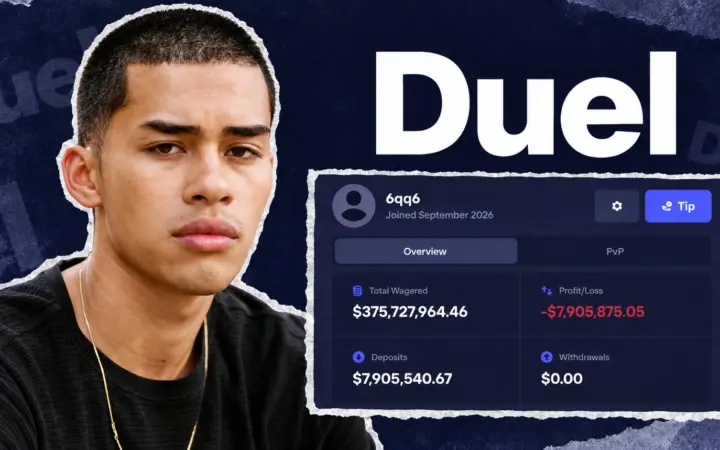
Duel.com Controversy: Fake-Volume Claims and the Sneako Clip
Conflicting wager records and an unconfirmed AI label: what the evidence establishes about Duel.com’s volume dispute and the Sneako clip.
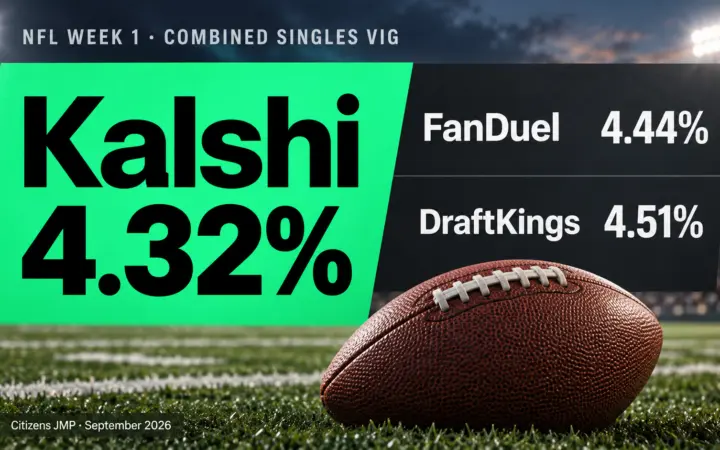
Kalshi NFL Week 1 Vig: Totals Drive Its Pricing Lead
Citizens' NFL pricing snapshot gives Kalshi a narrow overall lead, while FanDuel wins moneylines and sportsbooks lead sampled combos.

Mark Locke: Prediction Markets Can Outlast Today’s Rules
Mark Locke expects enduring wagering demand, while taxes, court disputes and settlement questions test the structure of sports prediction markets.