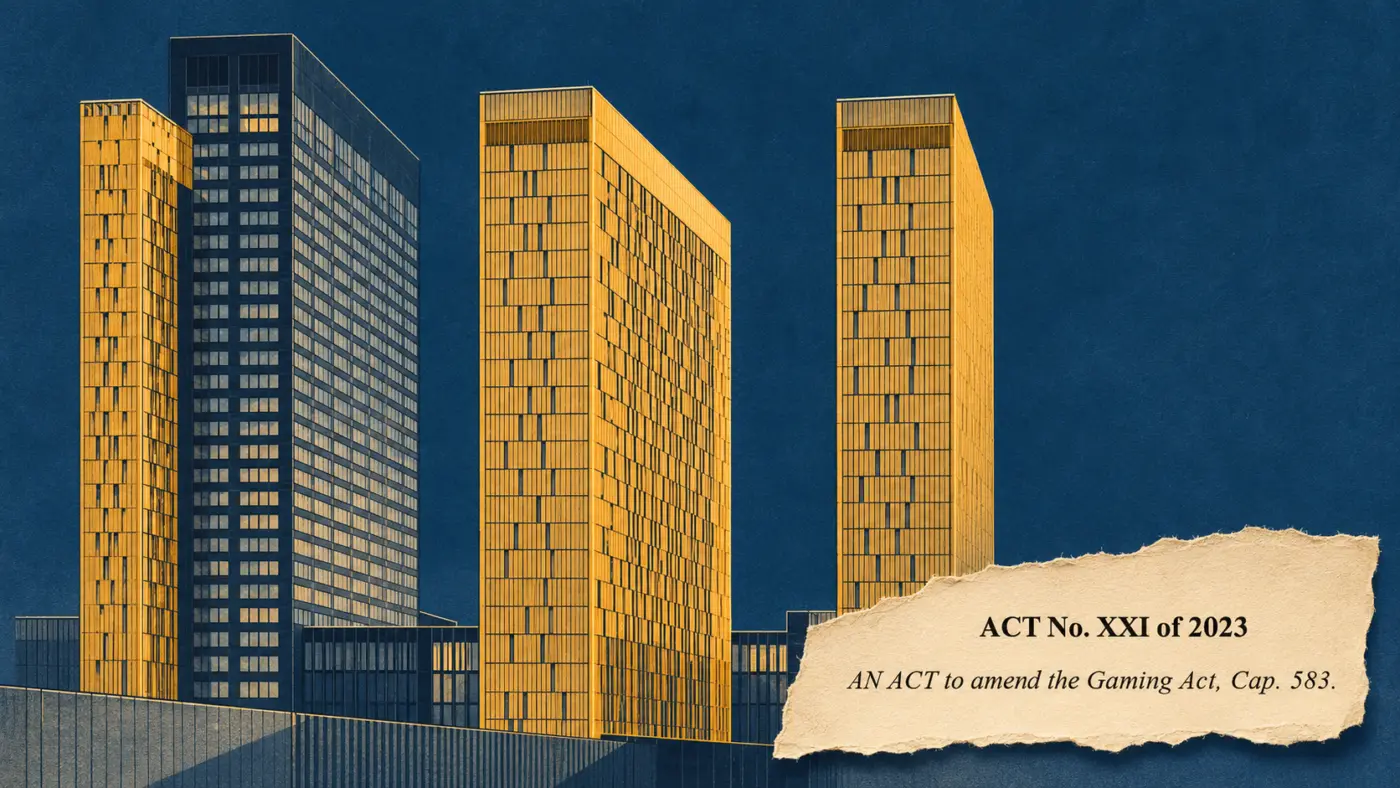
Can you sue an online casino for losses? What Malta’s Bill 55 means for players
Some players have won judgments for casino losses. Malta’s Bill 55 can still stand between an award and payment.

Can you sue an online casino for losses if it took your bets without the license your country required? In Austria, players have won on that ground. One obtained a judgment ordering repayment, only for a court in Malta to refuse to enforce it.
KEY FACTS AT A GLANCE
- Bringing a claim: The game, where you played, the dates and the operator’s local authorization can all affect your rights.
- Winning a claim: A missing license has supported Austrian casino claims. Dutch law can produce a different result on the same fact.
- Getting paid: Malta’s Article 56A can stand in the way of collecting from assets in Malta. On November 19, 2026, the EU’s top court left its compatibility with EU law open.
- Identify the operator and the playRecord the company named in the terms, the game, the dates and where you played.
- Check the local license and the legal groundsDid local law allow that operator to offer that game at the time? What ground for a claim does the law give you?
- Bring the claimIdentify the defendant and the court that can hear the case. Show why the defendant is liable and how much you lost.
- Obtain an enforceable judgmentCheck whom the judgment orders to pay.If the debtor pays in full voluntarily, collection ends here.
- Locate the debtor’s assetsIf money is still due, the place where those assets sit determines the next route.
- MaltaArticle 56A directs Maltese courts to refuse enforcement if the claim undermines MGA-licensed gaming or its obligations and concerns an authorized activity lawful under Malta’s gaming rules.
- Another EU stateEU rules govern recognition and enforcement of an EU judgment. A court can consider specific grounds for refusal.
- Outside the EUCheck local enforcement law and any treaty that applies where the assets are held.
Where and when did you play?
Start with the name on your account agreement. A familiar brand can trade through different companies. Use Dyutam’s casino license guide to compare the company and domain with the regulator’s entry. Then check whether that company had permission to offer your game, in that country, on those dates. A current badge tells you little about a bet you placed years ago. CasinoDrop’s license checklist shows which details to match.
| Where and when | What the court allowed | What the player still has to establish |
|---|---|---|
| AustriaMarch and April 2026 | A Vienna court upheld a player’s loss claim against an operator that lacked the Austrian concession. In Wunner, Austria’s Supreme Court allowed a separate suit against two directors to proceed. | Identify the operator and show the loss. A claim against a director needs a separate legal basis and evidence of personal liability. |
| GermanyEarlier ban on virtual slots and bets on lottery draws | On April 16, 2026, the EU court held that national law may void contracts for those prohibited games and allow players to reclaim lost stakes. | Which game, dates and place of play fall under the rule. Germany’s federal court has scheduled two decisions for January 28, 2027, including one about play abroad. |
| NetherlandsPlay before October 1, 2021 | On July 3, 2026, the Dutch Supreme Court held that the missing Dutch license alone did not invalidate the gambling contract. | Another legal ground, such as mistake or wrongful conduct, and the facts that support it. |
Austria allowed the player to sue the directors
In April 2026, a Vienna appeal court upheld a player’s claim against a casino operator that lacked the required Austrian concession. The defendant in that case was the company. The player in Wunner faced a different problem. His casino operator had gone into liquidation, so he sought damages from two of its directors.
On January 15, the Court of Justice of the European Union (CJEU) explained which country’s law generally governed that claim. It located the damage where the player habitually lived and took part in the games, in this case Austria. On March 12, Austria’s Supreme Court confirmed an Austrian court could hear his case. The player still had to establish why the directors themselves owed him damages.
Why the German and Dutch cases differ
Germany. In April, the CJEU considered virtual slots and bets on lottery draws under Germany’s earlier ban. It held that EU law allows a country to treat contracts for those prohibited games as void and to let a player recover lost stakes. Germany’s Federal Court of Justice has scheduled two decisions for January 28, 2027. One involves a player who participated from abroad. Keep travel dates if they affect where you placed your bets.
The Netherlands. On July 3, the Dutch Supreme Court considered online gambling before October 1, 2021. The operators lacked Dutch licenses, but that fact alone did not invalidate the players’ contracts. Someone claiming damages for wrongful conduct, for example, needs evidence of the conduct and the loss it caused.
Why the EU court stepped aside on Malta’s Bill 55
The dispute that reached Luxembourg began with a question about legal fees. Spielerschutz Sigma, an Austrian company that funds players’ lawsuits, wanted to know whether it could still collect in Malta after the law changed in 2023. Its adviser told the firm the new rule conflicted so clearly with EU law that Maltese courts would set it aside. Then a Maltese court relied on the rule to refuse enforcement of an Austrian judgment.
The funder sued its adviser. The Vienna court hearing that suit asked the CJEU whether the Maltese law complied with EU law. On November 19, the CJEU ruled the request inadmissible. To assess the adviser’s work, the judges in Vienna could look at what a competent adviser could reasonably have said on the date of the opinion. They could do that even while the legality of Bill 55 remained open.
Which judgments does Article 56A cover?
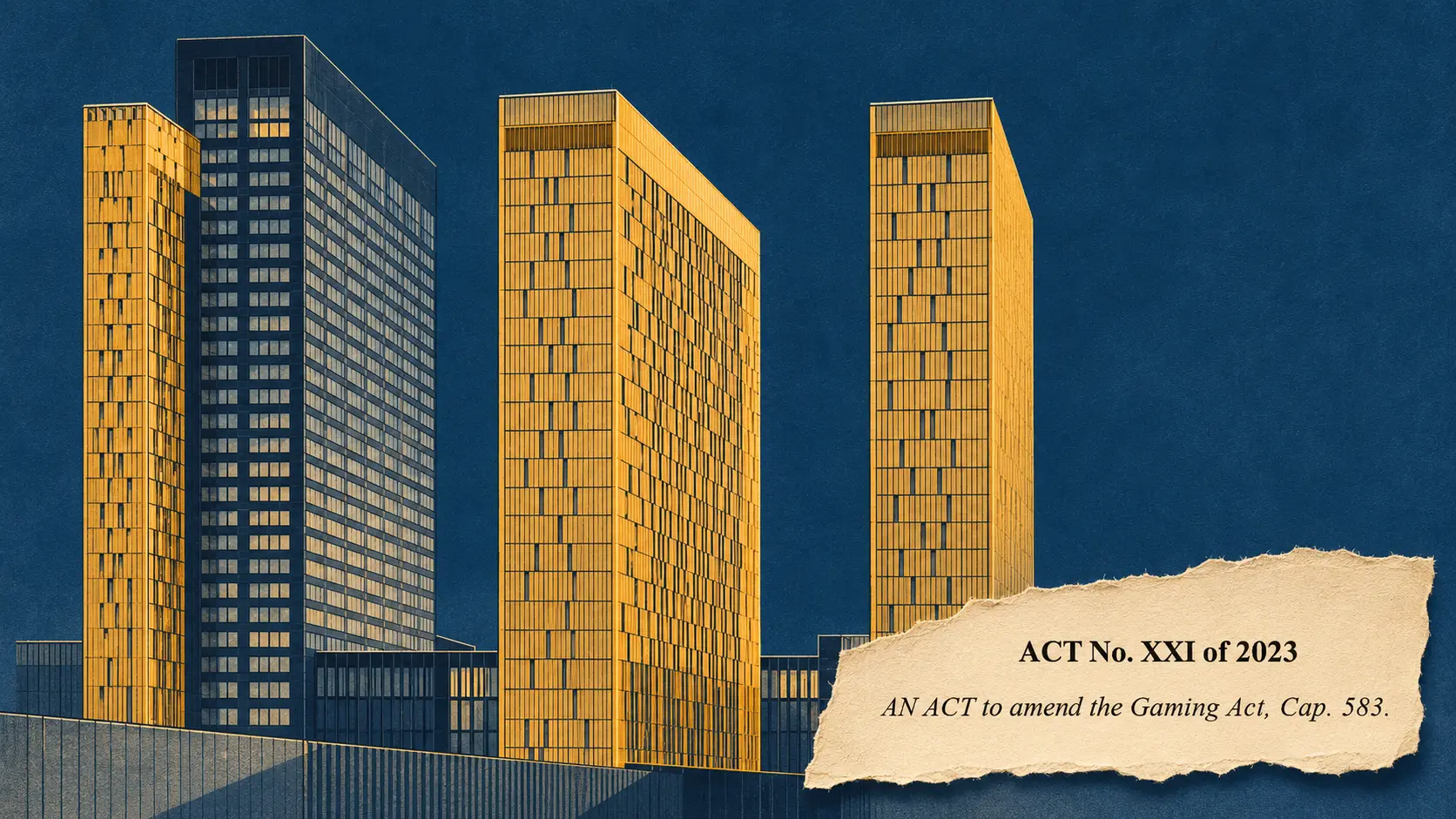
Bill 55 became Article 56A of Malta’s Gaming Act in June 2023. It covers actions in Malta against specified people, including licensed operators, and the recognition or enforcement there of foreign decisions arising from those actions. For a foreign judgment to fall within the provision, the underlying claim must meet both conditions below.
- The action conflicts with or undermines the legality of gaming services offered in or from Malta under a Malta Gaming Authority license, or the legality of obligations arising from those services.
- The action concerns an activity the license authorizes and that Malta’s gaming rules allow.
When both conditions apply, the law directs the Maltese court to refuse recognition or enforcement. The Malta Gaming Authority says this gives effect to an existing EU exception for public policy. The European Commission says systematic refusals undermine the trust that allows judgments to travel between member states. As of November 22, 2026, the Commission’s infringement register lists its June 2025 formal notice as the only decision in that file.
Two proceedings are easy to confuse here. Advocate General Emiliou gave the CJEU a nonbinding opinion in April. He recommended declining the Austrian referral and explained why he considered a general refusal rule incompatible with EU law. Separately, Gecić Law reports that Malta’s Court of Appeal referred enforcement questions to the CJEU in October in TSG v Posch. That case arose from a player’s attempt to enforce an award in Malta.
If you have a judgment, where does the casino hold assets?
Read the name of the debtor on the judgment. An award against the company that took your bets identifies who owes you money. A bank account belonging to a different company in the same group does not, by itself, give you a way to collect.
In Mr Green, a player with an Austrian judgment sought to preserve bank funds while pursuing payment. The CJEU said the court could consider a law that obstructs collection and the debtor’s past conduct when assessing urgency. The player still needed to show a real risk that collection would otherwise become impossible or substantially harder. An order to preserve funds keeps them in place while enforcement proceeds.
What changes if you paid a crypto casino?
Look at the company in the terms, the country where it sought customers and the location of its assets. CasinoDrop’s crypto casino guide explains how licensing fits alongside the payment method. If a trader directed its business to your country and your contract falls within that activity, EU consumer rules can allow you to sue at home even when the trader is based outside the EU.
Collection is a separate question. EU rules govern how a judgment from one member state travels to another. For assets outside that system, a lawyer must check the local procedure and any treaty that applies. In Ponner, a German player had a judgment against an operator based in Curaçao and sought information about possible bank accounts in Cyprus. The November 5 ruling addressed how she could seek that information. It records no payment to her.
What to save before your records disappear
Download the dated terms, the name of the company, your account ID, the domain and the full gambling history. Keep emails about blocks or complaints and record where you played, including any trips abroad. For a crypto deposit, save the network, transaction ID, amount and the matching entry in the casino account. CasinoDrop’s evidence checklist covers the records to save when something goes wrong.
At an online casino covered by Malta’s Player Protection Directive, you can access the previous six months of gambling history and request the full history. The directive defines that history from August 1, 2018, or an earlier date if the operator provides it. Ask for deposits, withdrawals, wins, losses and the total net position. Keep a copy of the request.
How to check a figure. Suppose you started and ended with a zero balance, deposited €800 and withdrew €300, with no bonuses, transfers or fees. Your ledger should show a net loss of €500 (€800 − €300), even if you wagered the same money many times. That €500 tells you what to reconcile with your records. A court still has to decide whether you can recover any of it.
Before filing, ask a lawyer in the relevant country which claim fits your facts, when its deadline runs and who pays if you lose. If a funder offers to handle the case, ask for its share in writing. Check who bears the cost if you win but the debtor never pays.
When the complaint is about your bank
A UK customer asked Santander for help controlling his gambling. The bank put a block on the wrong account. The Financial Ombudsman upheld the complaint and ordered Santander to refund identifiable gambling payments, less winnings, from August 15 to September 17, 2025. The reason for redress was how the bank handled this customer’s request. If your complaint concerns a bank block, save the request, the bank’s reply and the payments that followed.
FAQs
Can I sue if the casino held a Malta license?
Possibly. Check whether the operator could offer that particular game where you played at the time. Your country’s law determines what remedy a licensing breach can support.
Did the EU court uphold Malta’s Bill 55?
The court left that question open. Vienna could decide whether a legal adviser acted with reasonable care without first settling whether Malta’s law complies with EU law.
What if I played while traveling abroad?
Record your location for each period of play. Germany’s Federal Court of Justice has scheduled a decision involving play from abroad for January 28, 2027. The Austrian result in Wunner concerned a player who lived and played in Austria.
Does an Austrian judgment guarantee payment in Malta?
No. An Austrian judgment can establish the debt, but Malta’s Article 56A can prevent enforcement there. The company named in the judgment and the location of its assets matter if it fails to pay voluntarily.
Can I claim losses I paid in cryptocurrency?
The deposit currency alone does not decide your rights. Identify the operator, the market it targeted and where its assets are. Pair the wallet transaction ID with the casino’s ledger to document what you actually lost.
Can I ask for my betting history after I stop playing?
Yes. If the Malta Gaming Authority’s directive covers the operator, ask it for the full gambling history it holds under the directive. Include the account details it needs to identify you and keep a dated copy of your request.
KEY TAKEAWAYS
- Check the license for the dates you played — national law, game type and location can change the outcome.
- Keep the account history — it connects your payments to actual play and gives you a net figure to check.
- Identify who could pay — ask about the debtor’s assets and enforcement costs before committing to a claim.
Sources
- Full judgment in Spielerschutz Sigma, C-683/24 — Court of Justice of the European Union
- Why the Austrian referral was inadmissible (PDF) — Court of Justice of the European Union
- Gaming (Amendment) Act 2023, Article 56A (PDF) — Legislation Malta
- Wunner, C-77/24, on the law governing the claim against two directors (PDF) — Court of Justice of the European Union
- 5 Ob 8/26a, the Austrian jurisdiction decision (German) — Austrian Supreme Court
- 13 R 4/26t, operator’s appeal against a casino loss award (German) — Vienna Court of Appeal
- C-440/23, on the German prohibition and recovery of stakes (PDF) — Court of Justice of the European Union
- I ZR 216/25, lead case on casino losses (German) — German Federal Court of Justice
- I ZR 78/25, participation from abroad (German) — German Federal Court of Justice
- July 3 decision on gambling contracts and a missing license (Dutch) — Supreme Court of the Netherlands
- Formal notice to Malta on recognition of judgments — European Commission
- Infringement case register, INFR(2025)2100 — European Commission
- Response to the Commission’s formal notice — Malta Gaming Authority
- Advocate General Emiliou’s opinion in Spielerschutz Sigma (PDF) — Court of Justice of the European Union
- The Maltese Court of Appeal’s reference in TSG v Posch — Gecić Law
- Mr Green, C-198/24, on preserving bank funds (PDF) — Court of Justice of the European Union
- Brussels I bis, Articles 17–18, 36, 39 and 45–46 — European Union
- Ponner, C-716/24, on account information and insolvency (French) — Court of Justice of the European Union
- Player Protection Directive, Articles 2 and 18A (PDF) — Malta Gaming Authority
- Decision DRN-6513712 on Santander’s gambling block (PDF) — UK Financial Ombudsman Service

Aevan Lark
Aevan Lark is a gambling industry veteran with over 7 years of experience working behind the scenes at leading crypto casinos — from VIP management to risk analysis and customer operations. His insider perspective spans online gambling, sports betting, provably fair gaming, and prediction markets. On Dyutam, Aevan creates in-depth guides, builds verification tools, and delivers honest, data-driven reviews to help players understand the odds, verify fairness, and gamble responsibly.
Related coverage

Kelly Criterion Betting and Fractional Staking
Use a stated win probability and price to calculate a Kelly stake. See how estimation errors, volatility and drawdowns change the result.

How Crash Games Work: Aviator, Bustabit & Beyond
See how crash payouts work, how Bustabit’s published formula maps a target to a probability, and how to check the rules for…

How Do No Deposit Bonuses Work? The Real Price of ‘Free’
Calculate the turnover required by a no-deposit casino bonus and see how expiry, game contributions and cash-out caps affect withdrawals.