On December 10, 2021, a longtime MGM VIP named Dwight Manley flew to Las Vegas on a casino-provided plane. He checked into the MGM Grand Mansion — the most exclusive high-roller enclave on the Strip — and ordered an Old Fashioned at the bar. He says the drink tasted bitter.
Within three hours, his established $1 million credit limit had tripled to $3.5 million across three rapid-fire “this trip only” extensions. He was bleeding from a shattered ashtray, and casino staff described him as “drunk or wasted” in internal text messages. Within five hours, he couldn’t stand. What began as a routine VIP visit has now become the MGM Grand ketamine drugging lawsuit — and a federal judge has ruled that a reasonable jury could find Manley was poisoned while the casino extracted millions in credit from him in real time.
KEY FACTS AT A GLANCE
- Plaintiff: Dwight Manley — SoCal real estate developer, former sports agent (Dennis Rodman, Karl Malone era)
- Incident: December 10, 2021 at MGM Grand Mansion, Las Vegas
- Credit increase: $1M to $3.5M in a single afternoon — after 10 years at the $1M level
- Substance detected: Ketamine confirmed via hair follicle test; no other narcotics
- Case: Manley v. MGM Resorts International, 2:22-cv-01906-MMD-DJA (U.S. District Court, Nevada)
- Status: Summary judgment denied February 25, 2026 — case headed for jury trial
- Discovery finding: 11 other individuals alleged they were drugged by MGM employees at MGM properties
1:45 PM, December 10, 2021: The Bitter Old Fashioned
Dwight Manley was not a tourist. As a Southern California real estate developer and former NBA sports agent who once represented Dennis Rodman and Karl Malone, he had been an MGM Grand VIP for over a decade. He held a standing $1 million credit line — a level that hadn’t changed in ten years.
Accordingly, MGM flew him to Las Vegas on a casino-provided plane and installed him in the Mansion. This gated Italianate compound on the MGM Grand property serves as one of the most exclusive high-roller enclaves in the world. By every indication in the court record, the trip was routine.
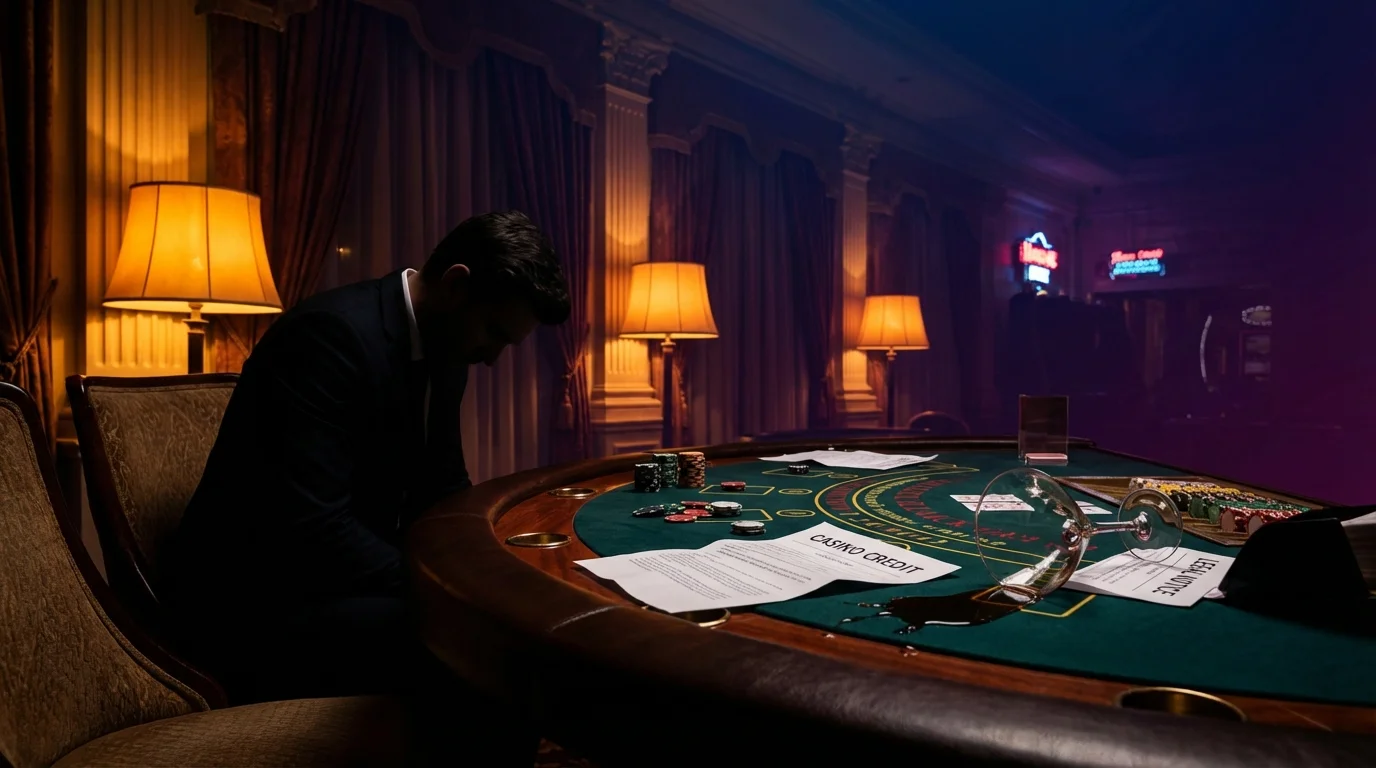
At approximately 1:45 PM, Manley sat down at a blackjack table in the Mansion and ordered an Old Fashioned from the bar. According to his testimony, the drink tasted bitter — noticeably off from what he normally received. He finished it anyway. Friends ordered a second round. By approximately 2:21 PM, as the second drink arrived, Manley began feeling disoriented.
What followed over the next two and a half hours is documented through surveillance footage, staff text messages, and witness testimony. A federal judge would later determine this evidence was sufficient to send the case to a jury.
By 4:00 PM, Manley shattered a glass ashtray at the table, cutting his hand badly enough to bleed on the felt. He later testified he did not feel the injury and had no memory of it happening. Staff responded not with medical assistance, but by moving him to a different table and handing his friends Band-Aids. Meanwhile, play continued.
Between these hours, three separate “this trip only” credit extensions pushed his $1 million limit to $3.5 million. Notably, two of the three extensions gained approval within approximately ten minutes of each other.
By 4:45 PM, Manley could not stand or walk without physical assistance. He left approximately $500,000 in chips on the table. By 5:15 PM, friends guided him back to his villa in the Mansion compound, where he collapsed unconscious.
The next morning, Manley texted his casino host, Vanessa Reboton: “I think someone must have spiked a drink.” Reboton’s response, according to court records, was to suggest IV hydration — a common Vegas hangover remedy for high rollers. Nobody suggested a doctor. Nobody suggested a blood draw. Nobody suggested calling the police.
Consequently, Manley paid Reboton $560,000 on the flight home. He says he made this payment to protect his reputation, fully expecting MGM to reimburse him once the drugging was confirmed. Three days later, he sent a formal preservation demand letter to MGM, putting the company on notice to retain all surveillance footage, communications, and records related to December 10.
The Credit Line Is the Crime Scene
To understand why this MGM Grand ketamine drugging lawsuit matters beyond the drugging allegation itself, you need to understand how casino credit works. More importantly, you need to see how the credit extension process on December 10 departed from every standard the industry claims to follow.
How Casino Markers Work
A casino marker is a short-term credit instrument. In practical terms, it functions as a counter-check drawn against a patron’s bank account. When you sign a marker at a blackjack table, you sign a legally binding negotiable instrument that the casino can submit to your bank for payment. In essence, it works identically to a personal check.
If the check bounces and you don’t pay, the casino can refer the matter to the Clark County District Attorney’s Bad Check Unit. As a result, you can face arrest and charges for passing fraudulent checks and theft. This is not hypothetical — it is exactly what happened to another MGM patron in a parallel case discussed below.
Every casino patron with a credit line has an established limit — a ceiling on how much the casino will extend in markers during a given visit. Casinos set that limit based on the patron’s financial profile, play history, and repayment record. According to gaming industry expert Danny Wade, a longtime casino executive who testified in this case, credit increases “are normally granted in small increments” over time.
In other words, a patron who has held a $1 million line for a decade does not typically receive a 250% increase in a single afternoon. That is not how the system is designed to work.
The December 10 Extensions
Nevada’s Minimum Internal Control Standards — the MICS — establish specific procedural requirements for credit operations. Markers must be documented in triplicate. Additionally, identity verification and signature comparison are required. Supervisor approval is mandatory for transactions exceeding $10,000. These checkpoints exist precisely to prevent improper credit extensions.
On December 10, 2021, three separate “this trip only” credit extensions moved Manley’s limit from $1 million to $3.5 million. Two processed within approximately ten minutes of each other. The extensions occurred while Manley sat at the table — while he was, according to his own casino host’s text messages, visibly deteriorating.
“[He] looked drunk or wasted.”
— Casino host Vanessa Reboton, text message to credit manager Justin Manacher, December 10, 2021
That text message is the hinge of this case. According to court filings, the credit team processed the increase after Reboton sent this message. The host acknowledged Manley’s “erratic behavior” in communications. Yet the credit extensions — each one requiring identity verification, signature comparison, and supervisory approval — sailed through every checkpoint.
The question this raises for anyone who plays on markers is not whodunit. It is mechanical. How did three rapid-fire credit extensions totaling $2.5 million pass every internal control checkpoint on a patron that the casino’s own staff described as wasted?
Understanding how casino economics work helps explain why. The house always holds a mathematical edge. A patron playing while impaired on a tripled credit line represents an enormous revenue opportunity. As a result, the credit system did not fail neutrally. It became the instrument of extraction.
The Evidence in the MGM Grand Ketamine Drugging Lawsuit
MGM moved for summary judgment, asking the court to dismiss the case before trial. On February 25, 2026, U.S. District Judge Miranda Du denied that motion from the bench. She ruled that Manley presented enough evidence for a jury to decide the case.
The Drug Test and Medical Evidence
The foundation is the hair follicle drug test conducted in March 2022, approximately three months after the incident. The test confirmed the presence of ketamine in Manley’s system. Importantly, no other narcotics were detected. Medical expert Dr. Michael Sucher reviewed the results and concluded “to a reasonable degree of medical probability” that Manley “was poisoned with ketamine in the early afternoon of Dec. 10, 2021, at the MGM Grand Mansion.”
Furthermore, Manley arranged two polygraph examinations through his initial attorney, David Chesnoff — a prominent Las Vegas criminal defense lawyer. Both tests determined that Manley was not deceptive when stating he did not voluntarily use drugs.
MGM’s counter-argument was straightforward. A hair follicle test covers an approximately 90-day detection window. It confirms ketamine was in his system during that period but cannot pinpoint the exact date or location of exposure. However, Judge Du ruled this was a factual dispute for the jury to weigh, not grounds for dismissal.
“I find that plaintiff has offered evidence to create a genuine issue of fact that the cocktail he was served by defendant’s employee was poisoned such that he was incapacitated at the time he entered into the credit instrument at issue.”
— U.S. District Judge Miranda Du, February 25, 2026 hearing
The Surveillance Video and Staff Communications
The surveillance video added another layer. Judge Du noted that the footage shows the bartender, Jerilyn Koch, “mostly using what appears to be prepared ingredients” and “adding a single serving ingredient that appears to be a sugar package.” However, the judge concluded that the video “does not, undisputedly, show that Ketamine was not contained in the ingredients.” In short, the video leaves the question open for a jury.
Perhaps the most damaging evidence against MGM came from its own employees. The casino host’s text messages — sent in real time on December 10 — documented Manley’s visible impairment while credit was being extended. Additionally, gaming industry expert Danny Wade testified that MGM failed to follow standard credit extension practices.
Judge Du also cited Nevada contract law. Under this law, an incapacitated person may disaffirm a contract within a reasonable time after regaining capacity. Manley notified the casino the very next morning and sent a formal preservation demand three days later. The court found this timeline sufficient.
Manley eventually paid the remaining markers in full. His legal position is that he did so to protect his reputation and banking relationships, expecting MGM to reimburse him once testing confirmed the drugging. In contrast, MGM’s defense team, led by attorney Lawrence Semenza III, characterizes the lawsuit as an attempt to avoid paying legitimate gambling debts. The jury will decide which narrative holds.
The Parallel Case: Thomson v. Aria
The MGM Grand ketamine drugging lawsuit does not exist in isolation. In December 2025, a second lawsuit alleged a strikingly similar pattern at another MGM property: credit extended to an allegedly incapacitated patron at a high-limit blackjack table.
Michael Duke Thomson is a 64-year-old licensed attorney who resides in Puerto Rico. He was a longtime Aria VIP with what court filings describe as a “pristine” repayment history. On January 23, 2024, Thomson played blackjack in Aria’s high-limit room. His last clear memory is leaving the table around midnight with a few thousand dollars in chips.
He woke up the next morning handcuffed in an Aria security holding pen. Casino staff told him they found him sleeping in the Sky Suites lounge. They said he became aggressive when security tried to wake him. Aria formally trespassed him from the property and told him not to return.
What Thomson did not discover until he contacted his VIP host the following day was alarming. Eight markers totaling approximately $75,000 had been issued in his name between roughly 3:00 AM and 9:00 AM — a six-hour window of which he has no memory. His host told him there were “discrepancies” between the amounts borrowed and the win/loss records. Moreover, the signatures on the markers “only loosely resemble” Thomson’s usual signature.
Months later, Aria submitted the markers to Thomson’s bank. He instructed the bank not to honor them. Consequently, Aria referred the matter to the Clark County District Attorney’s Bad Check Unit. Authorities arrested Thomson and charged him with passing fraudulent checks and theft. He ultimately paid the disputed amount as restitution. The charges were dismissed in October 2024.
“It is inequitable for Aria to retain funds procured under these circumstances.”
— Thomson v. Aria Resort & Casino LLC, complaint filed December 2025
Thomson now sues civilly, alleging negligence, unjust enrichment, and malicious prosecution. He alleges Aria weaponized the criminal prosecution process as a debt collection mechanism. In particular, the casino leveraged the marker system’s unique legal status to force payment on instruments he says he never knowingly signed.
The parallels between the two cases are difficult to dismiss. Both involve high-limit blackjack. Both involve credit extended to allegedly incapacitated patrons. Both are MGM properties. And both reveal how the marker system — designed as a convenience for creditworthy patrons — can become a trap when safeguards fail.
Eleven Others and a Pattern That Won’t Stay Buried
During discovery in the Manley litigation, plaintiff’s attorney Paul Hejmanowski obtained records from MGM documenting 11 other individuals who alleged MGM employees drugged them at MGM properties. The specific details of these complaints remain undisclosed. However, their existence is part of the evidentiary record and supports a pattern-of-conduct theory.
Getting those records was not easy. MGM actively fought to suppress them.
“We tried to get the records from the MGM of how many times somebody said they were involuntarily drugged in the casino. They fought me on it.”
— Attorney Paul Hejmanowski, plaintiff’s counsel
Separate from the Manley and Thomson lawsuits, the public record includes at least two additional drugging-related incidents at MGM properties. Both occurred at Aria in 2022 and both resulted in criminal arrests.
In June 2022, police arrested Ebony Bairfield, 40, at Aria after a high-roller patron reported being drugged at the casino’s High Limit Lounge. The victim had pulled $50,000 from a credit card at Aria’s cashier and received an additional $40,000 from a friend. After meeting Bairfield at the lounge and accepting drinks, he reported feeling “dizzy” and that “things got blurry.”
He blacked out and woke up hours later at the nearby Vdara hotel missing $90,000 in casino chips. Investigators found an empty capsule with residue in his hotel room. Prosecutors charged Bairfield with administering a drug to aid in the commission of a felony, burglary, and grand larceny.
A separate 2022 Aria incident involved another woman arrested on prostitution-related theft charges after a patron reported being drugged.
These cases involve different alleged perpetrators — patrons and outside actors rather than employees. Nevertheless, they share a common setting: MGM’s high-limit areas. The Manley discovery records, which allege employee involvement in 11 additional cases, raise a more troubling question. When multiple unrelated complainants independently report drugging at the same company’s high-limit venues, the common denominator is not the victims — it is the venue.
The Regulatory Black Hole
If the factual allegations in these cases are even partially true, the regulatory response has been effectively nonexistent.
The Gaming Control Board Investigation
The Nevada Gaming Control Board — the agency specifically tasked with protecting the public interest in gaming — investigated the Manley complaint. Agent Terry Ochal notified Manley in October 2022 that his case “has been approved by supervisors” for legal counsel review. However, the investigation amounted to interviewing bartender Jerilyn Koch once. The Board took no public enforcement action against MGM. No fine. No license discipline. No public statement.
Similarly, the Las Vegas Metropolitan Police Department’s response fell short. Metro closed its investigation without interviewing Koch — the bartender who prepared the drink that preceded Manley’s rapid deterioration. Koch herself testified that police never contacted her. MGM never contacted her about the allegations either.
Manley filed a police report in March 2022 and provided his hair follicle drug test results as evidence. Metro Detective Justin Adkins reviewed surveillance video and reported finding “no evidence that proved an employee did any illegal acts.” But his review covered only the video itself — the same video Judge Du would later describe as inconclusive. The investigation ended there.
Nevada Regulation 5.011
The regulatory failure is especially notable because Nevada Regulation 5.011 explicitly defines “unsuitable methods of operation” — grounds for disciplinary action against a casino’s gaming license. Among the enumerated violations:
“Permitting persons who are visibly impaired by alcohol or any other drug to participate in gaming activity.”
— Nevada Gaming Commission Regulation 5.011
Regulators strengthened this language in 2018, expanding it from “visibly intoxicated” to “visibly impaired by alcohol or any other drug.” The change specifically addressed impairment beyond alcohol, including drug-related incapacitation in casino environments. Then-Gaming Control Board Chair Becky Harris championed the amendment.
Based on the casino host’s own text messages — in which she described Manley as looking “drunk or wasted” and noted his “erratic behavior” — the regulation appears violated on its face. A visibly impaired patron not only continued gaming but also received $2.5 million in additional credit while impaired. Despite this, the NGCB has taken no action.
For context, the NGCB has not been inactive on other MGM enforcement matters. In April 2025, the Board fined MGM $8.5 million for anti-money laundering violations. In January 2026, MGM faced a broader $27 million AML crackdown alongside Caesars and Resorts World.
In other words, the agency is willing to act against MGM’s license on financial compliance issues. On patron safety — specifically on allegations that a VIP was drugged and stripped of millions while staff watched — the regulator has been invisible. The casino industry’s broader track record on protecting patrons suggests this is not an isolated regulatory gap.
The Responsible Gaming Theater
In March 2026 — the same month the MGM Grand ketamine drugging lawsuit cleared for jury trial — MGM Resorts International announced commitments exceeding $1 million to responsible gaming initiatives during Problem Gambling Awareness Month.
The infrastructure looks impressive on paper. MGM’s GameSense program has trained over 62,000 employees. More than 300 GameSense Advisors deploy across MGM properties. Responsible gaming reminders appear on 22,000 slot machines and 35,000 hotel room television screens. Additionally, the company committed $450,000 to the International Center for Responsible Gaming for a three-year study on sports wagering behavior.
However, all of this programming supposedly existed in December 2021. That was when staff at the MGM Grand Mansion watched a VIP patron deteriorate over the course of an afternoon — shattering glass, bleeding on felt, losing the ability to walk — and responded by tripling his credit access.
RESPONSIBLE GAMING SPEND VS. ALLEGED CONDUCT
What MGM Advertises
- $1M+ committed to responsible gaming (March 2026)
- 62,000+ employees trained via GameSense
- 300+ GameSense Advisors on property
- 22,000 slot machine reminders
- 35,000 hotel room TV screens with messaging
- $450K to ICRG for sports wagering research
What the Court Record Shows
- $2.5M credit increase while patron described as “wasted”
- No medical assistance for bleeding, disoriented VIP
- Credit approved AFTER host texted about impairment
- 11 other drugging complaints found in discovery
- Legal position: “no liability” for serving impaired patrons
- Bartender never interviewed by casino about allegations
MGM’s legal position makes the dissonance explicit. Attorney Lawrence Semenza III argued in court that “there is no liability to MGM relating to allowing a patron to overindulge in alcohol consumption.” That is the company’s actual legal posture. Even if Manley were merely drunk rather than drugged, MGM asserts it has no duty to stop extending credit to an impaired patron.
To be fair, the responsible gaming programs are not irrelevant. For patrons struggling with gambling disorders, GameSense advisors and self-exclusion tools provide meaningful resources. But these programs operate in a different universe than the credit extension process.
Specifically, GameSense advisors do not sit between a host and a credit manager when a VIP is at the table. Slot machine reminders do not override the financial incentive structure that rewards hosts for maximizing patron play. The programs address the patron’s psychology. The credit system addresses the casino’s revenue targets. When those interests collide, the credit system wins.
What Happens Next
With summary judgment denied, Manley v. MGM now heads toward a jury trial. A settlement conference will precede trial proceedings. This step carries particular significance given MGM’s reputational exposure.
For a company with a market capitalization exceeding $10 billion and $15.4 billion in net revenue (2023), the financial exposure of a single case is manageable. However, the reputational risk of open-court testimony about systematic patron drugging at its flagship property is a different calculus entirely.
Meanwhile, discovery has reopened in the case. In January 2026, Magistrate Judge Elayna Youchah reversed her own earlier denial and ordered MGM to produce five additional employees for depositions within 60 days. The list of approved witnesses reads as a tour of MGM Grand’s management structure:
| Name | Title |
|---|---|
| Chris Durlej | Vice President of Customer Development |
| Stewart Patchefsky | General Manager |
| William Ash | Director of Table Games |
| Kendall Hart | Director of Food and Beverage |
| Ronald Buono | Director of Surveillance |
A stipulated agreement filed in February 2026 delays some depositions pending adjudication of a dispute over the deposition of Sean Durand, MGM Grand’s Chief of Security. Filings describe Durand as a “key player” in the events. The fact that the court initially denied and then granted access to five senior MGM employees suggests genuine evidentiary gaps that require filling before trial.
In addition, Manley’s $1 million billboard reward campaign remains active across Las Vegas. Fourteen billboards direct anyone with information to contact DeBecker Investigations. The reward — doubled from $500,000 in October 2023 — represents the largest publicly known reward offer in a civil casino dispute. The broader landscape of casino industry legal battles is expanding, but few cases carry the reputational stakes of this MGM Grand ketamine drugging lawsuit.
What This Means If You Play on Markers
The Manley and Thomson cases expose structural vulnerabilities in the casino credit system. These vulnerabilities affect every patron who plays on markers. More importantly, these cases reveal how few real-time safeguards stand between a patron’s impairment and the casino’s ability to extract legally binding financial commitments.
UNDERSTAND THE RISK
If you play on casino markers, every instrument you sign is a legally binding counter-check that can be submitted to your bank and, if dishonored, referred for criminal prosecution. The credit extension process has fewer real-time safeguards than most patrons assume. Staff incentives — host compensation structures tied to patron play, property revenue targets — can override patron protection protocols. Understanding your risk exposure and setting firm bankroll limits before you sit down is not optional — it is your primary line of defense.
The Marker Vulnerability
The marker system creates a unique vulnerability that does not exist in cash gambling. When you buy chips with cash, your maximum loss is the cash in your pocket. When you play on markers, your maximum loss is whatever the casino decides your credit limit should be.
As the Manley case demonstrates, that limit can change mid-session without your meaningful consent. You sign legally binding instruments that the casino can submit to your bank. If you are impaired — whether by drugging, alcohol, or exhaustion — those instruments may still hold up unless you take immediate legal steps to challenge them.
Nevada contract law provides a narrow window of protection. An incapacitated person can disaffirm a contract, but the law requires action within a reasonable time after regaining capacity. Manley notified the casino the morning after the incident and sent a preservation demand three days later. The court found this timeline sufficient.
In contrast, Thomson did not contest his markers for months. By the time he told his bank not to honor them, Aria had already submitted them for payment. Authorities then referred the matter for criminal prosecution. The contrast between these two outcomes is instructive: speed matters.
If You Suspect Drugging at a Casino
STEP 1: MEDICAL EVIDENCE
Request medical attention immediately. Demand a blood and urine test — not a hair test. Blood is time-specific and can establish what was in your system within hours, not a 90-day window.
STEP 2: POLICE REPORT
File a police report the same day. This creates an official record and timestamps your allegation. Do not wait for drug test results — file the report first and supplement it later.
STEP 3: PRESERVATION DEMAND
Send a written preservation demand to the casino for all surveillance footage, communications, credit records, and staff schedules. Do this within 72 hours. Surveillance footage is overwritten on a cycle.
STEP 4: LEGAL COUNSEL
Retain an attorney experienced in gaming law before making any payments. Every payment you make on a disputed marker can be argued as ratification of the contract under Nevada law.
The Nevada Gaming Control Board complaint process exists, and filing one creates a paper trail. However, this case suggests the process lacks teeth. Filing a complaint still establishes a regulatory record. But as the Manley case demonstrates, do not assume the NGCB will investigate aggressively on your behalf.
Ultimately, VIP programs and high-limit rooms exist to maximize play. The host relationship — the personal attention, the comps, the casino-provided flights, the Mansion suites — creates trust that can be weaponized when institutional incentives align against you. A host who texts their credit manager that a patron looks “drunk or wasted” and then watches the credit increase go through is not protecting the patron. The system works exactly as its incentives dictate. Understanding that dynamic before you sit down at the table is the most important edge you can give yourself.
KEY TAKEAWAYS
- The credit system is the vulnerability — Casino markers are legally binding counter-checks. Credit extensions can happen mid-session, and internal controls meant to prevent exploitation of impaired patrons failed in both the Manley and Thomson cases.
- A federal judge found sufficient evidence for trial — Judge Du ruled that a reasonable jury could find Manley was poisoned with ketamine at the MGM Grand Mansion on December 10, 2021. This is a judicial finding, not merely an allegation.
- The pattern extends beyond one case — Discovery revealed 11 other drugging complaints at MGM properties. A parallel lawsuit at Aria involves nearly identical allegations. Separate criminal cases at Aria in 2022 involved patron drugging and theft.
- Regulatory oversight has been absent — Nevada Regulation 5.011 explicitly prohibits allowing visibly impaired persons to gamble. The casino host’s own text messages appear to document a violation. The NGCB has taken no enforcement action.
- Speed is your best protection — If you suspect drugging, get a blood test immediately, file a police report the same day, and send a preservation demand within 72 hours. Under Nevada law, delay in contesting markers can be treated as ratification.
- Responsible gaming programs don’t regulate credit — MGM’s $1M+ responsible gaming commitment coincides with the month this case cleared for trial. The programs address patron psychology but do not override the financial incentives driving credit extension decisions.
Sources
- Manley v. MGM Resorts International et al, Case 2:22-cv-01906-MMD-DJA — U.S. District Court, District of Nevada (Justia Dockets)
- Nevada Gaming Commission Regulation 5 — Operation of Gaming Establishments — Nevada Gaming Control Board
- Minimum Internal Control Standards — Table Games — Nevada Gaming Control Board
- Minimum Internal Control Standards — Cage and Credit — Nevada Gaming Control Board
- MGM Resorts & BetMGM Commit Over $1 Million to Responsible Gaming Initiatives — PR Newswire (March 2026)
- MGM Grand Headed for Trial in Alleged Drugging of Gambler — Nevada Current
- Gambler Who Alleges He Was Drugged at MGM Grand Seeks More Answers From Workers — Nevada Current
