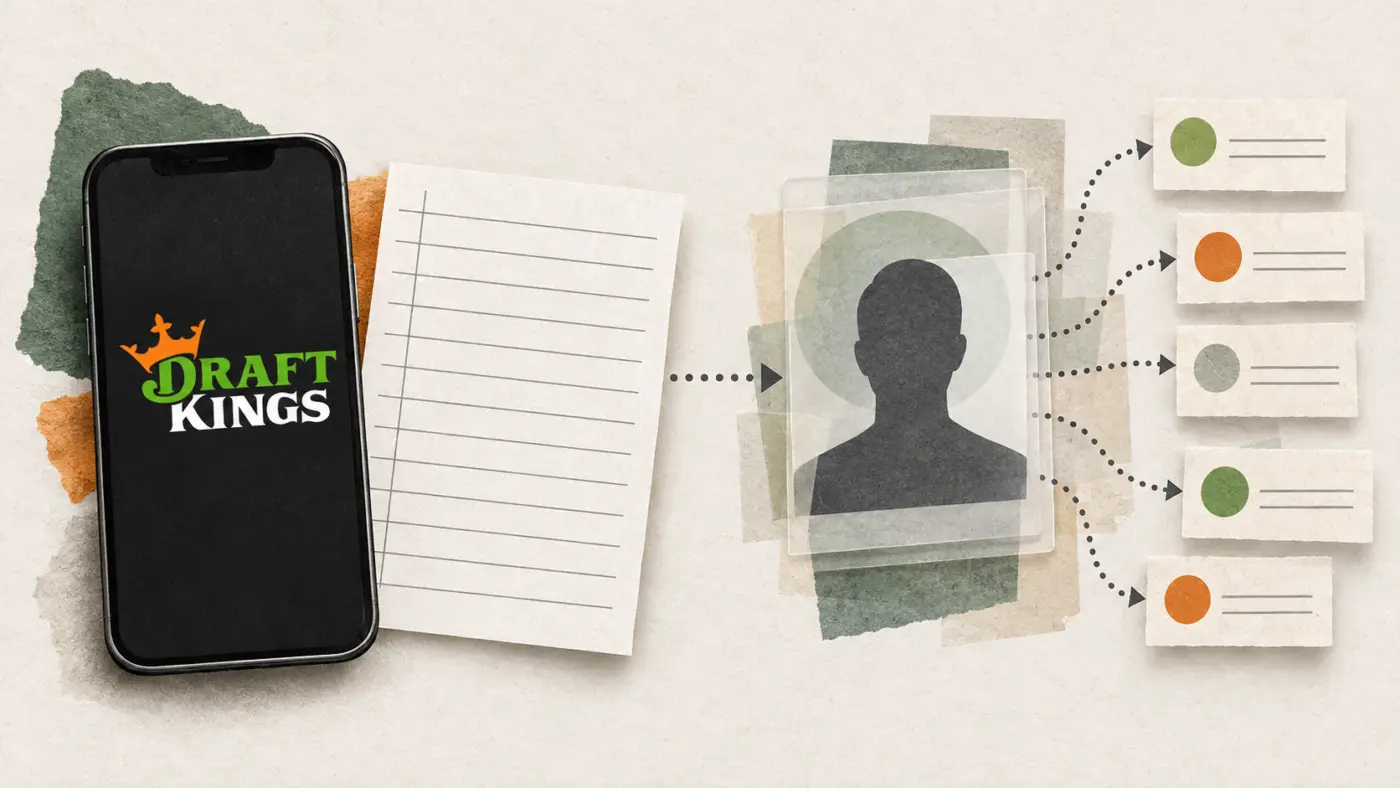
Your Betting History Shows What You Did. Can You See What Your Sportsbook Predicts You’ll Do Next?
Sportsbook profiles can predict future behavior. We examine the records, the rights and the case for clearer disclosure.
Your betting history tells you what happened. A sportsbook data request can ask what the company inferred from that activity, including retained information relevant to the personalized offers it chooses to send you.
KEY FACTS AT A GLANCE
- Focus: The distinction between recorded bets, customer predictions and the reason for an individual offer.
- Massachusetts: The commission directed fact-finding on sportsbook AI on September 24, 2026; the cited discussion established no finding of wrongdoing.
- Evidence: Historical UK access responses document profile fields. This article has not tested a current US sportsbook data request.
- Analysis: Useful disclosure should explain what retained classifications mean, while identifying the limits of what they establish.
AI is changing the product around the bet
On September 24, the Massachusetts Gaming Commission directed staff to engage with DraftKings and examine AI use across licensed sportsbooks. That inquiry creates an opening to examine what customers can learn about the information used to personalize their experience. It follows reporting already examined in Dyutam’s coverage of DraftKings AI targeting and player-protection tools.
The technology reaches beyond bonus selection. In its 2025 annual report, DraftKings describes sportsbook recommendation engines that present betting markets using past play and location. It also describes data-science and machine-learning services that support conversion and monetization, alongside functions in fraud and compliance. Those are the company’s descriptions of its systems, not independent measurements of their effectiveness.
This is a change in how an online gambling product is assembled for each customer. The selection of markets, recommendations and offers can depend on an interpretation of previous activity. Dyutam’s earlier analysis of AI in gambling explored that wider shift. The question here concerns the customer’s ability to inspect information about themselves within it.
The commercial incentive is understandable: make a product more relevant and encourage activity that justifies the cost of attracting and retaining a customer. Protective uses pursue different objectives. A system’s purpose and the action taken on its output matter more than the AI label. Technology used for fraud checks does not, by its existence, establish that a separate marketing system protects vulnerable customers.
Your betting record and your customer profile answer different questions
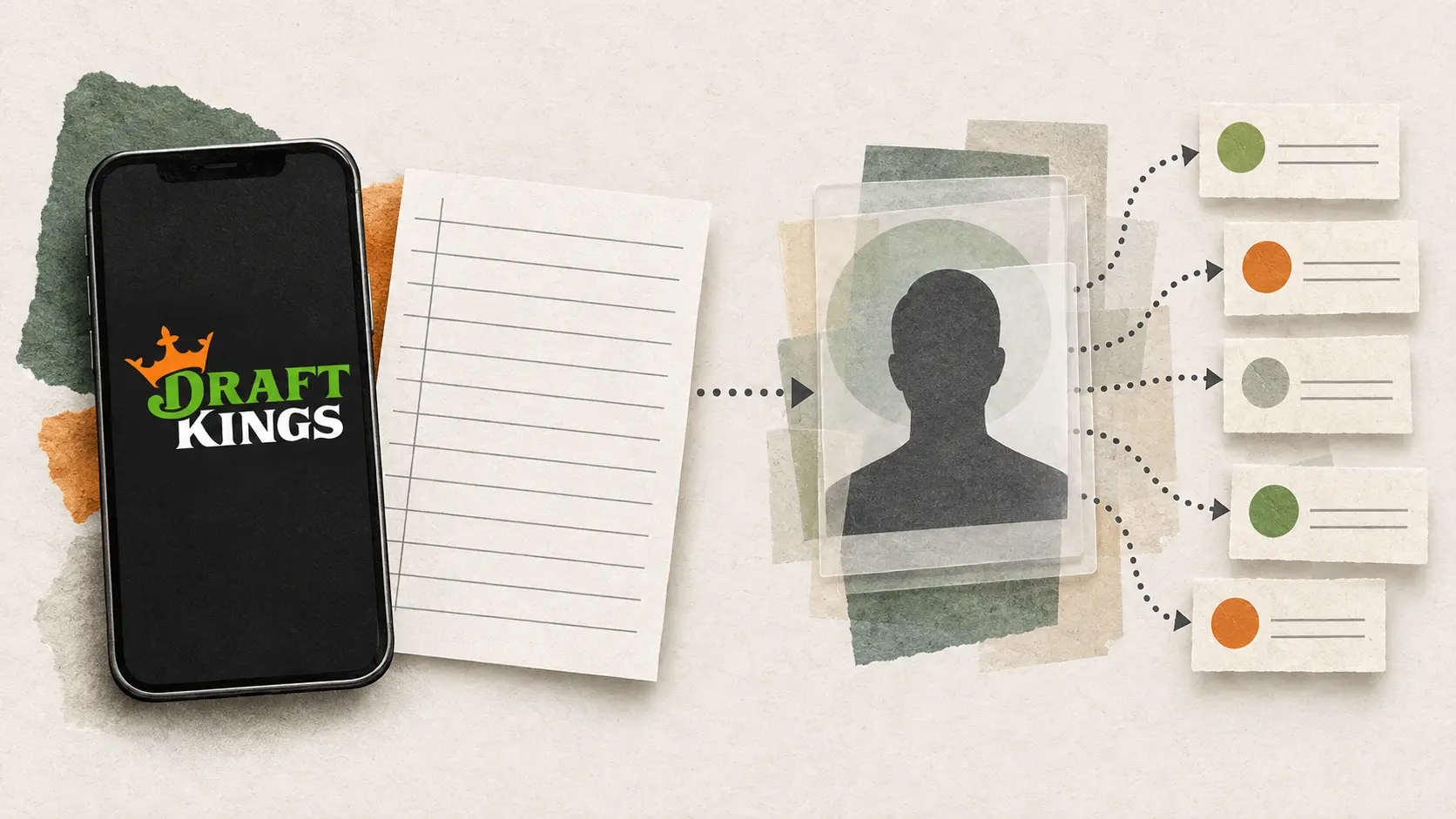
A transaction history can establish that a wager was placed at a particular time and later settled. A profile can add an interpretation: a classification of commercial value, an estimate of future activity or a prediction of responsiveness to an offer. Some classifications can be produced through ordinary rules; calling every field an AI prediction would overstate the evidence.
Recorded activity
What did I do?
- Bets placed
- Stakes and timestamps
- Recorded results
Illustrative record categories
Customer profile
What might the company infer?
- Responsiveness to promotions
- Customer-value classification
- Predicted betting activity
Historical UK examples; a current US inventory is unverified
Offer explanation
Why this particular bonus?
- Information used for that decision
- Applicable rules and timing
- Any overrides that affected the offer
Evidence needed to explain a decision; not obtained here
A profile alone may not explain an offer. This comparison does not guarantee that each category exists, is retained or must be disclosed.
Explaining a particular bonus requires another connection. A retained profile might describe a customer without showing which information was used when that offer was selected. Useful evidence would identify the relevant inputs, applicable rules and timing. This research has not obtained that decision record from a US operator.
A historical UK file shows what profiling can contain
There is a documented example beyond general privacy-policy language. Cracked Labs’ 2022 investigation, commissioned by Clean Up Gambling, examined data-access responses involving two UK Sky Betting & Gaming customers from 2020–2021. Its technical report describes one disclosed CSV containing 186 profile attributes, some of them empty.
| Documented field category | Function described by Cracked Labs |
|---|---|
| Promotional influence | Responsiveness to promotions |
| Customer value band or score | Classification of commercial value |
| Live football betting probability | Predicted in-play betting activity |
| Cross-sell product | A product identified for recommendation |
| Win-back margin | Estimated value over the following 12 months if the customer returned |
These are historical UK examples, not a verified inventory of current US sportsbook records. The report does not establish that every attribute was a prediction or that these fields selected a documented individual bonus. Their importance is more specific: they demonstrate how a customer file can contain conclusions and expectations alongside recorded activity.
Personalized sportsbook bonuses have a commercial purpose
DraftKings’ March 2026 investor presentation supplies the financial context. The company presents customer analytics as a driver of personalization and reports the following figures on slide 39.
Promotional spending in 2025
$400
million
DraftKings says it automated and personalized this promotional spending through AI.
Margin on promotional wagers
+13
percentage points
Reported increase in sportsbook net revenue margin on promotional wagers.
Derived unit conversion: +1,300 basis points ÷ 100.
These measure promotional spending and a company margin change. They are not individual customer losses or Massachusetts-only figures.
The margin conversion is straightforward: 100 basis points equal one percentage point, so 1,300 divided by 100 equals 13 percentage points. It is not a 13% relative increase. The presentation does not supply a starting margin on that slide, and these company-reported aggregates do not establish what happened to any individual customer or what was spent in Massachusetts.
A bonus is a cost the operator expects to justify through customer activity. Personalization aims to improve that calculation. That commercial logic can coexist with relevant, convenient offers, but it gives customers a reason to ask how they have been classified. A reward’s friendly presentation does not explain the business decision behind it.
What Massachusetts access rights establish
Massachusetts’ sports-wagering privacy rules provide a concrete starting point. Section 257.04 addresses requests for copies of personal information and descriptions of its use, including relevant records held by vendors and subcontractors. It provides for machine-readable access and written decisions, with reasons for denial and directions for complaints to the commission.
That framework supports asking about retained information beyond transactions. It does not expressly promise a particular marketing score, an operator’s source code or an explanation of every offer. The scope of the records, applicable exceptions and the response itself still need examination. Massachusetts provisions should not be presented as a nationwide guarantee.
This distinction matters for accountability. A rule can establish an access process without demonstrating what a customer actually receives. The next useful evidence would be redacted responses that can be compared with the requests that produced them.
What to ask for in a sportsbook data request
DraftKings directs customers to its Privacy Center, accessible through their account, to request personal information. Its help page says transaction history may be included and describes a typical US response period of 45 days, with possible extensions. That is the company’s stated process; Section 257.04 does not itself specify that deadline.
STEP 1: DEFINE THE INFORMATION
Alongside account and transaction records, request any retained marketing classifications, inferred attributes or predictions concerning you, with explanations of their meaning and use. Identify a relevant time period.
STEP 2: IDENTIFY THE OFFER
If a particular promotion matters, provide its date and description. Request any retained records connecting that offer to information about you, including relevant vendor-held information. Do not assume such a decision log exists.
STEP 3: READ THE RESPONSE
Compare the response with the categories requested. Look for definitions, the scope searched and reasons for omissions or refusal. Where something is unclear, distinguish records that do not exist from records withheld under an exception.
This is a checklist of requests, not a guarantee of disclosure. This article reviewed public procedures and documented historical responses; it did not submit or test a current US request. An absent field alone cannot establish concealment. It may never have existed, may no longer be retained or may be subject to a valid exception.
Access also differs from changing how information is used. Sky Betting & Gaming’s current UK privacy statement separates direct marketing, personalized marketing and cookie-controlled advertising. Stopping messages therefore should not be assumed to stop every form of personalization. Its policy illustrates the distinction; customers elsewhere need to check their own operator’s applicable controls.
Our view: transparency should follow the prediction
Dyutam’s view is that useful customer access should extend to understandable retained conclusions about the customer. Returning a field name without its meaning may satisfy an export format while leaving the recipient unable to interpret it. If a classification is disclosed, its purpose, relevant date and status as a prediction deserve a plain-language explanation.
This is an editorial standard for useful disclosure, not a claim that every element is legally required today. A prediction can be uncertain, outdated or appropriate for one purpose and misleading for another. Explaining those limits would help a customer assess the record without requiring the company to publish its entire model.
The Massachusetts review can establish how operators use these systems. Customer-access evidence would address a complementary issue: whether the person being classified can understand the information retained about them. Research should test that process with actual responses, and criticism should follow what those responses establish.
AI’s expanding role makes that standard more consequential. As recommendations and offers become more individualized, a customer needs a way to distinguish their recorded behavior from a company’s interpretation of it. Data access also serves a different purpose from limits, breaks or exclusion; Dyutam’s responsible-gambling resources cover those forms of support and control.
FAQs
Is downloading betting history the same as requesting all personal information?
No. A history export describes activity. An access request can ask for other retained personal information, subject to the applicable rules and exceptions.
Can I request predictions or classifications about me?
You can include retained inferences and classifications in your request. Whether particular records exist or must be disclosed depends on the circumstances and applicable rules.
Will the response explain why I received a bonus?
Not necessarily. A customer profile may not show which inputs and rules selected a particular offer. This research has not obtained that explanation from a current US request.
Must the sportsbook disclose its algorithm?
Access to personal information does not automatically mean access to source code. Massachusetts’ cited access provision does not expressly guarantee an individual-offer explanation.
Does opting out of marketing stop profiling?
Do not assume it does. Operators may distinguish messaging, personalized offers and cookie-controlled advertising. Check the controls and policy that apply to your account and jurisdiction.
Does an omitted score prove something was hidden?
No. A record may not exist, may no longer be retained or may fall within an exception. Assess the response and any stated reasons before drawing that conclusion.
KEY TAKEAWAYS
- Separate the records — activity, inferred information and an individual-offer explanation answer different questions.
- Keep the evidence in scope — historical UK profile fields do not establish what a current US operator retains or discloses.
- Ask precisely — specify retained information and relevant offers, then assess the response and its stated limits.
- Demand intelligibility — Dyutam’s view is that disclosed classifications should come with explanations customers can understand.
Sources
- September 24, 2026 commission meeting, discussion from 16:00 — Massachusetts Gaming Commission
- 205 CMR 257: Sports Wagering Data Privacy, including Section 257.04 — Massachusetts Gaming Commission
- 2025 annual report, product and technology descriptions — DraftKings
- 2026 Investor Day presentation, slide 39 — DraftKings
- Privacy Center overview and access-request process — DraftKings
- Digital Profiling in the Online Gambling Industry: project background and commissioning disclosure — Cracked Labs
- Technical report, pages 13 and 18–20 — Cracked Labs
- Privacy statement, marketing and customer-rights sections — Sky Betting & Gaming

Aevan Lark
Aevan Lark is a gambling industry veteran with over 7 years of experience working behind the scenes at leading crypto casinos — from VIP management to risk analysis and customer operations. His insider perspective spans online gambling, sports betting, provably fair gaming, and prediction markets. On Dyutam, Aevan creates in-depth guides, builds verification tools, and delivers honest, data-driven reviews to help players understand the odds, verify fairness, and gamble responsibly.
Related coverage

Brazil Betting Ban Orders Legal Sites Shut by October 6
Brazil orders licensed sportsbooks and online casinos to close, with withdrawal protections and an October 6 site shutdown.

New York Sues Polymarket; Company Files Federal Challenge
New York seeks gambling penalties against Polymarket US as the company brings the dispute into federal court.

Kalshi Egg Money Ad: Payouts, Profits and Hedging
Kalshi’s egg ad turns bakery knowledge into grocery money. Its settlement rules and losing outcome complicate the pitch.