Scuba Weight Calculator
Updated:Calculate the proper amount of weight needed for optimal buoyancy control in scuba diving.
Why Proper Weighting Matters
Proper weighting is one of the most critical skills in scuba diving, yet it's often overlooked or misunderstood. Achieving neutral buoyancy - the ability to hover effortlessly in the water column - requires the correct amount of weight to offset the positive buoyancy created by your wetsuit, BCD, and body composition.
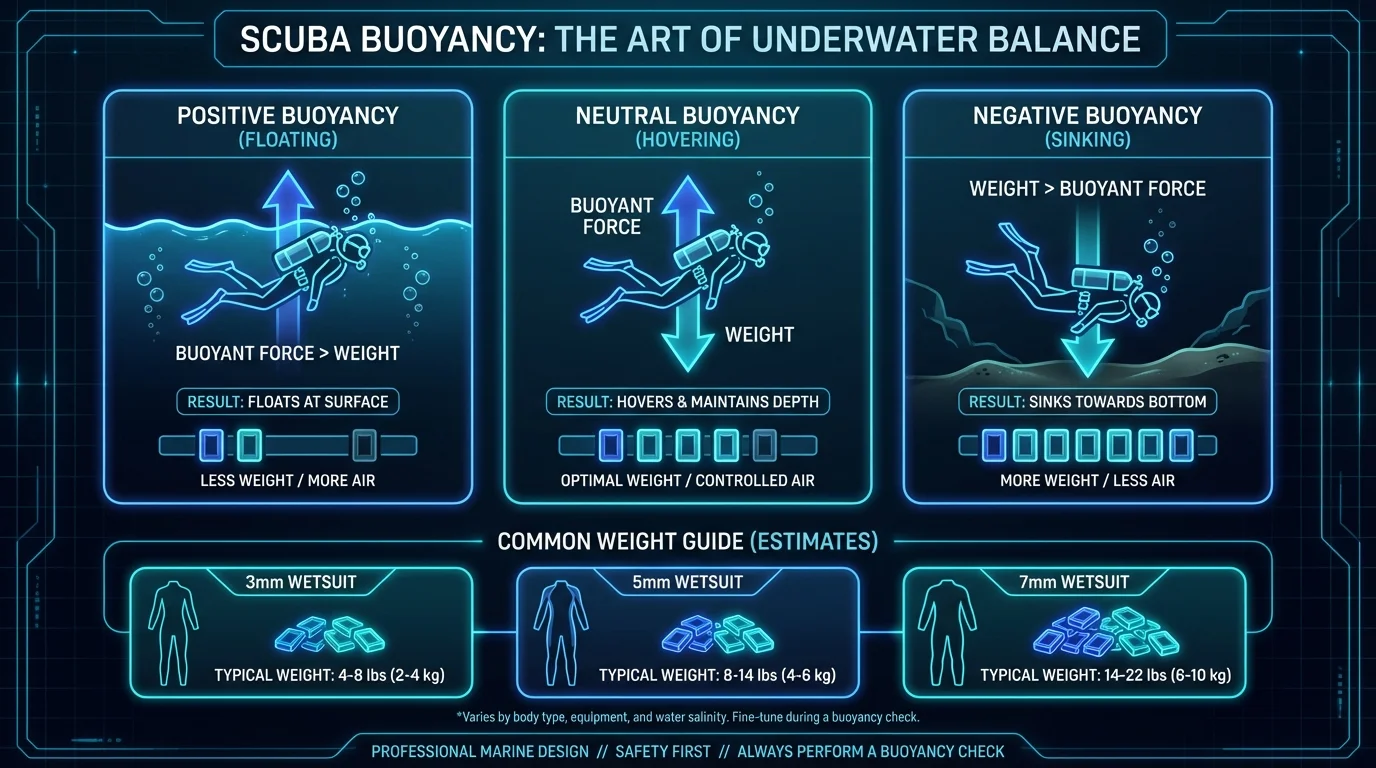
Diving with improper weighting creates multiple problems:
- Overweighting: Causes excessive air consumption as you constantly add air to your BCD to compensate, creates difficulty controlling ascents, increases fin fatigue from fighting to stay off the bottom, and can lead to dangerous rapid ascents if you lose weight.
- Underweighting: Makes descending difficult or impossible, requires swimming down which wastes energy and air, causes you to float up uncontrollably, and can prevent you from completing your dive or safety stop.
- Proper Weighting: Minimizes air consumption, allows precise depth control, reduces fatigue, protects marine life from fin damage, and dramatically improves your overall diving experience and safety.
Understanding Diving Buoyancy Factors
Several factors determine how much weight you need to achieve neutral buoyancy:
How to Calculate Scuba Diving Weight
The total weight required for scuba diving is the sum of several factors, primarily based on your body weight and the equipment you're wearing.
Total Weight = (Body Weight × Build Factor) + Wetsuit Factor + Saltwater Adjustment + Tank Adjustment + Experience Adjustment
Step-by-Step Example Calculation
- Base Weight: 170 lbs Average Build (10%) = 17 lbs
- Exposure Protection: 5mm Full Wetsuit = +14 lbs
- Water Type: Saltwater = +4 lbs
- Tank Type: Aluminum 80 = +5 lbs
- Result: 17 + 14 + 4 + 5 = 40 lbs Total
Body Weight and Composition
Your body weight is the foundation of the calculation. A common starting point is 10% of your body weight, but this varies significantly based on body composition. Muscle is denser than fat, so muscular divers need less weight while those with higher body fat percentages need more. Our calculator accounts for three body types:
- Lean/Muscular: Less buoyant, requires less additional weight (factor: 0.08 of body weight)
- Average Build: Standard buoyancy (factor: 0.10 of body weight)
- Heavy/Higher Body Fat: More buoyant, requires more weight (factor: 0.12 of body weight)
Wetsuit Thickness and Material
Neoprene wetsuits are filled with tiny gas bubbles that provide thermal insulation but also create significant positive buoyancy. The thicker the wetsuit, the more neoprene material, and therefore more buoyancy to compensate for:
- No Wetsuit/Skin: No additional buoyancy
- 3mm Wetsuit: Add approximately 6-9 lbs
- 5mm Wetsuit: Add approximately 12-15 lbs
- 7mm Wetsuit: Add approximately 18-21 lbs
- Drysuit: Add approximately 14-18 lbs (plus additional weight for undergarments)
Important Note: Neoprene compresses at depth, losing buoyancy. At 99 feet (30m), a wetsuit loses about 50% of its surface buoyancy. This is why proper weight distribution and BCD control are essential throughout your dive.
Saltwater vs Freshwater
Water density has a significant impact on buoyancy. Saltwater is approximately 2.5% denser than freshwater due to dissolved salts. This increased density provides more buoyancy, requiring additional weight:
- Freshwater: Baseline (no adjustment)
- Saltwater: Add 3-5 lbs (typically 4 lbs for average divers)
Tank Type Buoyancy Characteristics
Different scuba tanks have vastly different buoyancy characteristics when full versus empty:
- Aluminum 80 (AL80): Starts at -1.5 lbs when full, becomes +4 lbs when empty. You need approximately 4-6 lbs more on your weight belt to compensate for this 5.5 lb swing.
- Steel HP100: Remains negative throughout the dive (-2 lbs full, -0.5 lbs empty). Allows you to wear 4-6 lbs less weight compared to aluminum tanks.
- Steel LP85: Similar to HP100, stays negative (about -2 lbs throughout).
Experience Level Adjustment
Experience affects weighting recommendations:
- Beginner (<20 dives): Add 2-3 lbs to make descents easier and build confidence. Focus on getting comfortable underwater before fine-tuning weight.
- Intermediate (20-100 dives): Use calculated weight as-is. Begin experimenting with removing 1-2 lbs at a time to find your optimal amount.
- Advanced (100+ dives): Reduce by 1-2 lbs. Experienced divers have better buoyancy control and can use minimal weight for maximum efficiency and air consumption.
The Buoyancy Check Procedure
Before your first dive with new equipment or in a new environment, perform a proper buoyancy check at the surface:
- Full Equipment: Wear all your diving gear including your tank with 500 PSI (nearly empty, simulating end-of-dive conditions).
- Deflate BCD: Remove all air from your BCD completely.
- Vertical Position: Float vertically in water too deep to stand, holding a normal breath.
- Eye-Level Float: You should float at eye level with water at the top of your head. If you're too high, add weight. If you sink, remove weight.
- Exhale Test: When you fully exhale, you should slowly sink. If you remain floating, add more weight. If you sink rapidly, remove weight.
- Fine-Tune: Adjust in small increments (1-2 lbs) until you achieve perfect neutral buoyancy at eye level when holding a normal breath.
Common Weighting Mistakes
- Using Too Much Weight: The most common error. Many divers carry 5-10 lbs more than needed, destroying their air consumption and buoyancy control.
- Never Reassessing: Your weight needs change with different gear, water types, and exposure suits. Always recheck when conditions change.
- Skipping the Buoyancy Check: Guessing your weight or using the same amount as your buddy is dangerous and ineffective.
- Poor Weight Distribution: Even with the correct total weight, improper distribution (all on the waist, head-down positioning) creates trim problems.
- Not Accounting for New Wetsuits: Brand new neoprene has more buoyancy than compressed older suits. You may need 2-4 lbs more with a new wetsuit.
- Forgetting About Tank Changes: Switching from aluminum to steel or vice versa requires a 4-6 lb adjustment.
Weight Distribution Tips
Proper weight distribution is as important as total weight:
- Use integrated weight systems or weight belts positioned at hip level for optimal trim
- Consider moving 2-4 lbs to tank trim pockets if you dive head-down
- Ankle weights (1 lb each) can help correct feet-up positioning, but address buoyancy control issues first
- Distribute weight evenly left-to-right to prevent rolling
Frequently Asked Questions
How much weight do I need for scuba diving?
The amount of weight needed varies based on your body type, wetsuit thickness, water type (salt vs fresh), and tank type. Generally, you need 2-4 lbs more in saltwater, 2-3 lbs per millimeter of wetsuit thickness, and adjustments based on whether you use aluminum or steel tanks.
What is the buoyancy check procedure?
To check proper weighting, float at the surface with an empty BCD and a nearly empty tank (500 PSI). Hold a normal breath - you should float at eye level. Exhale completely and you should slowly sink. If you sink on a normal breath, remove weight. If you stay afloat when exhaling, add weight.
Why do I need more weight in saltwater?
Saltwater is denser than freshwater, providing more buoyancy. You typically need 2-4 lbs more weight in saltwater compared to freshwater to achieve neutral buoyancy. The Dead Sea requires even more weight due to its extremely high salt content.
How does wetsuit thickness affect buoyancy?
Wetsuits are made of neoprene, which contains gas bubbles that provide positive buoyancy. Thicker wetsuits have more neoprene and therefore more buoyancy. Generally, add 2-3 lbs per millimeter of wetsuit thickness. A 7mm wetsuit might require 14-21 lbs more weight than diving without exposure protection.
Should beginners wear more weight?
Beginner divers often slightly overweight themselves (1-2 lbs extra) to make it easier to descend and stay down. However, overweighting can lead to excessive air consumption, difficulty controlling ascents, and fin fatigue. As you gain experience, gradually reduce weight to find your optimal amount.
Do aluminum and steel tanks require different weighting?
Yes. Aluminum 80 tanks become positively buoyant when empty (about +4 lbs), requiring more weight on your belt. Steel tanks remain negatively buoyant when empty (about -2 lbs), allowing you to wear less weight. This 6 lb difference significantly affects your overall weighting needs.