Training Pace Calculator
Train smarter, not harder with science-based paces
What is Training Pace?
Training pace refers to the specific speed at which you should run during different types of workouts to maximize physiological adaptations. Running at the right intensity is crucial for improvement. Running too fast on easy days leads to burnout and injury, while running too slow on hard days limits the training stimulus needed for adaptation.
The VDOT Principle
This calculator uses principles similar to Jack Daniels' VDOT methodology, which estimates your current fitness level based on recent race performance and prescribes training paces for different physiological systems. VDOT (V-dot-O2max) represents your running potential and translates race times into actionable training intensities.
If you ran a 5K race in 25:00 (5:00/km pace):
Easy Pace: ~7:30/km | Threshold: ~5:36/km | Interval: ~5:00/km
These paces target different energy systems for optimal training adaptation.
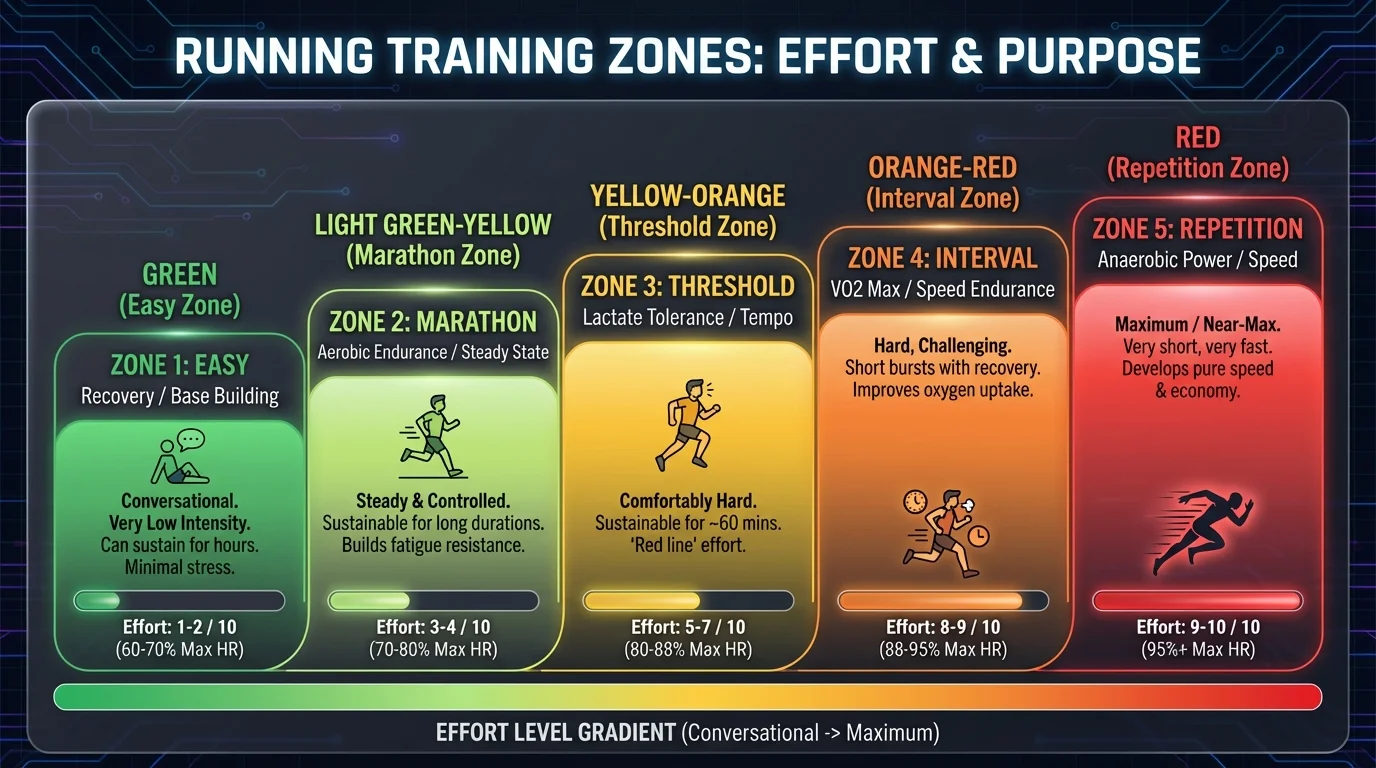
Understanding the Five Training Zones
Each training zone targets a specific physiological adaptation. Training in the correct zone ensures you get the maximum benefit from each workout.
- Easy / Recovery Pace: Conversational pace for building aerobic base. Use for warm-ups, cool-downs, recovery runs, and most of your weekly mileage (60-80% of total). Should feel comfortable enough to hold a full conversation.
- Marathon Pace: The sustainable aerobic pace for long races. Trains steady-state aerobic metabolism and glycogen efficiency. This is typically your goal marathon race pace.
- Threshold (T-Pace): "Comfortably hard" pace where your body clears lactate as fast as it produces it. Best for tempo runs of 20-40 minutes. Improves lactate clearance and running economy.
- Interval (I-Pace): Near VO2 Max intensity (hard effort, about 3K-5K race pace). Used to increase your maximum aerobic capacity. Typically done in 3-5 minute intervals with recovery between.
- Repetition (R-Pace): Very hard, anaerobic speed work (faster than mile pace). Improves running economy, neuromuscular coordination, and mechanics. Short reps of 200m-600m with full recovery.
How to Use Training Paces Effectively
These paces are guidelines, not rigid rules. Environmental factors like heat, humidity, altitude, and terrain significantly affect perceived effort. Always prioritize effort level over exact pace, especially on easy days.
For best results, base your training paces on a recent race performance (within the last 4-6 weeks) that reflects your current fitness. A 5K or 10K typically provides the most accurate prediction for training intensities.
Frequently Asked Questions
What are these training zones?
Easy: Conversational pace for recovery. Marathon: Aerobic strength. Threshold: "Comfortably hard", clears lactate. Interval: VO2 max development. Repetition: Speed and economy.
Which race result should I use?
Use a recent race result that reflects your current fitness. Do not use a personal best from years ago. A 5K or 10K is often the best predictor for training intensities.
How accurate are these training paces?
These paces are estimates based on VDOT principles. Individual factors like heat, humidity, terrain, and fatigue affect actual training paces. Use these as guidelines and adjust based on effort level.