Spread Betting in Sports – What is it? How it Works with Examples
Read a point spread, grade the final margin and compare the cost of buying a half-point using the actual price on each ticket.

Spread betting is the great equalizer of sports betting. It’s the reason you can bet on a mismatch like the Chiefs vs. the Panthers and still have a sweat in the 4th quarter. Unlike the Moneyline, where you simply pick a winner, the spread asks a more nuanced question: by how much will they win or lose?
A point spread and its price are two separate parts of the ticket. Read the handicap first, then check what the quoted price returns for the same stake.
Example: a favorite at −3 wins the spread bet if it wins by four or more, pushes if it wins by exactly three, and loses otherwise. At −3.5 that same three-point win loses. The price beside the spread sets the payout.
What Does “Spread” Mean in Betting?
The “point spread” (or just “the spread”) is a margin of victory set by oddsmakers to level the playing field between two unequal teams. You can use a Spread to Moneyline Converter to see how these spreads translate to win probabilities.
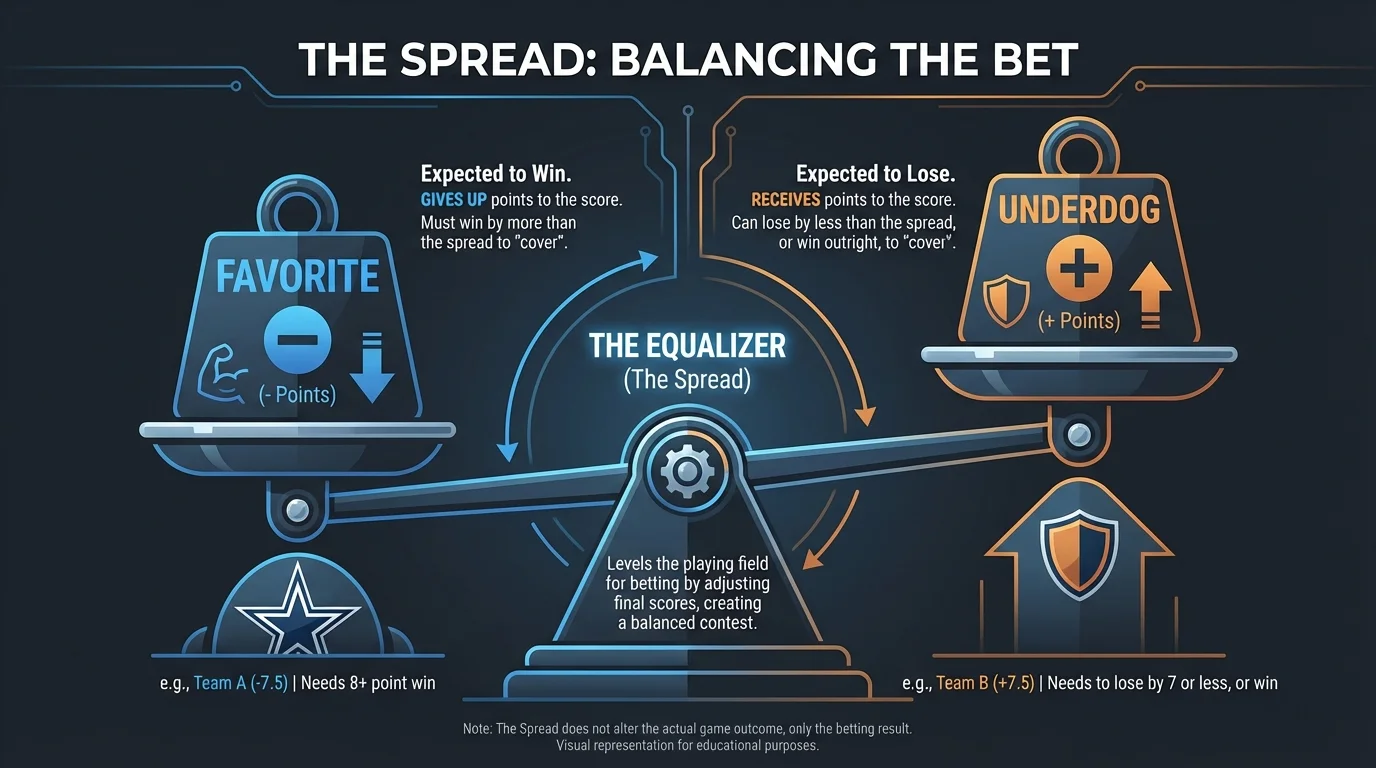
- The Favorite: The team expected to win. They must win by more than the spread amount to “cover”.
- The Underdog: The team expected to lose. They can lose the game but still win the bet if they lose by less than the spread amount (or win outright).
How to Read the Lines: Plus (+) vs. Minus (-)
When you look at a betting board, you’ll see numbers like -3.5 or +7. These symbols tell you the story. Understanding these odds is crucial, and an Odds Converter can help you switch between American, Decimal, and Fractional formats if needed.
The Minus Sign (-): The Favorite
If a team has a minus sign (e.g., Chiefs -4.5), they are the favorite.
- The Requirement: They must win the game by 5 points or more.
- The Math: Final Score – 4.5 > Opponent Score.
The Plus Sign (+): The Underdog
If a team has a plus sign (e.g., Ravens +4.5), they are the underdog.
- The Requirement: They must either win the game outright OR lose by 4 points or less.
- The Math: Final Score + 4.5 > Opponent Score.
Real-World Example: NFL Spread
Let’s look at a classic matchup.
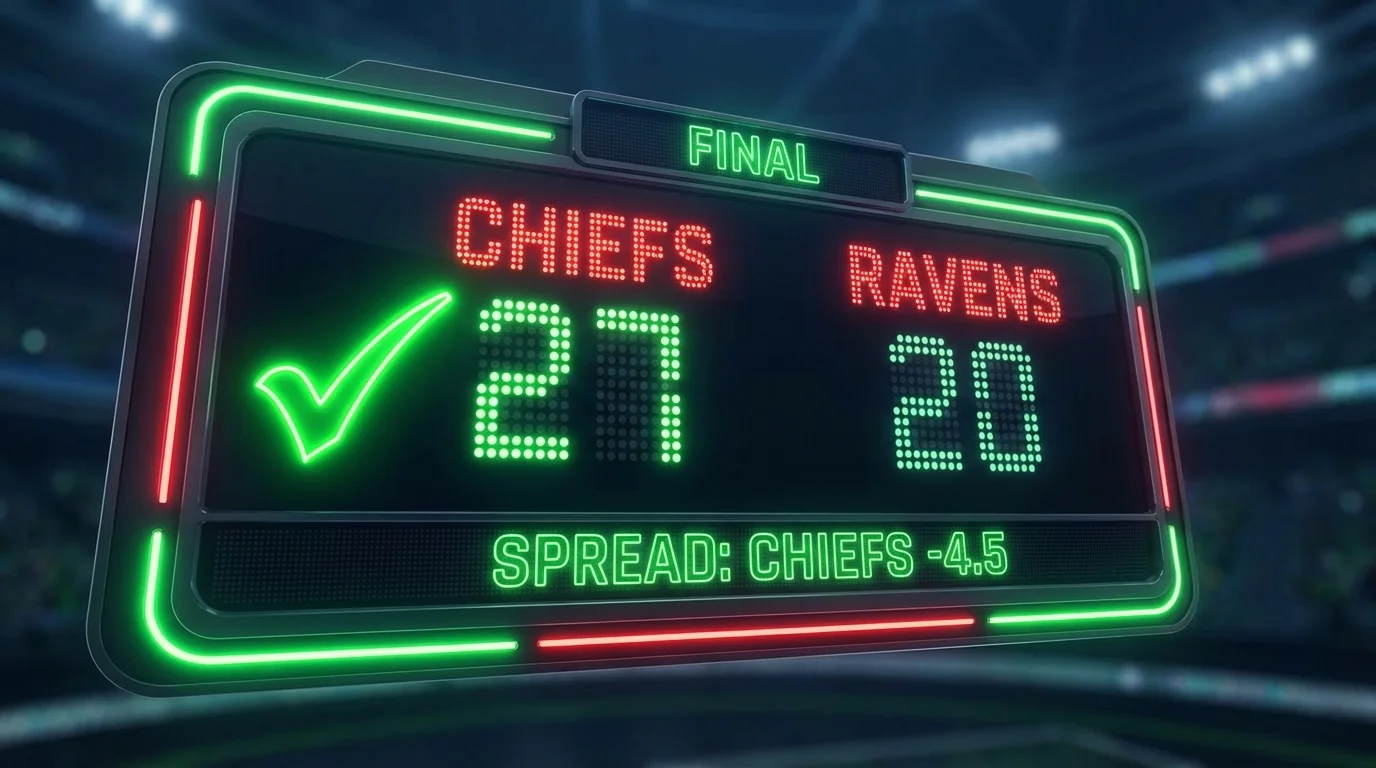
- Kansas City Chiefs (-4.5)
- Baltimore Ravens (+4.5)
Scenario A: Chiefs Win Big
Score: Chiefs 30, Ravens 20.
Margin: 10 points.
Result: Chiefs cover the -4.5 spread easily. (30 – 4.5 = 25.5, which is > 20).
Scenario B: A Close Game
Score: Chiefs 27, Ravens 24.
Margin: 3 points.
Result: Ravens win the bet. Even though the Chiefs won the game, they didn’t cover the 4.5 points. (27 – 4.5 = 22.5, which is < 24).
🎯 Did I Cover? (Outcome Simulator)
Key Numbers: The Secret Edge in NFL Betting
In NFL betting, not all point spreads are created equal. Certain margins of victory occur far more frequently than others due to the scoring structure of football (touchdowns worth 6-7 points, field goals worth 3). These are called key numbers, and understanding them is essential for serious bettors.
The Most Important Key Numbers
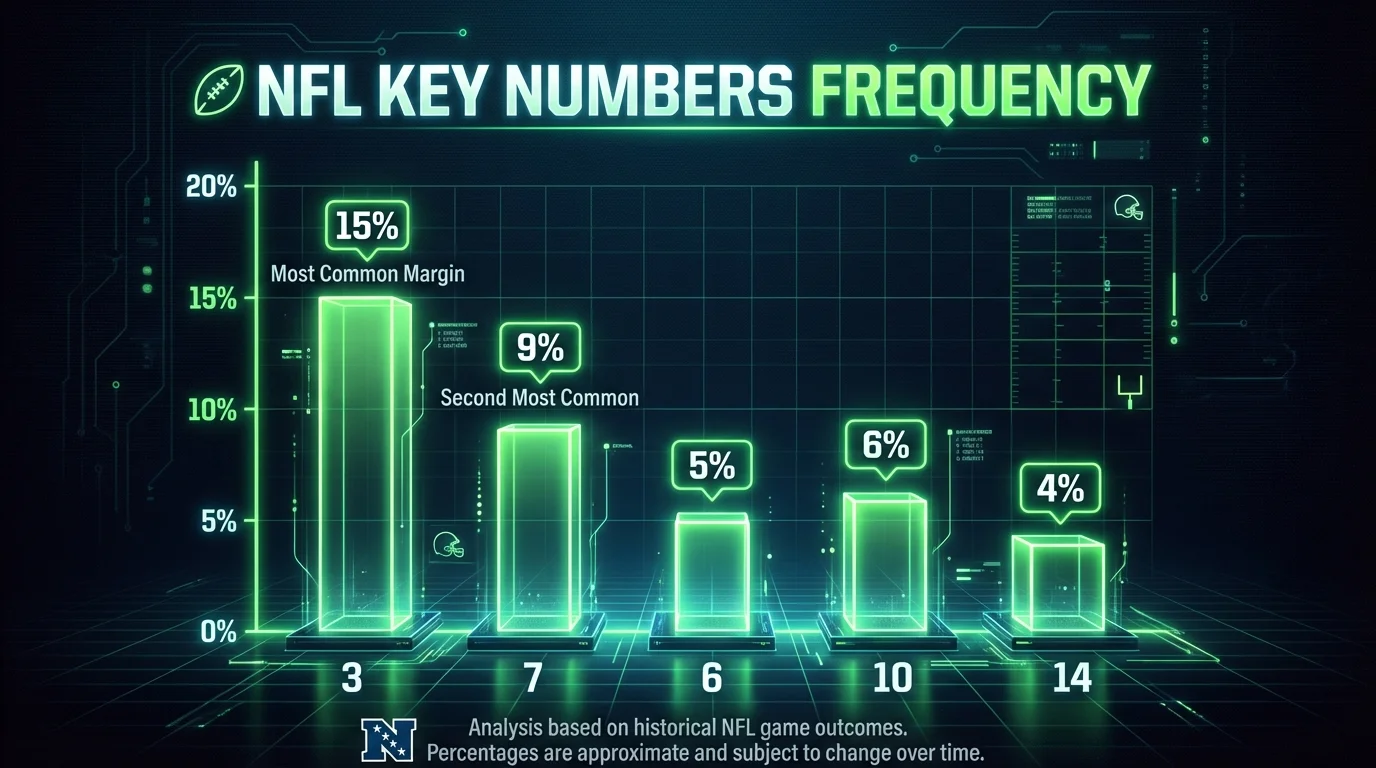
Three and seven are familiar NFL margins because field goals score three and a touchdown plus extra point scores seven. The chance that a particular favorite wins by exactly three depends on both teams and the line. A league-wide frequency for either side winning by three cannot be substituted for that chance.
How to Use Key Numbers
Line Shopping Becomes Critical: If one sportsbook has Chiefs -3 (-110) and another has Chiefs -2.5 (-120), the -2.5 at higher juice might actually be the better bet. You’re paying 10 cents extra in juice to avoid pushing on the most common margin in football.
The Half-Point Matters Most at Key Numbers: The difference between +2.5 and +3 is far more valuable than the difference between +4.5 and +5. Always prioritize getting on the right side of 3 and 7.
Spread Betting Across Different Sports
While the concept of spread betting remains the same, each sport has unique characteristics that affect how spreads work.
NBA Point Spreads
Basketball spreads are typically much larger than football spreads due to higher scoring. You’ll regularly see spreads of -10, -12, or even -15 for mismatches.
- Higher Variance: A team can go on a 10-0 run in two minutes, making large comebacks more common than in football.
- Key Numbers: Unlike NFL, there are no significant key numbers in NBA. Every margin is roughly equally likely.
- Garbage Time: Trailing teams often score meaningless points late in blowouts, which can affect spread outcomes without affecting who wins.
- Rest and Travel: Back-to-back games and cross-country travel significantly impact performance. Sharp bettors heavily weight these factors.
NHL Puck Lines
In hockey, the spread is called the “puck line” and is almost always fixed at 1.5 goals.
- Standard Line: Favorites are -1.5, underdogs are +1.5. Unlike NFL/NBA, this number rarely changes.
- Low Scoring Impact: Hockey games average around 6 total goals, so a 1.5 goal spread is significant. The favorite must win by 2+ goals.
- Empty Net Factor: When trailing teams pull their goalie in the final minutes, it often results in a 2-goal margin, making -1.5 favorites cover late.
- Adjusted Juice: Instead of moving the line, books adjust the odds. You might see -1.5 (+150) for underdogs and -1.5 (-180) for favorites.
MLB Run Lines
Baseball’s version of the spread is the “run line”, also fixed at 1.5 runs.
- Standard Line: Like hockey, it’s -1.5 for favorites and +1.5 for underdogs.
- Starting Pitcher Dependent: The run line value changes dramatically based on who’s pitching. An ace on the mound can make -1.5 much more attractive.
- Bullpen Games: When teams don’t have a traditional starter, run lines become less predictable.
- Late Inning Swings: Baseball’s lack of a clock means big innings can happen at any time, making run lines volatile until the final out.
College Football and Basketball
College sports often feature much larger spreads than their professional counterparts.
- Massive Mismatches: You’ll see spreads of -30 or higher when top programs play smaller schools.
- Less Sharp Money: With hundreds of games each week, oddsmakers can’t be as precise, creating more opportunities for value.
- Motivation Factors: Rivalry games, bowl eligibility, and conference standings create unique situational angles.
Alternate Spreads and Buying Points
Most sportsbooks offer “alternate lines” that let you adjust the spread in exchange for different odds. This is called buying points (if you’re making the spread more favorable) or selling points (if you’re accepting worse numbers for better odds).
How Alternate Spreads Work
Standard line: Chiefs -7 (-110)
Alternate options might include:
- Chiefs -6.5 (-120): Pay more juice for a half-point better spread
- Chiefs -6 (-130): Pay even more for a full point advantage
- Chiefs -3 (-200): Much easier to cover, but you’re risking $200 to win $100
- Chiefs -10 (+130): Harder to cover, but you’d win $130 on a $100 bet
When Buying Points Makes Sense
| Favorite’s final margin | Risk $110 at −3.5 (−110) | Risk $110 at −3 (−125) |
|---|---|---|
| Wins by at least 4 | +$100 | +$88 |
| Wins by exactly 3 | −$110 | $0 (refund) |
| Wins by 2 or less, ties or loses | −$110 | −$110 |
🪝 Compare Two Spread Prices
The Math Behind Buying Points
The price for the extra half point varies by sportsbook and event. Compare like stakes. In the example above, you give up $12 of profit on every win by four or more to save $110 on every win by exactly three.
The −3 ticket has higher expected return when 110 × P(win by exactly 3) exceeds 12 × P(win by 4+). Insert estimates for this particular team and matchup. The spread alone cannot make that decision.
Live Betting and In-Game Spreads
Live betting (also called in-play or in-game betting) allows you to bet on spreads that update in real-time as the game unfolds. This has become one of the fastest-growing segments of sports betting.
How Live Spreads Work
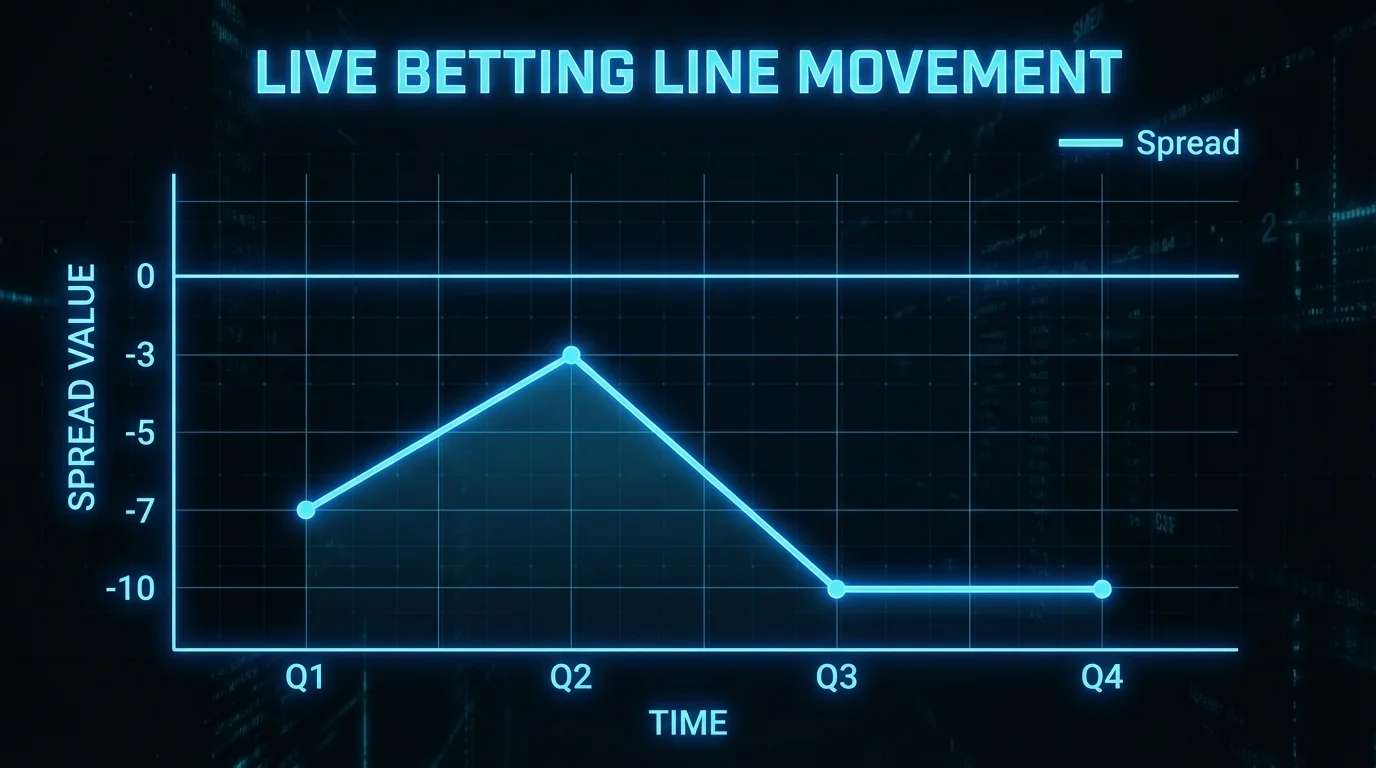
The spread adjusts continuously based on:
- Current Score: If the underdog jumps to an early lead, they might become the live favorite.
- Time Remaining: A 7-point deficit with 5 minutes left is very different from the same deficit at halftime.
- Game Flow: Momentum, injuries, and possession all factor into live odds.
- Pre-Game Expectations: If the Chiefs were -7 pre-game and lead by 3 at halftime, the live spread might be Chiefs -4.5 for the second half.
Live Betting Strategies
Fade the Overreaction: Markets often overreact to early scores. If a heavy favorite falls behind early, the live spread might offer value on them as the market panics.
Watch the Game: Unlike pre-game betting where you're analyzing stats, live betting rewards actually watching. You might see an injury or tactical change before it's reflected in the odds.
For a full-game hedge, write down both prices and stakes. Suppose you risk $110 on the underdog +7 at −110, then $110 on the opponent −3 at −110. Grade both on the full-game final margin.
| Favorite’s final margin | Net across both tickets |
|---|---|
| 2 or less, including an outright loss | +$100 − $110 = −$10 |
| Exactly 3 | +$100 and a push = +$100 |
| 4–6 | Two wins = +$200 |
| Exactly 7 | A push and +$100 = +$100 |
| 8 or more | −$110 + $100 = −$10 |
Be Quick: Live lines move fast. By the time you click "place bet," the line may have already changed. Most books require you to accept line changes or have your bet rejected.
Risks of Live Betting
- Higher Juice: Live spreads often carry -115 or -120 juice instead of the standard -110.
- Emotional Decisions: The fast pace can lead to impulsive bets. Stick to your strategy.
- Information Disadvantage: Professional bettors with advanced models and faster data feeds have an edge in live markets.
Teaser Bets: Adjusting Multiple Spreads
A teaser is a special type of parlay that lets you adjust the point spread in your favor on multiple games. In exchange for the better numbers, all legs must win (like a parlay), and the payout is reduced.
How Teasers Work
The most common teaser is a 6-point, 2-team teaser in the NFL:
Original Lines:
- Chiefs -7 (-110)
- Bills -3 (-110)
6-Point Teaser:
- Chiefs -1 (moved 6 points from -7)
- Bills +3 (moved 6 points from -3)
Standard Payout: A 2-team, 6-point teaser typically pays around -120 to -110 (bet $120 to win $100).
The "Wong Teaser" Strategy
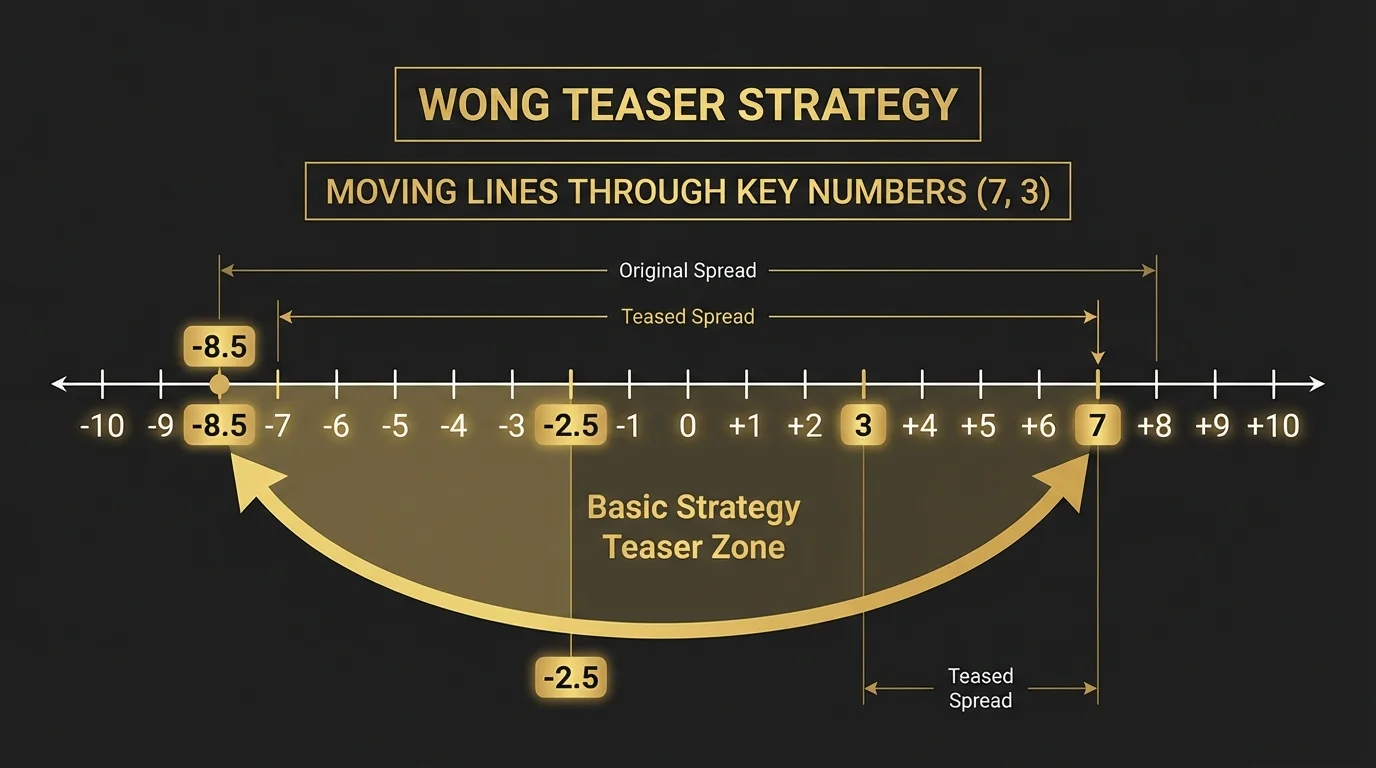
Named after gambling author Stanford Wong, this strategy identifies the mathematically optimal teasers in NFL betting:
- Tease favorites from -7.5 through -8.5 down through -1.5 to -2.5: You cross both key numbers (7 and 3).
- Tease underdogs from +1.5 through +2.5 up through +7.5 to +8.5: Again, crossing both 3 and 7.
The theory: by crossing both key numbers in both directions, you're maximizing the value of your 6 points.
Teaser Variations
- 6-point teaser: Most common. Standard payout around -110 to -120 for 2 teams.
- 6.5-point teaser: Slightly better odds but reduced payout.
- 7-point teaser: Even more favorable spread adjustments, lower payout (around -140).
- 10-point teaser: Often called a "sweetheart teaser." Much bigger adjustments but usually requires 3+ teams and has reduced payouts.
When to Avoid Teasers
- NBA Teasers: Without key numbers, teasing basketball spreads offers less mathematical value.
- Large Favorites: Teasing a -14 favorite to -8 still requires an 8-point win. You're not crossing valuable numbers.
- 3+ Team Teasers: Each additional leg dramatically reduces your probability of winning. Stick to 2-team teasers.
Spread vs. Moneyline: Which is Better?
Many beginners start with the Moneyline (just picking the winner) but graduate to the spread. Here is why.
COMPARING YOUR OPTIONS
Moneyline Betting
- Goal: Simply pick the winner
- Payouts: Varies wildly (e.g., -500 for big favorites)
- Best for: Close matchups or underdog upsets
- Risk: High cost for favorites (bet $500 to win $100)
Spread Betting
- Goal: Pick who covers the margin
- Payouts: Consistent (usually -110)
- Best for: Lopsided games or "buying" points
- Risk: Standard risk (bet $110 to win $100)
How to Place a Spread Bet (Step-by-Step)
Ready to make your first spread bet? Follow this simple process.
STEP 1: FIND MATCHUP
Navigate to the NFL or NBA section of your sportsbook app.
STEP 2: FIND SPREAD
Look for the "Spread" column (usually next to team names).
STEP 3: SELECT TEAM
Click the spread number (e.g., -3.5) to add it to your bet slip.
STEP 4: ENTER STAKE
Type your wager amount. The slip calculates your potential payout.
STEP 5: CONFIRM BET
Review your selection and click "Place Bet" to finalize.
The "Vig" or "Juice" (-110)
You'll often see the number -110 next to the spread (e.g., Chiefs -4.5 (-110)). This is the price of the bet.
WHY THE VIG MATTERS
At -110 odds, you need to win 52.4% of your bets just to break even. This means you must be better than average to profit long-term. Sharp bettors obsess over finding -105 or even +100 lines because every cent of reduced juice directly impacts your bottom line.
At −110, a winning $110 stake earns $100 and returns $210. The lost $110 on a losing bet and the $100 profit on a win produce the 52.38% break-even rate if pushes are excluded. A sportsbook’s daily profit also depends on its liabilities and the results.
⚡ Instant Payout Calculator
3 Pro Strategies for Spread Betting
1. Shop for Lines: Different sportsbooks have different lines. Book A might have Chiefs -7, while Book B has Chiefs -6.5. That half-point ("the hook") is massive. Always take the better number.
2. Calculate Value: Don't just bet on gut feeling. Use an Expected Value Calculator to determine if the odds offered are truly favorable compared to the real probability of the outcome.
3. Fade the Public: If 80% of the public is betting on the favorite, but the line isn't moving (or is moving the other way), pros might be on the underdog. Smart bankroll management, like using the Kelly Criterion, is essential when following these contrarian strategies.
To compare tickets, keep the team, settlement period and stake fixed. Grade the whole-point push and the adjacent half-point separately. Then compare the offered profit on every other winning outcome.
For a worked explanation, see how a push settles.
FAQs
Can I lose the game but win the bet?
Yes! If you bet the underdog (e.g., +7) and they lose the game by only 3 points, you still win your bet because they lost by less than the spread.
What happens if the spread is exactly the final score difference?
This is called a 'Push'. If the spread is -3 and the favorite wins by exactly 3, it is a tie. The sportsbook refunds your original bet amount.
What does 'ATS' mean?
ATS stands for 'Against The Spread'. It refers to a team's record specifically in relation to the point spread, not just their straight-up win/loss record.
Why does the spread change?
Oddsmakers move the line based on where the money is going (to balance their risk) or due to news like player injuries or weather changes.
What are key numbers in NFL betting?
Three and seven are prominent NFL scoring margins. What matters when buying a half point is the probability of your selected team finishing on that exact margin and the cost in reduced winning payouts.
What is the difference between a puck line and a point spread?
A puck line is hockey's version of the point spread, but it's almost always fixed at 1.5 goals rather than varying like NFL or NBA spreads. The favorite must win by 2+ goals, and the underdog can lose by 1 goal and still cover.
What is a teaser bet?
A teaser is a parlay where you get to adjust each spread in your favor (usually by 6 points in the NFL). In exchange, all legs must win and the payout is reduced. For example, teasing Chiefs -7 and Bills -3 would give you Chiefs -1 and Bills +3.
Can I bet on spreads during a live game?
Yes, live betting (or in-game betting) allows you to bet on spreads that update in real-time as the game progresses. The spread adjusts based on the current score, time remaining, and game flow. Live spreads often have slightly higher juice (-115 or -120).

Aevan Lark
Aevan Lark is a gambling industry veteran with over 7 years of experience working behind the scenes at leading crypto casinos — from VIP management to risk analysis and customer operations. His insider perspective spans online gambling, sports betting, provably fair gaming, and prediction markets. On Dyutam, Aevan creates in-depth guides, builds verification tools, and delivers honest, data-driven reviews to help players understand the odds, verify fairness, and gamble responsibly.
Related coverage
What Is a Push in Sports Betting? Ties Explained
A push returns your stake when results land exactly on the betting line. Learn how pushes affect spreads, parlays, and why the…
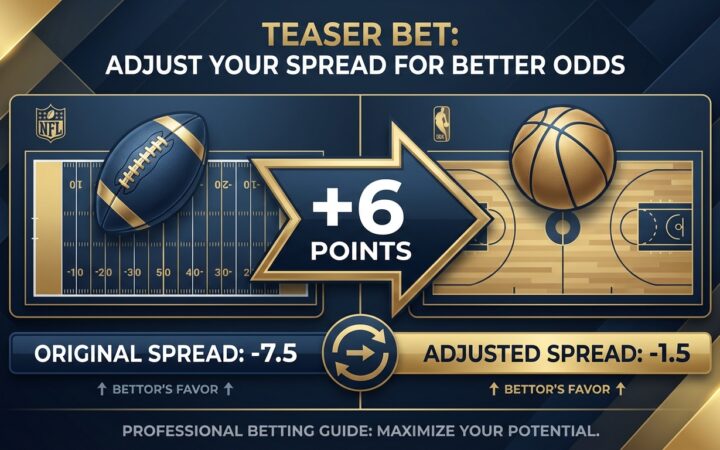
What Is a Teaser Bet? NFL & NBA Teasers Explained
Compare teaser prices, whole-ticket and per-leg break-even rates, and the sportsbook’s rules for pushed selections.
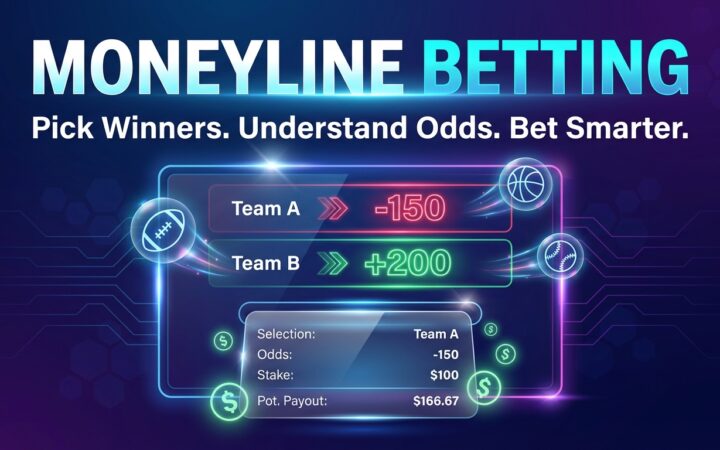
What Is Moneyline Betting? How It Works, Examples & Strategy
Use American odds to calculate a moneyline ticket’s profit and gross return, or compare draw-no-bet settlement with a three-way market.