Maryland Refiles Sweepstakes Ban After VGW Ignores Two Cease-and-Desists
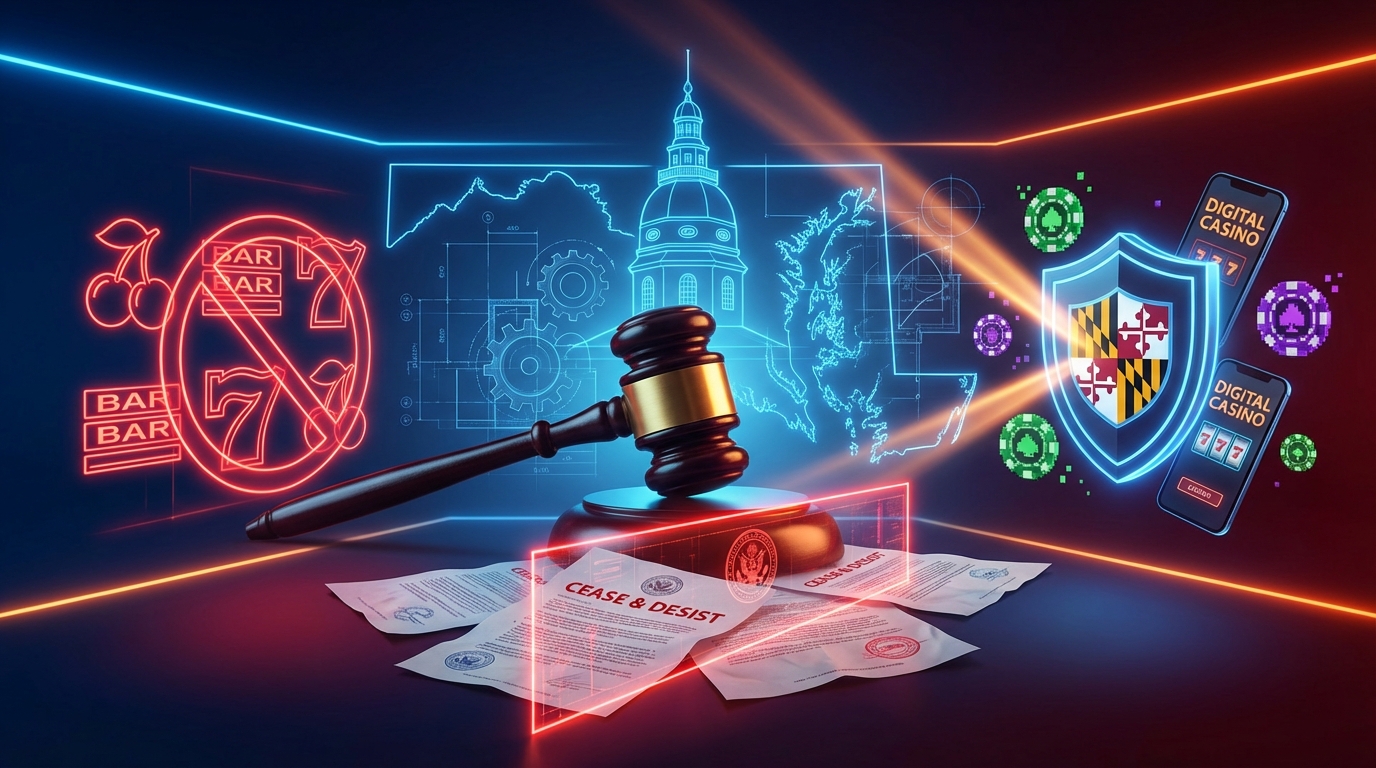
Maryland refiles SB112/HB295 to ban sweepstakes casinos after VGW ignored two cease-and-desist orders. Session opens January 14, ban effective July 1 if passed.
Maryland legislators have refiled twin bills to ban sweepstakes casinos as the 2026 session opens today—and this time they have ammunition: VGW, the operator behind Chumba Casino and LuckyLand Slots, has ignored not one but two cease-and-desist orders from state regulators, continuing to operate in defiance of explicit shutdown demands.
KEY FACTS AT A GLANCE
- Bills: SB112 (Senate) + HB295 (House)
- Title: “Gaming — Prohibition on Interactive Games and Revenue From Illegal Markets”
- Session: January 14 – April 13, 2026
- Effective date if passed: July 1, 2026
- Penalties: Misdemeanor, up to 3 years prison, up to $5,000 fine
- 2025 attempt: SB860 passed Senate 47-0, stalled in House
- VGW cease-and-desists: March 2025 (ignored), November 2025 (ignored)
VGW’s Defiance Becomes Legislative Fuel
The Maryland Lottery and Gaming Control Agency sent its first cease-and-desist to VGW on March 12, 2025, demanding the operator confirm whether it was conducting online gaming in the state and provide a breakdown of its offerings. VGW never responded.
Eight months later, on November 18, 2025, regulators sent a second order—this time with sharper language. The letter explicitly warned that continued non-compliance “may jeopardize the qualifications of Chumba Casino for any future Commission-issued license, registration, or certification.”
VGW called that bluff. As gaming attorney Daniel Wallach noted when sharing the letters, the company’s refusal to respond “could help support the revival of prohibition efforts in 2026.” Now legislators have their villain—an operator openly defying state regulators.
“We have reviewed your site(s) and see that [Lucky Land Slots and Chumba Casino’s] offerings contain the elements of gaming. Under Maryland law, gaming is illegal unless it is expressly authorized. The gaming that is being offered through your site is not legally authorized in Maryland.”
— Maryland Lottery and Gaming Control Agency, November 2025
What the Bills Prohibit
The legislation targets the core mechanic that makes sweepstakes casinos legally ambiguous: the dual-currency model. SB112 and HB295 explicitly prohibit operating platforms that utilize “multiple currency systems of payment allowing the player to exchange the currency for any prize or award or cash or cash equivalents.”
This is the Gold Coin / Sweeps Coin model exactly. Players purchase Gold Coins (not gambling), receive free Sweeps Coins as a “bonus,” then redeem Sweeps Coins for cash prizes (allegedly not gambling because they were free). The bill closes this loophole by targeting the structural mechanism, not individual operators.
WHAT THE BILLS DEFINE AS “INTERACTIVE GAMES”
- Games simulating casino-style gaming (slots, video poker, blackjack, roulette, craps, poker)
- Games simulating lottery games (draw games, instant win, keno, bingo)
- Games simulating sports wagering
- Any platform using multiple currency systems allowing exchange for cash or cash equivalents
Exception: Games that “solely award noncash prizes” are excluded.
What Failed in 2025—And Why It Might Pass Now
Last year’s attempt, SB860, passed the Maryland Senate with a unanimous 47-0 vote in early March. The bill would have criminalized not just operators but their suppliers, payment processors, geolocation partners, and affiliated parties—with penalties up to 3 years imprisonment and fines ranging from $10,000 to $100,000.
But SB860 stalled in the House Ways and Means Committee. It had a hearing but never received a vote before the session ended on April 7, 2025. VGW was among the parties that testified in opposition.
The 2026 version benefits from changed circumstances:
Why It Might Pass in 2026
- VGW ignored two cease-and-desists (optics favor legislators)
- California’s AB831 ban provides precedent
- Six states passed bans in 2025
- Bipartisan framework already built (47-0 Senate vote)
- Nine states now working on similar bills
Why It Stalled in 2025
- Ran out of session time
- House Ways and Means didn’t prioritize
- Industry lobbying (VGW testified in opposition)
- Less national momentum at the time
- First cease-and-desist had just been sent
The 2026 National Wave
Maryland joins a coordinated national push against sweepstakes casinos. According to Indiana Gaming Commission testimony, nine states are currently working on prohibition legislation: Maine, Arkansas, Maryland, Mississippi, Florida, Illinois, Ohio, Massachusetts, and Indiana itself.
| State | Bill | Status | Key Detail |
|---|---|---|---|
| Maryland | SB112 / HB295 | Session opens Jan 14 | Refiled after 2025 stall; VGW ignored 2 C&Ds |
| Mississippi | SB2104 | Filed Jan 9 | Up to 10 years prison, $100K fine |
| Indiana | HB 1052 | Hearing held Jan 6 | IGC testified in support; $100K civil penalties |
| Maine | LD 2007 | Hearing Jan 14 | Tied to iGaming legalization push |
| Virginia | HB161 | Pre-filed | Sweeps ban inside iGaming bill |
| Florida | HB 591 + companion | Pre-filed | Third-degree felony for operators |
States That Banned Sweepstakes in 2025
The 2026 legislative push follows a 2025 that saw sweepstakes casinos banned or effectively shut down in multiple states:
STATES THAT BANNED SWEEPSTAKES CASINOS IN 2025
- Montana — SB 555 signed May 12, effective Oct 1
- Connecticut — Ban effective Oct 1
- California — AB 831 signed, effective Jan 1, 2026
- New Jersey — Legislative ban
- New York — S 5935A became law Dec 2025
- Washington — Enforcement action
VGW has already shut down sweeps play in more than a dozen states, including Connecticut, Montana, New Jersey, and New York. The company exited California ahead of the January 1 deadline. But in Maryland, despite two regulatory orders, VGW continues operating—a posture that now serves as Exhibit A for legislators pushing prohibition.
The Casino Industry Push
Both bills were “introduced at the request of the Maryland Lottery and Gaming Control Agency.” Translation: incumbent gaming interests want sweepstakes competitors eliminated.
Maryland’s six licensed casinos generated nearly $2 billion in gaming revenue in 2025. They have substantial resources to lobby—and a clear financial interest in eliminating unregulated competitors that pay no state taxes and face no licensing requirements.
The regulator’s cease-and-desist letters make the economic argument explicit: sweepstakes casinos are “revenue from illegal markets” that undercuts the state’s regulated gaming industry.
Timeline: What Happens Next
JAN 14: SESSION OPENS
Maryland’s 90-day legislative session begins today
JAN-MAR: COMMITTEE
SB112 in Budget & Taxation; HB295 in Ways & Means
APR 13: SESSION ENDS
Bills must pass both chambers before deadline
JULY 1: EFFECTIVE
If passed, ban takes effect July 1, 2026
KEY TAKEAWAYS
- VGW’s defiance is the story — Two ignored cease-and-desists give legislators a clear villain
- Bipartisan support exists — 2025 version passed Senate 47-0; same framework returns
- Dual-currency model targeted — Bill language closes the Gold Coin / Sweeps Coin loophole
- National momentum building — Nine states working on prohibition bills in 2026
- Casino industry backing — Bills introduced at request of Maryland Lottery and Gaming Control Agency
- July 1 deadline looms — If passed, operators must exit Maryland by summer

Aevan Lark
Aevan Lark is a gambling industry veteran with over 7 years of experience working behind the scenes at leading crypto casinos — from VIP management to risk analysis and customer operations. His insider perspective spans online gambling, sports betting, provably fair gaming, and prediction markets. On Dyutam, Aevan creates in-depth guides, builds verification tools, and delivers honest, data-driven reviews to help players understand the odds, verify fairness, and gamble responsibly.
Related coverage

Jack Doherty Said a Shuffle Deal Barred Him From Posting. His YouTube Channel Kept Publishing
Doherty described a posting restriction. His YouTube channel published at least six later Shorts, whose contractual status remains unknown.

Vikas Garg Mahadev Case: ED’s ₹940.77 Crore Attachment Explained
The June attachment, ED’s allegations, Ebix’s corporate links and the company responses, explained from dated records.
A $10 Parlay Skips FanDuel’s Illinois Fee. A $10 Straight Bet Doesn’t.
FanDuel’s 50¢ Illinois fee favors qualifying parlays over equal-sized singles, with a steep cost for small stakes.