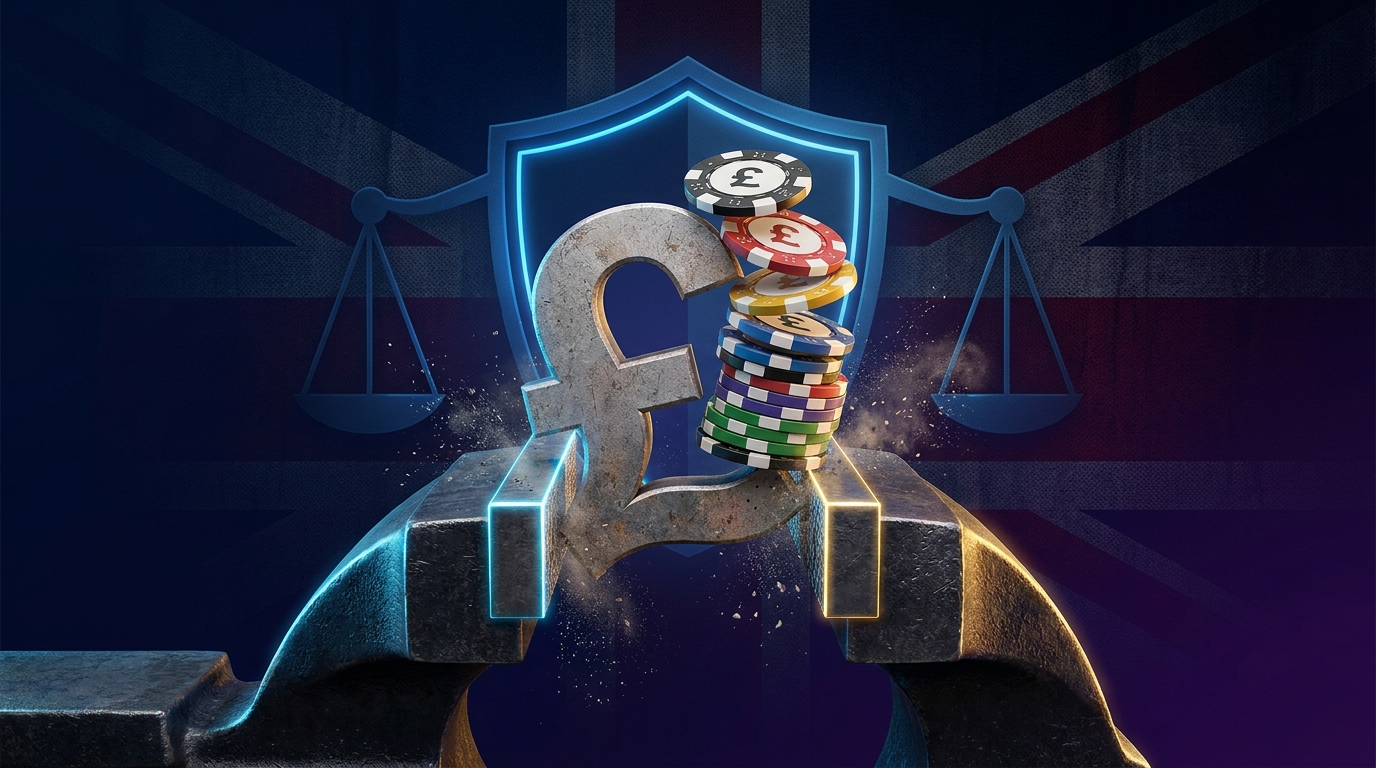
UKGC Licence Fees Rise 25% as Betfred Fined £900K
UK operators face a 25% UKGC licence fee rise from October — days after Betfred's £900,000 safer-gambling settlement.
In the space of 72 hours, Britain’s gambling operators learned two things: getting compliance wrong now costs £900,000 — and simply holding a licence is about to cost a quarter more. On 30 June 2026 the Gambling Commission announced a £900,000 settlement with the operator of Betfred.com over safer-gambling failures. Days later, the government confirmed the UKGC licence fee increase for 2026 — a headline 25% rise on most gambling licences from 1 October. Taken together, they mark a sector being squeezed from both sides at once.
Neither event is unusual on its own. What is striking is the timing: within the same week, the regulated industry was reminded that the cost of failing its customers and the cost of merely staying licensed are both climbing — and they are landing on top of a statutory levy and duty rises that were already reshaping operator margins.
KEY FACTS AT A GLANCE
- Fee rise: UKGC licence fees increase 25% from 1 October 2026, confirmed by DCMS on 30 June 2026
- Betfred settlement: £900,000 agreed by Petfre (Gibraltar) Ltd, operator of Betfred.com, for safer-gambling failures — announced 30 June 2026
- Online, not retail: the £900,000 action is against the online business only; no anti-money-laundering failings were cited
- A repeat: it is the second Commission penalty against a Betfred entity in about a year, after an £825,000 action against its retail arm in December 2025
- On top of everything else: a statutory levy (from April 2025) and rising betting duties are hitting operators in the same window
Getting compliance wrong: the £900,000 Betfred settlement
The £900,000 was agreed by Petfre (Gibraltar) Limited, the licensed entity that runs Betfred.com. It is important to be precise about who was penalised: this action targets Betfred’s online business, and the Commission characterises the money as a regulatory settlement — a payment in lieu of a financial penalty — rather than a fine in the strict sense. Crucially, the case was about social-responsibility and safer-gambling failings only. No anti-money-laundering breaches were cited.
The failings surfaced during a Commission compliance assessment of the online business in 2024. Investigators found that Petfre lacked sufficiently effective processes to identify indicators of harm — spend, time spent gambling and patterns of play — and lacked the means to take immediate, automated action when strong signals appeared. The most damning detail was a structural gap in its monitoring: once a customer’s account had been flagged for a safer-gambling review, it would not be flagged again for a further seven days. In that window, customers showing fresh signs of harm slipped through.
The consequence was laid bare in a single example. According to the Commission, in one instance a consumer lost £17,900 within 24 hours without an additional interaction. Petfre has since implemented interim mitigating controls and delivered an action plan, and no warning or third-party audit was attached to this settlement.
“The failure to implement an effective monitoring framework to identify and contact consumers at risk of harm at pace has resulted in a significant regulatory settlement. We expect all operators to learn from this case and read the public statement to ensure they do not make the same mistakes.”
— John Pierce, Commission Director of Enforcement, UK Gambling Commission
What makes the settlement sting is that it is not Betfred’s first brush with the regulator — nor even its first in the past year. The £900,000 online action follows an £825,000 penalty in December 2025 against Done Brothers (Cash Betting) Limited, the separate entity that trades as Betfred in its betting shops. That retail case did involve anti-money-laundering failings alongside social-responsibility breaches on gaming machines, and it came with a warning and a mandated third-party audit. Go back further and the pattern deepens: Petfre paid roughly £2.87m in 2022, and Done Brothers £3.25m in 2023. Seen against the wider regulatory tightening — the Commission has recently moved to cap wagering requirements at 10x — the group has now absorbed four separate actions in under four years.
Getting a licence: the confirmed 25% fee increase
If enforcement is the cost of getting compliance wrong, the second half of the squeeze is the cost of simply being licensed at all. After a consultation that ran from 27 January to 30 March 2026, the Department for Culture, Media and Sport confirmed a headline 25% increase to Gambling Commission licence fees, effective 1 October 2026 and introduced in a single step via secondary legislation. In the regulator's own words, the change is straightforward in headline but uneven in detail.
The 25% uplift is broad. It applies to annual operating licence fees, to application fees (which are charged at 75% of the relevant annual fee), to personal licences, to supplementary operating licences, to single machine permits, and to the fees for varying a licence or changing corporate control. Two carve-outs stop it being a flat 25% across the board: society lottery fees are frozen to protect returns to good causes, and general betting (limited) licences move onto a market-share basis tied to gross gambling yield rather than a straight uplift.
| Licence / fee category | Change from 1 October 2026 |
|---|---|
| Operating licence annual fees | +25% |
| Application fees | +25% (set at 75% of the annual fee) |
| Personal, supplementary & corporate-control fees | +25% |
| Single machine permits | +25% |
| Society lottery fees | Frozen — no change |
| General betting (limited) licences | Moved to a market-share (GGY) basis |
The industry did not ask for this. Of the 47 responses to the consultation — mostly from operators, suppliers and their trade bodies — the majority opposed any increase at all. The government had floated three options (a 30% headline, a 20% headline, and a 20% rise with a further 10% ringfenced for tackling the illegal market) before dropping all three in favour of a standalone 25%. Ringfencing was rejected; instead, according to trade publication iGaming Business, the Treasury committed a separate £26 million over three years to illegal-market enforcement.
The Commission's justification is structural. It has been running annual budget deficits of around £4 million, and says that even with the 25% uplift it will need to find at least £8 million in further efficiency savings over five years. The rationale traces back to the 2023 Gambling Act Review White Paper, which committed to reviewing the regulator's fees so it has adequate resources for an expanding set of duties. The last time fees were overhauled, in 2021, remote operators' fee bands rose by 55% — so for many online firms the 2026 change is the second significant increase in five years.
The wider squeeze: levy, duties and the cost stack
The fee rise does not land in isolation, and this is where the "both sides" framing becomes a genuine cost stack. Since 6 April 2025, operators have also paid a statutory levy — a separate charge under the Gambling Levy Regulations 2025, set as a percentage of gross gambling yield and banded by sector. Online operators pay the top rate of 1.1%, down to 0.1% for the smallest categories. The levy is projected to raise around £100 million a year, ringfenced for research, prevention and treatment of gambling harm, and it is collected by the Commission itself. It is a different instrument from the licence fee, with a different purpose — but to an operator's finance team it is another line item arriving in the same period.
Then there are the duties. According to the Betting and Gaming Council, Remote Gaming Duty rose from 21% to 40% in April 2026, and a new remote betting duty is due to lift the sports-betting rate from 15% to 25% in 2027 — with the Treasury expecting more than £1 billion a year in additional gambling tax by 2029. Stack the levy, the duties and the 25% fee rise together and the picture is of multiple cost lines converging on the same operators within roughly two years. It is the kind of pressure that has already prompted at least one brand to exit the UK market rather than absorb the arithmetic.
Is enforcement actually easing?
Here the story gets more nuanced than a simple "crackdown" headline. On paper, the Commission's enforcement totals have fallen: its 2024/25 annual report recorded £4.2 million in fines and settlements across 24 cases, down from £7.2 million the year before. The regulator frames that drop as a sign of improving compliance rather than a lighter touch — and points to a sharp rise in upstream activity, including more than 95,000 illegal gambling URLs removed and some 9,700 compliance activities in the year.
But the "totals are falling" reading is misleading if taken at face value. Several of the heaviest individual actions carry 2025 dates that fall into the following financial year — most strikingly a £10 million penalty against Platinum Gaming in October 2025, plus £2 million actions against Spreadex and Paddy Power Betfair. A single one of those actions already exceeds the entire reported £4.2 million total for 2024/25. In other words, the headline figure dipped while the register itself stayed busy — and Betfred's £900,000 is one more entry on it.
Industry reaction and the black-market warning
The industry's response to the cumulative burden has been blunt. The Betting and Gaming Council, which represents the regulated sector, has warned that layering higher costs onto operators risks pushing players toward unlicensed sites rather than making gambling safer.
"Steep tax rises layered on top of major new regulation will not make gambling safer."
— Grainne Hurst, Chief Executive, Betting and Gaming Council
The council's central argument is that cost pressure has a displacement effect. It cites figures from H2 Gambling Capital suggesting the UK black market took around £17 billion in stakes in 2025, and warns that this could climb above £33 billion by 2028 if regulated operators are priced out of competitiveness. That concern is not merely rhetorical: the scale of unlicensed play is a live issue that we have covered in the context of unregulated online gambling globally, and it dominated the agenda at this year's ICE Barcelona. The uncomfortable irony for policymakers is that a fee rise partly intended to fund the fight against the illegal market could, if the industry is right, hand that same market an advantage.
For its part, Betfred said it had co-operated fully with the Commission's investigation and had put an action plan in place to remedy the failings identified in its online business. Whether operators of its size can keep absorbing both halves of the squeeze — the rising cost of compliance and the rising cost of the licence itself — is the question the next 12 months will answer.
FAQs
How much are UKGC licence fees going up in 2026?
Most UK Gambling Commission operating, application and personal-licence fees rise by a headline 25% from 1 October 2026. The government confirmed the increase on 30 June 2026 after a consultation that ran from January to March 2026.
When does the UKGC licence fee increase take effect?
The increase takes effect on 1 October 2026. It is applied in a single step rather than phased in, and is introduced through secondary legislation.
Why are Gambling Commission licence fees increasing?
To close a structural funding shortfall and resource an expanding set of duties. The Commission has been running annual budget deficits of around £4 million, and says it will still need at least £8 million in further efficiency savings over five years even with the 25% rise. The change stems from the 2023 Gambling Act Review White Paper.
Do all gambling operators pay the 25% more?
Not quite. The 25% applies to most operating, application, personal, supplementary and machine-permit fees. But society lottery fees are frozen, and general betting (limited) licences move to a market-share basis tied to gross gambling yield instead of a flat uplift, so the effect varies by licence type.
Why was Betfred fined £900,000?
The Gambling Commission found safer-gambling failures at Petfre (Gibraltar) Ltd, which operates Betfred.com. The online business lacked effective automated processes to spot indicators of harm, and once an account was flagged for a safer-gambling review it would not be re-flagged for seven days. In one case a customer lost £17,900 in 24 hours without any further contact. The £900,000 is a regulatory settlement rather than a formal fine, and covered social-responsibility failings only — no money-laundering breaches were cited.
Has Betfred been penalised by the Gambling Commission before?
Yes. The £900,000 online settlement, announced on 30 June 2026, is the second Commission action against a Betfred entity in about a year. In December 2025 its retail arm, Done Brothers (Cash Betting) Ltd, was penalised £825,000 for anti-money-laundering and social-responsibility failings. Earlier settlements included roughly £2.87 million in 2022 and £3.25 million in 2023.
What is the UK gambling statutory levy, and is it the same as the fee rise?
No — they are separate. The statutory levy is a mandatory charge on operators of between 0.1% and 1.1% of gross gambling yield, in force since April 2025 and projected to raise around £100 million a year for research, prevention and treatment of gambling harm. The 25% increase is a licence fee that funds the Commission's own operations. Different instrument, different purpose.
What other costs are UK gambling operators facing in 2026?
Beyond the 25% licence-fee rise, operators are absorbing the statutory levy introduced in April 2025 and higher betting duties. According to the Betting and Gaming Council, Remote Gaming Duty rose from 21% to 40% in April 2026, with a new remote betting duty due to raise the sports-betting rate to 25% in 2027 — a stack of overlapping cost increases arriving in the same window.
KEY TAKEAWAYS
- Two hits in one week — a £900,000 Betfred settlement (30 June) and a confirmed 25% UKGC licence fee rise (1 July) framed a sector squeezed on cost and compliance at once.
- Online, not retail — the £900,000 is against Petfre (Gibraltar), which runs Betfred.com, for safer-gambling failings only; the separate £825,000 retail action in December 2025 is a different entity.
- The fee rise is broad but uneven — 25% on most licences from 1 October 2026, with society lotteries frozen and general betting (limited) licences moved to a market-share basis.
- It is a cost stack, not a single change — the statutory levy (from April 2025) and rising betting duties are landing in the same window as the fee increase.
- Enforcement isn't really easing — reported totals fell to £4.2m in 2024/25, but individual 2025 actions dwarf that figure, and the register keeps growing.
Sources
- Petfre (Gibraltar) Limited to pay £900,000 for regulatory failures — UK Gambling Commission
- Government response: changes to Gambling Commission fees from 1 October 2026 — DCMS / GOV.UK
- DCMS concludes consultation on gambling regulation funding — UK Gambling Commission
- £825,000 fine for Done Brothers (Cash Betting) Limited — UK Gambling Commission
- Statutory gambling levy: how the levy is calculated — UK Gambling Commission
- DCMS confirm 25% increase in Gambling Commission licence fees from October — iGaming Business

Aevan Lark
Aevan Lark is a gambling industry veteran with over 7 years of experience working behind the scenes at leading crypto casinos — from VIP management to risk analysis and customer operations. His insider perspective spans online gambling, sports betting, provably fair gaming, and prediction markets. On Dyutam, Aevan creates in-depth guides, builds verification tools, and delivers honest, data-driven reviews to help players understand the odds, verify fairness, and gamble responsibly.
Related coverage

Who Answers for a Gambling Ad? Greece’s Case Against 18 Influencers
Greek complaints against 18 influencers over alleged unlicensed gambling promotion: the case status, the fine framework and how Dutch rules compare.

Ohio Sends Cease-and-Desist Letters to 10 Prediction Market Firms
Ohio demands an immediate stop to sports contracts from ten prediction market firms, with written compliance confirmation due October 16.
UK Remote Gaming Duty Receipts Rise 108% in July
HMRC collected £589.7 million in July. Payment timing and the original forecasts explain what the increase proves.