Race Nutrition Calculator
Updated:Calculate your carbs, fluids, and sodium for triathlon, marathon, and cycling events
Calculate Your Nutrition Plan
The Importance of Race Nutrition
Proper nutrition can make or break your triathlon performance. While you can get through a sprint triathlon on pre-race fueling alone, anything longer requires a strategic approach to eating and drinking during the race. Studies show that inadequate fueling is one of the top reasons athletes fail to finish Ironman events or significantly underperform relative to their training.
Your body can only store approximately 2,000 calories of glycogen in muscles and liver combined. During an Ironman, you may burn 8,000-12,000 calories. Without proper fueling, you will "bonk" or "hit the wall" when glycogen stores deplete, causing dramatic performance decline, confusion, and potentially DNF (Did Not Finish).
How Many Carbs Per Hour Do You Need?
Carbohydrates are your primary fuel source during endurance events. The human gut can absorb approximately 60 grams of glucose per hour through a single transporter (SGLT1). However, research has shown that using multiple carbohydrate sources (glucose + fructose) can increase absorption to 90-120 grams per hour because fructose uses a different transporter (GLUT5).
The debate around high carbohydrate intake (90-120g/hour) has intensified as elite cyclists and Norwegian triathletes reportedly consume 110-120g per hour in competition. However, sports scientists like Dr. Dan Plews argue that age-group athletes should cap intake at 90g per hour, as the marginal gains from higher intake often come with increased GI distress risk.
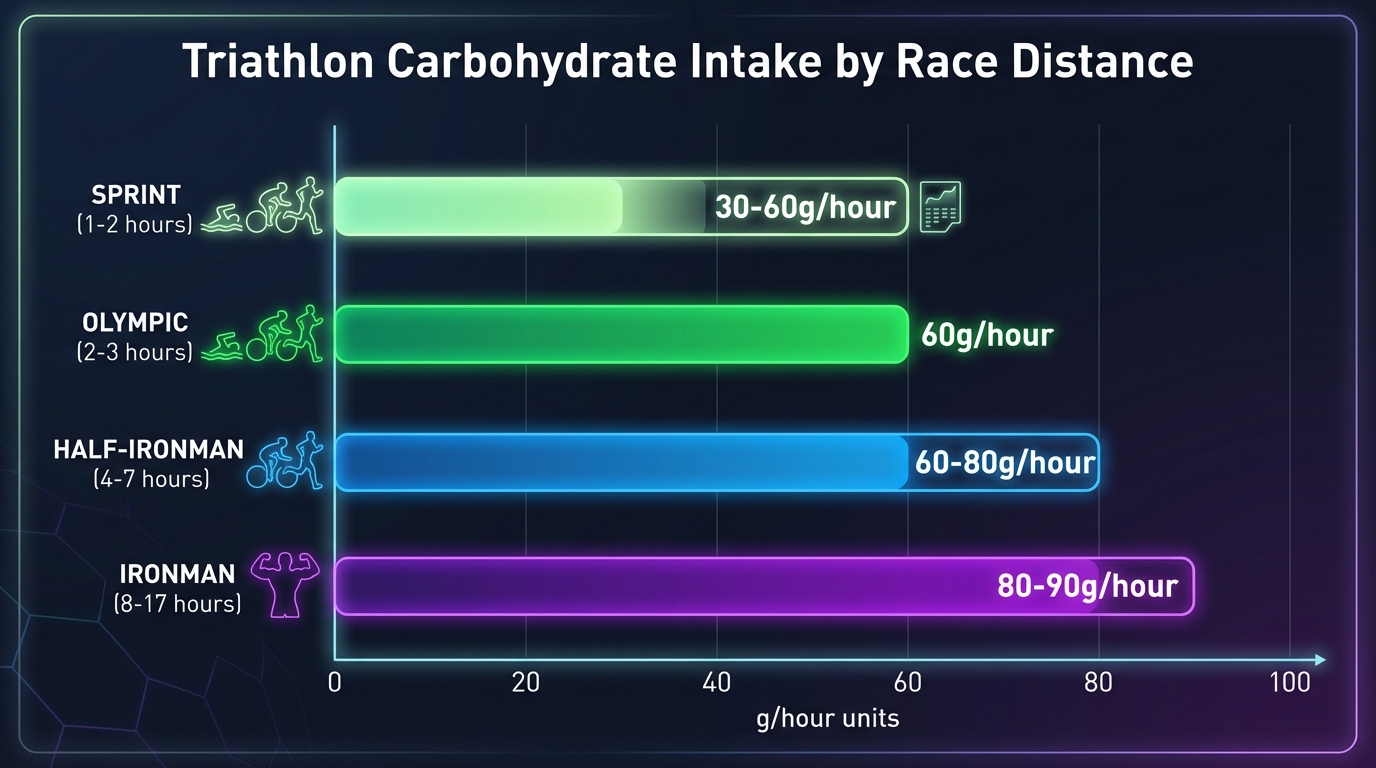
Sprint (1-2 hours): 30-60g/hour - Water and a gel or two may suffice
Olympic (2-3 hours): 60g/hour - Regular fueling becomes important
Half-Ironman (4-7 hours): 60-90g/hour - Consistent fueling is critical
Ironman (8-17 hours): 80-120g/hour - Higher intake possible with gut training
The Glucose-to-Fructose Ratio Debate
The traditional 2:1 glucose-to-fructose ratio has been the gold standard for decades, optimizing absorption at intakes up to 90g per hour. However, newer products like Maurten and reformulated SIS Beta Fuel use a 1:0.8 ratio, which research suggests may be more effective for athletes pushing 90-120g per hour. Professor Asker Jeukendrup, a leading authority on sports nutrition, clarifies that the optimal ratio depends on your target intake: 2:1 works best at 90g/hour, while 1:0.8 may be better for 120g/hour.
Gut Training: The Fourth Discipline
Your gut is trainable, just like your muscles. Research shows that 30-70% of Ironman athletes experience GI issues during races, often because they haven't trained their intestines to handle race-level carbohydrate intake. Gut training is the practice of consuming your target race nutrition during training sessions to improve intestinal absorption capacity.
A landmark study by Costa (2017) demonstrated that just 2 weeks of gut training (consuming 90g carbs per hour, 5 sessions per week) significantly improved tolerance and reduced symptoms of GI distress. The key is consistency: your gut adapts to what you regularly expose it to.
Weeks 1-2: 40-50g/hour - Establish baseline tolerance
Weeks 3-4: 60-70g/hour - Gradually increase during key sessions
Weeks 5-6: 80-90g/hour - Approach race-level intake in long sessions
Race Week: Practice exact race nutrition - Nothing new on race day
Hydration and Electrolytes
Fluid needs vary dramatically based on individual sweat rates, body size, and environmental conditions. The goal is to replace 80-100% of fluid losses without overdrinking (which can cause dangerous hyponatremia). A general guideline is 500-1000ml per hour, but personal sweat testing provides more accurate targets.
- Light Sweaters: 400-600ml/hour in moderate conditions
- Moderate Sweaters: 600-800ml/hour in moderate conditions
- Heavy Sweaters: 800-1200ml/hour, especially in heat
Sodium: The Critical Electrolyte
Sodium is the most important electrolyte to replace during long-course triathlon. Sweat sodium concentration varies from 200-2000mg/L depending on the individual. Salty sweaters (those with white salt stains on their kit) need more aggressive sodium replacement. Sodium maintains blood volume, supports nerve function, and helps prevent cramping.

Nutrition by Discipline
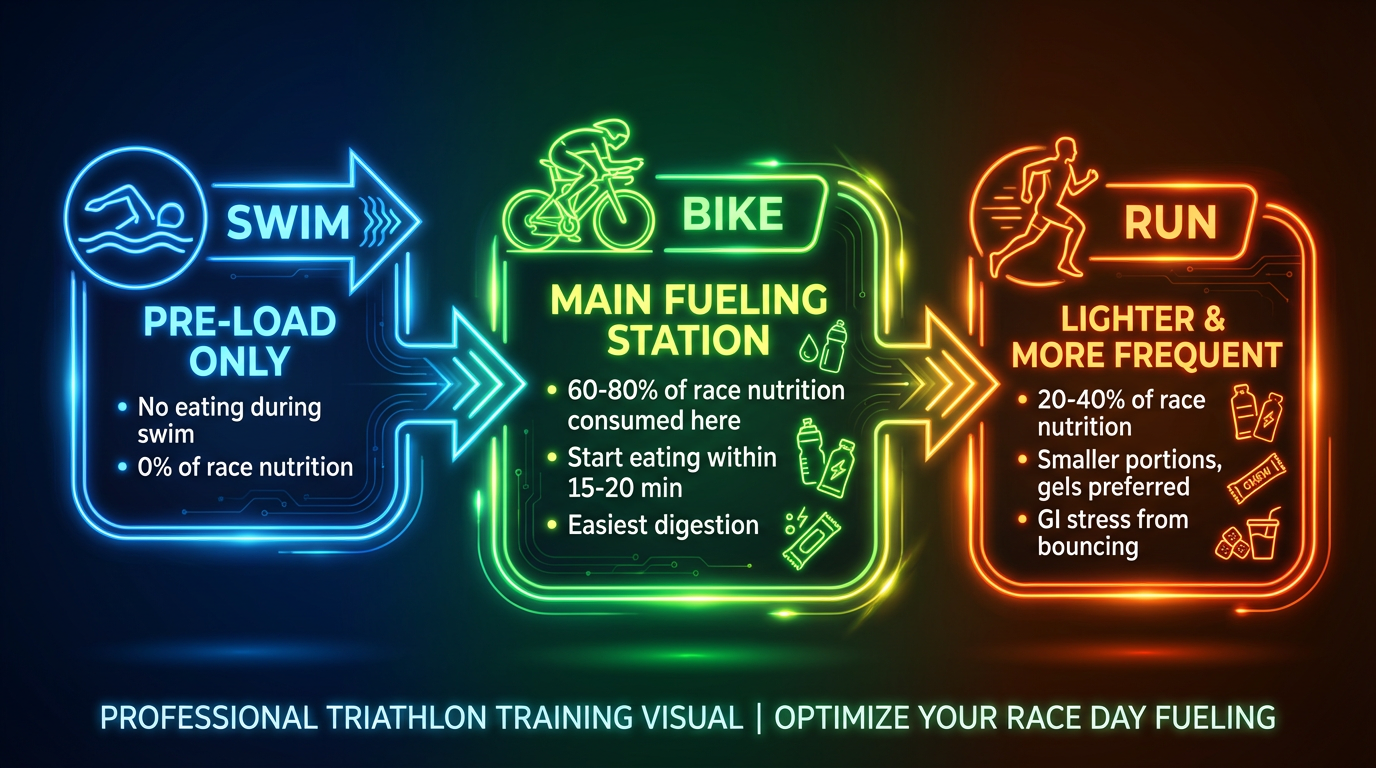
Swim: Pre-Load, Don't Eat
You cannot and should not eat during the swim. Focus on proper pre-race nutrition: eat your last meal 2-3 hours before start (300-500 calories, mostly carbs, low fiber/fat). Consider a small carb snack (gel or sports drink) 15-30 minutes before entering the water.
Bike: The Fueling Station
The bike leg is where 60-80% of your race nutrition should be consumed. Your digestive system works more efficiently while cycling compared to running. Start eating within the first 15-20 minutes of the bike, and set a timer or use distance markers to remind yourself to fuel consistently.
Every 15-20 minutes: Take 2-3 sips of sports drink (100-150ml)
Every 30-45 minutes: Consume a gel or portion of bar (20-30g carbs)
Every 1-2 hours: Take a salt tablet if needed (200-400mg sodium)
Run: Lighter and More Frequent
Running creates more GI stress due to the vertical bouncing motion. Reduce portion sizes and increase frequency. Stick to gels, liquid calories, and cola (the caffeine and sugar provide a boost). Walk through aid stations if needed to consume nutrition safely. In an Ironman marathon, the aid stations become your lifeline.
How to Prevent Bonking
Bonking (also called "hitting the wall" or "hunger knock") occurs when your muscle glycogen depletes faster than you can replenish it. The symptoms are unmistakable: sudden fatigue, confusion, irritability, and a dramatic loss of power. In severe cases, athletes cannot continue at any pace. Prevention is far easier than recovery.
- Carb Load Properly: Maximize glycogen stores 24-48 hours before race day with 8-10g of carbs per kg of body weight
- Start Fueling Early: Begin consuming carbohydrates within 15-20 minutes of exercise, before you feel hungry
- Fuel Consistently: Set a timer to consume 20-30g of carbs every 20-30 minutes throughout the race
- Match Intake to Intensity: Higher effort burns more glycogen—adjust your intake upward for harder segments
- Practice in Training: Train your gut to absorb race-level carbohydrates so you can execute on race day
If you do start to bonk, the recovery protocol is simple but slow: stop or dramatically reduce intensity, consume fast-acting carbs (gels, cola, sports drink), and wait 15-20 minutes for blood sugar to stabilize. Prevention is always better than cure.
Common Nutrition Mistakes
- Starting Too Late: Waiting until you feel hungry or tired means you are already behind. Start fueling in the first 20 minutes of the bike.
- Over-drinking Water: Drinking only water without electrolytes can dilute blood sodium levels, causing hyponatremia. Always include sodium in your hydration plan.
- Trying New Foods on Race Day: GI distress is common when athletes consume unfamiliar products. Test everything in training first.
- Ignoring Temperature: Hot conditions dramatically increase fluid and sodium needs. Adjust your plan based on race-day weather.
- Front-Loading Nutrition: Eating too much early can cause GI distress later. Spread intake evenly throughout the race.
Pre-Race Nutrition Tips
Your race-day nutrition actually begins 24-48 hours before. Carbohydrate loading (if done correctly) can increase glycogen stores by 20-40%. In the final 48 hours, focus on familiar, easily digestible carbohydrate-rich foods while reducing fiber and fat intake.
- 48 Hours Before: Increase carbohydrate intake to 8-10g per kg of body weight
- Night Before: Eat a familiar, carb-rich dinner (pasta, rice, potatoes). Avoid excessive fiber
- Race Morning: Eat 2-3 hours before start: 200-400g carbs, minimal fat/fiber
- 30 Minutes Before: Optional small carb boost (gel or sports drink)
Frequently Asked Questions
How many carbs per hour do I need for cycling or running?
For events under 2 hours, aim for 30-60g of carbs per hour. For events 2-3 hours, target 60-80g per hour. For ultra-endurance events over 3 hours, elite athletes consume 80-120g per hour using multiple carbohydrate sources (glucose + fructose). Start conservatively and train your gut to handle higher amounts over time.
How many gels do I need for a marathon or Ironman?
For a marathon (3-5 hours), plan for 8-15 gels worth of carbohydrates at 60-80g per hour. For an Ironman (10-17 hours), you need 20-35 gels worth, though most athletes use a mix of gels, bars, and sports drinks. One gel provides about 25g of carbs, so divide your hourly target accordingly.
What is gut training and why does it matter?
Gut training is the practice of consuming race-level carbohydrates during training to improve your intestinal absorption capacity. Research shows that 2-4 weeks of consistent practice (5+ sessions per week at target intake) significantly improves tolerance and reduces GI distress. Start at 40-50g per hour and progressively increase to your race target.
How do I prevent bonking during a race?
Bonking occurs when muscle glycogen depletes faster than you replenish it. Prevention requires starting fueling early (within 15-20 minutes of exercise), consuming carbohydrates consistently every 20-30 minutes, and never waiting until you feel hungry. Proper carb loading 24-48 hours before also maximizes starting glycogen stores.
What is the optimal glucose to fructose ratio?
The traditional 2:1 glucose-to-fructose ratio is optimal for intakes up to 90g per hour. For higher intakes (90-120g per hour), research suggests a 1:0.8 ratio may improve absorption by better utilizing both intestinal transporters (SGLT1 for glucose, GLUT5 for fructose). Products like Maurten and SIS Beta Fuel use this newer ratio.
How much sodium do I need per hour during endurance events?
Sodium needs vary dramatically based on individual sweat rate and concentration. Light sweaters need 300-500mg per hour, moderate sweaters 500-700mg, and heavy sweaters 700-1000mg or more. In hot conditions, increase by 30-50%. Signs you need more sodium include muscle cramps, bloating, and excessive thirst despite adequate fluid intake.
When should I start eating during a triathlon or long race?
Start fueling within the first 15-20 minutes of the bike leg (or running for non-triathlon events). Your glycogen stores are sufficient for the swim, but delaying nutrition on the bike creates a deficit you cannot recover from. Set a timer or use distance markers to remind yourself to fuel consistently before hunger sets in.
Should I use real food or gels during endurance events?
Both work, but gels and sports drinks are faster to digest and less likely to cause GI issues at race intensity. Real food (bananas, rice cakes, dates) works well for lower-intensity segments and ultra-events where variety prevents flavor fatigue. For events under 4 hours, gels and liquid calories are generally preferred for simplicity and absorption speed.