Triathlon Training Calculator
Updated:Plan your weekly training volume and distribution
Triathlon Training Fundamentals
Triathlon training presents a unique challenge: you must develop proficiency in three distinct sports while managing fatigue, preventing injury, and peaking at the right time. Unlike single-sport athletes who can focus all their energy on one discipline, triathletes must strategically balance swim, bike, and run training to maximize overall race performance.
The key to successful triathlon training lies in smart time allocation. Most age-group athletes have limited hours available for training, making efficiency paramount. This calculator helps you determine how to distribute your available training time across disciplines based on your target race distance, fitness level, and time until race day.
Time Distribution Across Disciplines
The typical triathlon training distribution follows a pattern optimized for race-day performance and injury prevention:
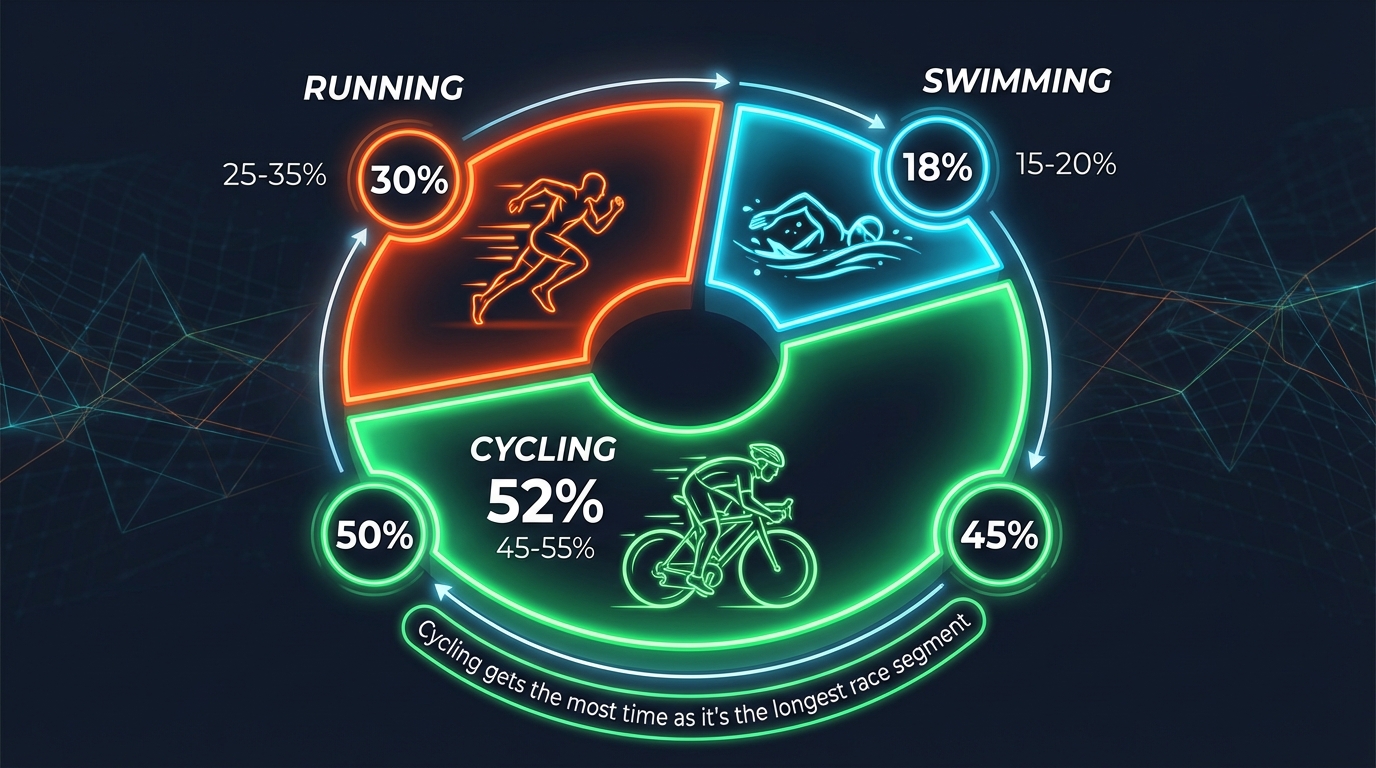
- Swimming (15-20% of training time): Swimming receives the smallest time allocation because technique improvements come quickly, and the swim leg is the shortest portion of most races. Quality technique work yields better results than volume.
- Cycling (45-55% of training time): The bike leg is the longest portion of a triathlon (often 50-56% of total race time), making cycling the largest training investment. Cycling also carries lower injury risk, allowing for higher volume.
- Running (25-35% of training time): Running receives moderate attention. While crucial for race performance, running creates the highest injury risk, especially when combined with cycling fatigue. Smart run training balances intensity with recovery.
With 10 weekly training hours and a balanced approach:
Swim: 1.5-2 hrs | Bike: 4.5-5.5 hrs | Run: 2.5-3.5 hrs
This distribution ensures adequate development across all three disciplines while respecting injury prevention principles.
Understanding Periodization
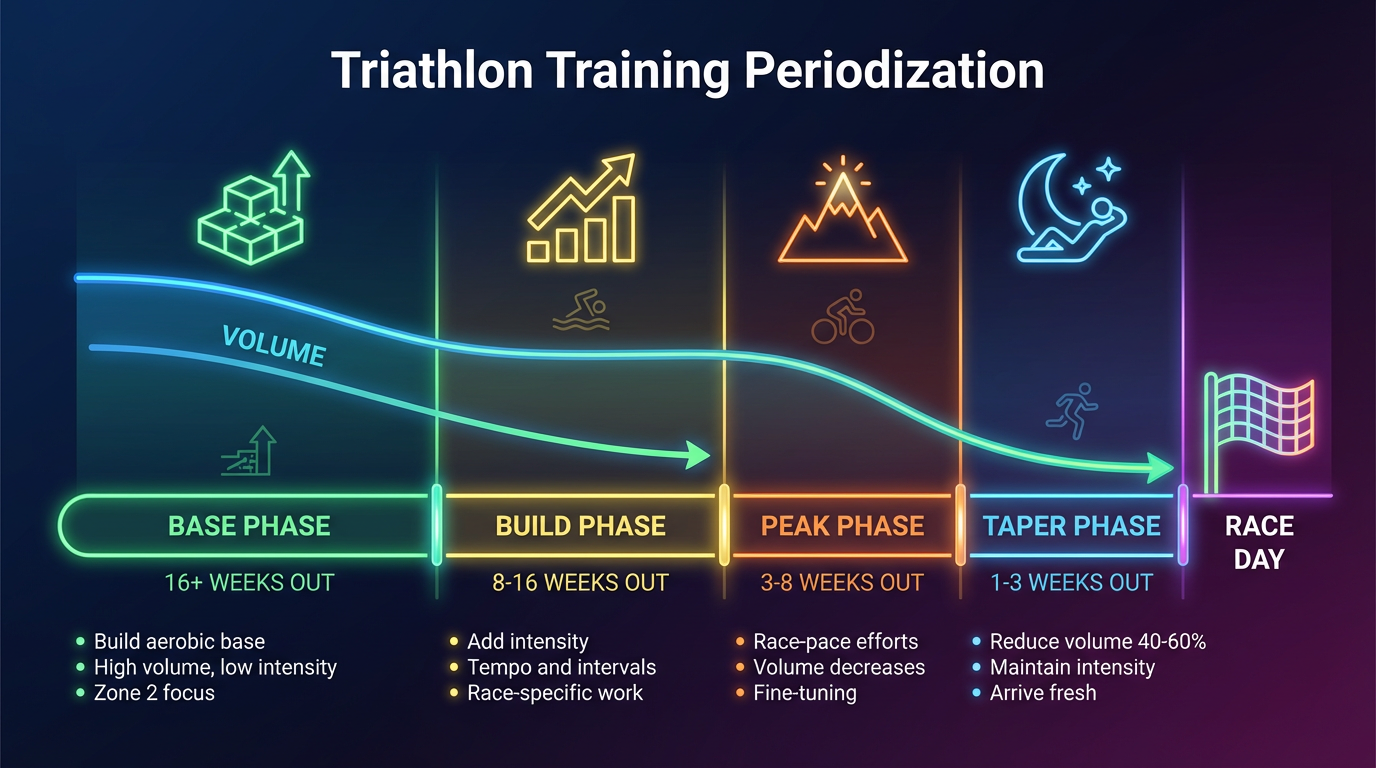
Periodization is the systematic planning of athletic training through distinct phases. Each phase has specific goals that build upon the previous one, leading to peak performance on race day. The four main phases in triathlon training are:
Base Phase
The base phase focuses on building aerobic capacity and establishing training habits. Training is predominantly in Zone 2 (easy, conversational pace), with high volume and low intensity. This phase develops the cardiovascular foundation that supports all future training. Base phase typically occurs 16+ weeks before your race.
Build Phase
During the build phase, intensity increases while volume remains high. Athletes incorporate tempo efforts, interval training, and race-specific workouts. This phase develops the lactate threshold and muscular endurance needed for racing. Build phase typically spans weeks 8-16 before race day.
Peak Phase
The peak phase includes race-pace efforts and fine-tuning. Volume begins to decrease while intensity remains high. Athletes practice race nutrition, pacing strategies, and brick workouts. This phase typically covers weeks 3-8 before the race.
Taper Phase
The taper phase reduces training volume by 40-60% while maintaining some intensity. This allows the body to recover, adapt, and store energy for race day. Proper tapering can improve race performance by 2-3%. Taper begins 1-3 weeks before the race, depending on race distance.
Key Workouts for Each Discipline
Swimming Key Workouts
- Technique Drills: Catch-up, fingertip drag, and single-arm drills improve efficiency
- Threshold Sets: 5-10 x 100m at race pace with short rest builds speed endurance
- Open Water Practice: Sighting, drafting, and mass start simulations prepare for race conditions
Cycling Key Workouts
- Long Ride: Weekly rides at 70-75% of race distance build endurance and mental toughness
- Sweet Spot Intervals: 2-3 x 20 minutes at 88-93% FTP develops sustainable power
- Hill Repeats: Build strength and improve climbing for varied race courses
Running Key Workouts
- Long Run: Weekly runs progressing to race distance (or 2+ hours for Ironman)
- Tempo Runs: 20-40 minutes at lactate threshold pace improves race speed
- Interval Training: 6-10 x 400-800m repeats develops VO2max and speed
The Importance of Brick Workouts
Brick workouts are a cornerstone of triathlon training. These sessions combine two disciplines back-to-back, typically bike-to-run. The term "brick" comes from how your legs feel when transitioning from cycling to running—like they are made of bricks.
Brick workouts serve several purposes: they teach your body to perform while fatigued, help develop pacing strategies for the run leg, and build mental confidence for race day transitions. A typical brick might include a 60-90 minute bike ride followed immediately by a 15-30 minute run. As fitness improves, both durations can increase.
Recovery and Rest Days
Recovery is when adaptation occurs. Without adequate rest, training stress accumulates, leading to overtraining, injury, and declining performance. Most triathlon training plans include:
- 1-2 Rest Days Per Week: Complete rest or very light activity (walking, stretching)
- Easy Days Between Hard Sessions: Zone 1-2 training allows recovery while maintaining consistency
- Recovery Weeks: Every 3-4 weeks, reduce volume by 30-40% to absorb training adaptations
- Sleep: 7-9 hours nightly is essential for hormonal recovery and tissue repair
Frequently Asked Questions
How many hours per week should I train for a triathlon?
Training hours depend on your race distance and goals. Sprint triathlons require 5-8 hours/week, Olympic distance 8-12 hours/week, Half-Ironman 10-15 hours/week, and full Ironman 12-20+ hours/week. Beginners should start conservatively and build gradually.
What is a brick workout in triathlon training?
A brick workout combines two disciplines back-to-back, most commonly bike-to-run. The name comes from how your legs feel like bricks when transitioning from cycling to running. Bricks help your body adapt to the unique demands of triathlon racing and improve transition performance.
How long should I prepare for my first triathlon?
For a Sprint triathlon, beginners should allow 8-12 weeks. Olympic distance typically needs 12-16 weeks. Half-Ironman requires 16-24 weeks of preparation, while a full Ironman demands 24-36 weeks or more. These timelines assume a baseline fitness level.
What are the training phases in triathlon periodization?
The four main phases are: Base (building aerobic foundation with volume), Build (adding intensity and race-specific work), Peak (fine-tuning with race-pace efforts), and Taper (reducing volume while maintaining intensity to arrive fresh on race day).
How should I distribute training time between swim, bike, and run?
A typical distribution is 15-20% swimming, 45-55% cycling, and 25-35% running. Cycling gets the most time because it is the longest race segment. Swimming gets less time because gains come quickly. Running is limited to prevent overuse injuries.