George Santos Insider Trading on Kalshi Ends Polymarket Deal
Polymarket terminates George Santos's influencer deal as regulators probe Kalshi bets allegedly placed against his own State of the Union attendance.
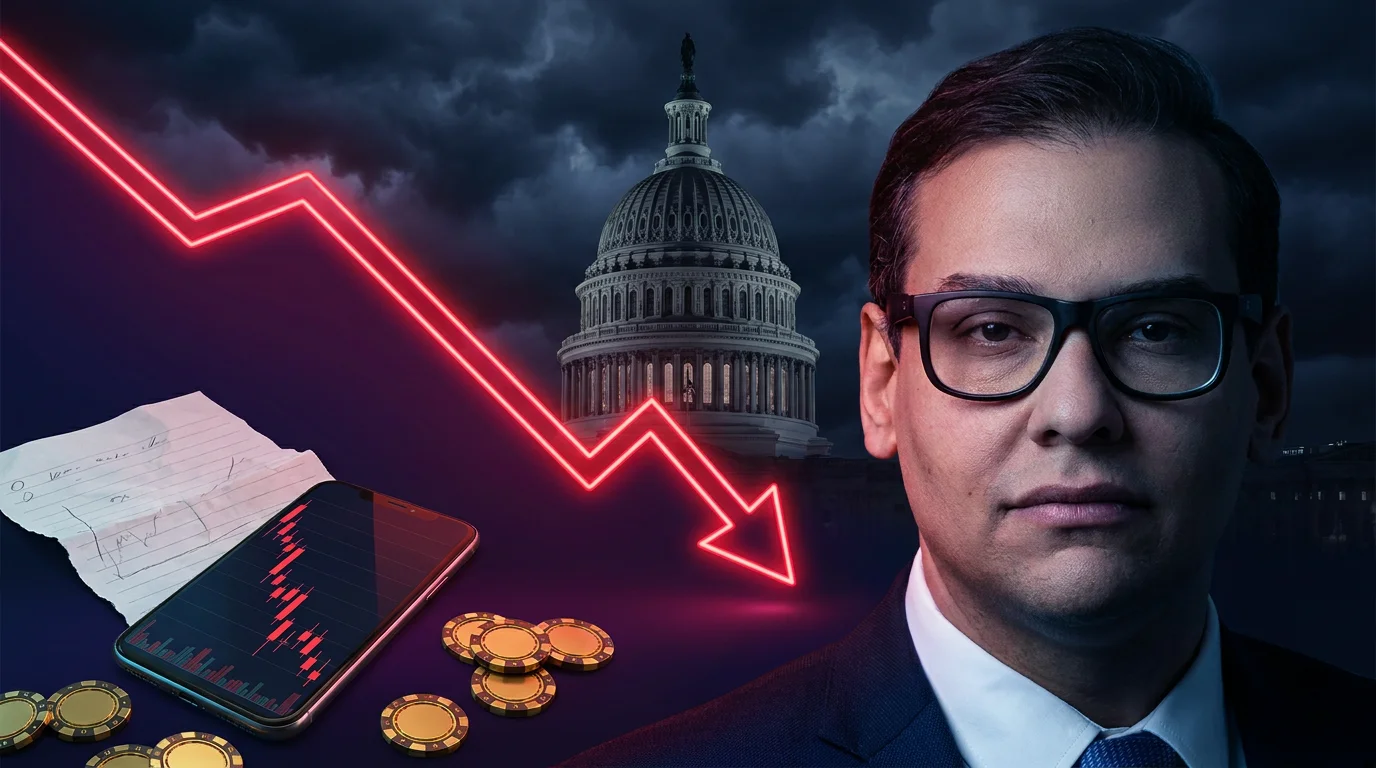
George Santos told his followers he’d be in the gallery for President Trump’s State of the Union — then allegedly bet tens of thousands of dollars that he wouldn’t show. Now the George Santos insider trading probe has cost the former congressman his paid deal with Polymarket, which confirmed this month it is terminating his influencer contract while the CFTC examines the bets he placed on rival exchange Kalshi.
KEY FACTS AT A GLANCE
- The allegation: Santos publicly promised to attend the Feb. 24 State of the Union, then bet against his own attendance on Kalshi
- The profit: “In the tens of thousands of dollars,” according to NPR’s sources
- The fallout: Kalshi froze his account and referred him to federal regulators; Polymarket is terminating his paid influencer contract
- The investigation: The CFTC has opened a probe; DOJ involvement is disputed
- His response: Santos calls the accusation “preposterous”
- The industry reaction: Kalshi rolled out employer checks and risk scoring for high-risk markets on June 9
A Bet Against Himself on Kalshi
On February 23, Santos posted a video on X telling viewers, “I’m going to be there for the State of Union in the gallery, guys.” Kalshi was running a market on which public figures would attend the speech, and the announcement sent the odds of a Santos appearance surging to roughly 75 percent.
According to three people with direct knowledge of his trades who spoke to NPR, Santos had already placed bets on Kalshi predicting he would not appear. When he no-showed the February 24 address — posting from an airport during the speech and blaming a delayed flight — the market cratered, and his “No” position paid out a profit in the tens of thousands of dollars, NPR’s sources said.
The scale of the activity was hard to miss. Kalshi data shows Santos-related trading accounted for more than 35 percent of the market’s volume the day before the speech, with over $7.8 million wagered on February 24 alone. Kalshi’s compliance team flagged the pattern, froze his account, and referred the matter to federal authorities.
-
Feb 23
Santos posts X video confirming attendance“I’m going to be there for the State of Union in the gallery, guys.” His Kalshi attendance odds surge to roughly 75%.
-
Feb 24
$7.8M wagered — and Santos no-showsHe posts from an airport during the speech, blaming a delayed flight. Santos-related trading made up over 35% of the market’s volume the day before.
-
Late Feb
Kalshi freezes his accountCompliance flags the suspicious pattern and refers the matter to federal regulators.
-
Jun 2
NPR breaks the investigation storyThree sources say Santos profited “in the tens of thousands of dollars” betting against his own attendance.
-
Jun 3
Polymarket terminates his influencer dealSantos calls the allegation “preposterous” and says his lawyers are in touch with the DOJ.
-
Jun 9
Kalshi launches employer checksNew employer-disclosure rules, market risk scoring and whistleblower tools arrive for high-risk markets.
Polymarket Cuts George Santos Loose
The strangest wrinkle in the story is that the trades happened on Kalshi while Santos was on Polymarket’s payroll. After his release from federal prison in October 2025, Santos reinvented himself as a paid influencer for Polymarket, using his large online following to promote the platform — his last sponsored post, marked as a paid partnership, went up on June 1. Kalshi recently overtook Polymarket as the world’s largest prediction market by volume, making the two platforms direct rivals.
A Polymarket spokesperson told the Associated Press the company is in the process of terminating his contract as a result of the revelations. For a platform that spent 2026 courting mainstream legitimacy, a brand ambassador under federal scrutiny for allegedly deceiving the very markets he was hired to promote proved an easy call.
The irony writes itself: Santos was expelled from Congress in December 2023, pleaded guilty to wire fraud and identity theft, and was sentenced in April 2025 to 87 months in prison. He served roughly 84 days before President Trump commuted the sentence. Within months of walking free, he was selling prediction markets to America — and, investigators suspect, trading on the one subject where he held all the inside information: himself.
CFTC Confirmed, DOJ Disputed
What exactly is being investigated — and by whom — is murkier than the headlines suggest. The Commodity Futures Trading Commission, which regulates prediction markets as designated contract markets, has opened a probe into the trades. But NPR’s June 2 report, citing three sources, said the Justice Department was also investigating — while a DOJ spokesperson flatly contradicted that in a statement to Newsweek.
“The department has no current investigation into the former congressman.”
— DOJ spokesperson, to Newsweek
Santos, for his part, has swung between bewilderment and defiance. “Well, that’s news to me,” he told NPR when first asked about the probe. A day later he posted a longer statement on X.
“The bases [sic] of the accusation is preposterous and I look forward to supplying any information asked of me to any agency that inquires.”
— George Santos, statement on X, June 3
On his podcast, Santos leaned into the gray zone: “It is not straightforward. It is not a crime to do prediction market.” Legal experts partly agree that the label is slippery — Todd Phillips of Klaros Group, who has written extensively on prediction market regulation, told the AP that the alleged conduct resembles market manipulation more than classic insider trading. Either way, the distinction matters less than the outcome: betting against your own publicly announced plans, using knowledge only you possess, is exactly the scenario regulators have warned about.
WHY THE COMMUTATION DOESN’T PROTECT HIM
Trump’s October 2025 commutation covered Santos’s existing fraud sentence — it does not immunize him against prosecution for any new conduct, including the Kalshi trades now under CFTC scrutiny.
Santos Joins 2026’s Prediction Market Insider Trading Wave
If the allegations hold up, Santos won’t even be the biggest insider-trading story prediction markets have produced this year. The industry is facing a surge in suspicious trading cases: a Google engineer was charged over a $1.2 million “Year in Search” scheme, an Army master sergeant became the first-ever criminal prediction-market insider-trading defendant after making roughly $400,000 on the Maduro raid, and four wallets pocketed $663,000 front-running Trump’s Iran ceasefire announcement.
At the small end of the spectrum, Kalshi fined a MrBeast editor who traded about $4,000 on streaming markets he had non-public scheduling information about. The Santos case sits in the middle by dollar value — but stands alone in one respect: he is the first public figure accused of trading on his own announced behavior, the purest version of the “betting on yourself” problem.
Kalshi’s Answer: Employer Checks and Risk Scores
Whatever regulators ultimately do with the Santos referral, the case has already changed how the industry polices itself. Kalshi disclosed that it opened 200 insider-trading investigations over the trailing twelve months — more than 150 of them in the first quarter of 2026 alone — blocked over 100 potential insider trades, and referred at least 20 cases to law enforcement.
Then, on June 9 — one week after the Santos story broke — Kalshi announced its most aggressive integrity measures yet: traders in designated high-risk markets must now disclose their employer, every proposed market gets a risk score before listing, and whistleblower tools appear on every market page. It’s the clearest acknowledgment yet that the industry’s insider problem can’t be handled case by case, a concern that has already reached Congress through Rep. Torres’s bill to ban insider trading on prediction markets.
(trailing 12 months)
in Q1 2026 alone
trades blocked
referrals
For prediction markets, the Santos episode is a stress test of the industry’s core promise: that markets aggregate honest information. When the person being bet on is also the person placing the bets, that promise collapses — and no amount of marketing spend on celebrity influencers can paper over it.
FAQs
What did George Santos allegedly do on Kalshi?
According to NPR’s sources, Santos placed bets on Kalshi that he would not attend the February 24 State of the Union after publicly announcing he would be there, profiting in the tens of thousands of dollars when he no-showed.
Is the DOJ investigating George Santos for insider trading?
It is disputed. NPR reported on June 2 that the DOJ and CFTC were both investigating, but a DOJ spokesperson told Newsweek the department has no current investigation into the former congressman. The CFTC probe is consistently reported.
Why did Polymarket cut ties with George Santos?
Santos was working as a paid influencer promoting Polymarket. After the insider-trading allegations surfaced, a Polymarket spokesperson told the Associated Press the company is terminating his contract as a result of the revelations.
Is betting on yourself illegal on prediction markets?
It is a legal gray zone. Prediction markets are regulated by the CFTC as designated contract markets, and experts say conduct like this may qualify as market manipulation rather than classic insider trading. Exchanges like Kalshi prohibit trading on material non-public information regardless.
How did Kalshi catch the Santos trades?
Kalshi’s compliance team detected the suspicious pattern — Santos-related trading made up over 35% of the State of the Union market’s volume the day before the speech. The exchange froze his account and referred the matter to federal regulators.
Can Santos be prosecuted after Trump commuted his sentence?
Yes. The October 2025 commutation covered his existing wire fraud and identity theft sentence. It does not protect him from prosecution for any new conduct, including the Kalshi trades.
What is Kalshi doing to stop insider trading?
On June 9, 2026, Kalshi announced employer-disclosure requirements for traders in high-risk markets, a risk-scoring framework applied to every market before listing, and expanded whistleblower tools. It opened 200 insider-trading investigations in the trailing twelve months and referred at least 20 cases to law enforcement.
KEY TAKEAWAYS
- Polymarket terminated Santos’s paid influencer deal — days after NPR revealed the federal probe into his Kalshi trades
- The alleged scheme was simple — announce you’ll attend the State of the Union, bet you won’t, no-show, collect tens of thousands (per NPR’s sources)
- The CFTC probe is confirmed; DOJ involvement is disputed — a DOJ spokesperson denies any current investigation despite NPR’s reporting
- Kalshi’s surveillance worked — it flagged the trades, froze the account, and referred the case within its 200-investigation enforcement year
- The industry is tightening rules — Kalshi’s June 9 employer-disclosure and risk-scoring rollout landed one week after the story broke
Sources
- DOJ is investigating former congressman George Santos for insider trading on Kalshi — NPR
- Polymarket cuts ties with George Santos as regulators probe trades on rival prediction market — Associated Press (via CNBC)
- George Santos Issues Statement on Kalshi Prediction Markets Allegation — Newsweek
- Prediction market roundup: Polymarket severs ties with Santos amid insider trading probe — iGaming Business
- Kalshi looks to tackle insider trading by asking some users for their employer info — NBC News

Aevan Lark
Aevan Lark is a gambling industry veteran with over 7 years of experience working behind the scenes at leading crypto casinos — from VIP management to risk analysis and customer operations. His insider perspective spans online gambling, sports betting, provably fair gaming, and prediction markets. On Dyutam, Aevan creates in-depth guides, builds verification tools, and delivers honest, data-driven reviews to help players understand the odds, verify fairness, and gamble responsibly.
Related coverage

Dabble Fined A$1.07 Million for Leaving Self-Excluded Bettors’ Accounts Open
Dabble paid A$1,069,200 for delayed account closure. The notices, wider marketing failures and scoped no-betting finding explained.
NYT: DraftKings AI Targeted Bettors Likely to Lose More
A Times investigation raises questions about promotional scoring and player protection. DraftKings disputes loss-based targeting.

Lithuania Blocks Polymarket: Access and Payment Orders
Lithuania’s Polymarket enforcement involved separate access and payment instructions, with an August court ruling preceding September announcements.