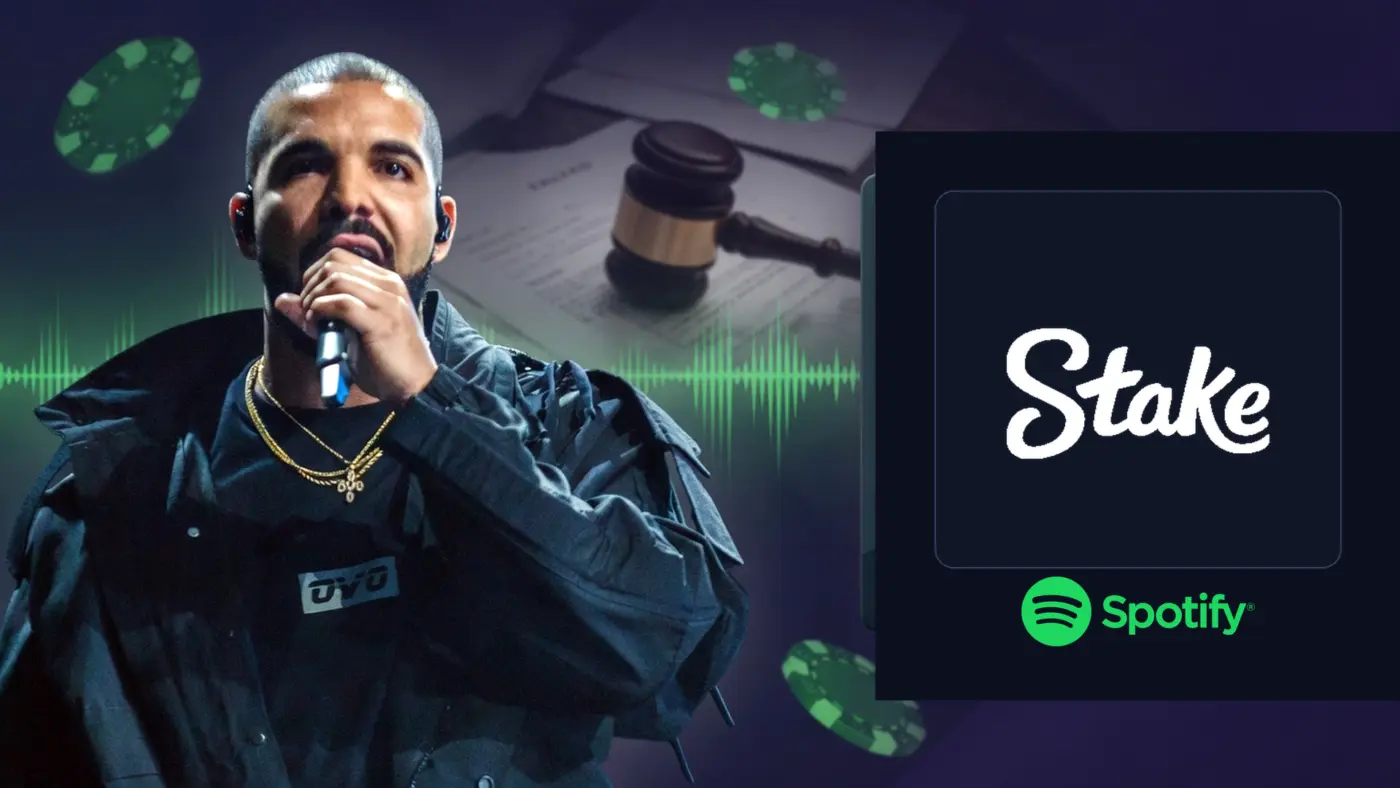
Stake Drake Lawsuit: Court Sends RICO Claims to Arbitration
Virginia court stays the Stake Drake lawsuit, sending claims to arbitration—not a merits dismissal.
A federal docket marked the Stake Drake lawsuit arbitration fight as “terminated” on July 30, 2026. The order itself tells a different story: claims against the sweepstakes casino go to private AAA arbitration, the full civil case is stayed, and no court has ruled on the alleged illegal casino or stream-bot scheme.
KEY FACTS AT A GLANCE
- Case: Ridley v. Sweepsteaks Ltd., No. 1:25-cv-02511 (E.D. Va.)
- Judge: U.S. District Judge Leonie M. Brinkema
- Order date: July 30, 2026
- Outcome: Motion to compel arbitration granted; entire action stayed
- Not decided: Illegal-casino, RICO, or stream-bot merits
- Defendants named: Sweepsteaks Ltd. (Stake.us), Kick, Drake, Adin Ross, George Nguyen
- Status reports: Due within 120 days of the order, then every 90 days
What “Terminated” Actually Means
Hip-hop and social posts framed the Virginia class action as finished. The court file is more precise. Judge Brinkema’s July 30 order grants Sweepsteaks Ltd.’s motion to compel arbitration, stays the civil action pending that process, cancels a scheduled August 14 hearing, and directs the clerk to remove the case from the court’s active docket. PACER and CourtListener then show a termination date—administrative housekeeping while the dispute moves off the public calendar, not a jury verdict or summary judgment for either side.
Billboard and Rolling Stone, which obtained the 20-page memorandum opinion, reported the same core holding: Stake-related claims must proceed under the platform’s binding arbitration clause; claims against Drake, Adin Ross, and George Nguyen are frozen because any liability they might face is intertwined with the Stake arbitration outcome. According to Rolling Stone, Drake, Ross, and Nguyen had still not been served when the opinion issued.
IMPORTANT DISTINCTION
“Terminated” on a federal docket after a stay is not the same as “dismissed with prejudice on the merits.” The order does not decide whether Stake.us is an illegal online casino, whether celebrity promotion violated consumer law, or whether anyone funded stream bots.
How the Stake Drake Lawsuit Got Here
When we covered the Virginia filing and the stream-bot allegations, the case was brand new. Lead plaintiffs LaShawnna Ridley and Tiffany Hines sued on December 31, 2025. A February 24, 2026 amended complaint expanded the named plaintiff group to eight people. Defendants include Sweepsteaks Ltd. doing business as Stake.us, Kick Streaming Pty Ltd., Aubrey Drake Graham, Adin Ross, and Australian national George Nguyen.
The operative theory has two strands. First, plaintiffs allege Stake.us markets itself as a “social casino” while dual currency—Gold Coins bundled with redeemable Stake Cash—functions as real-money gambling illegal under Virginia and federal law. Second, they allege Drake, Ross, and Nguyen used Stake’s tipping and transfer features as an unregulated money path to fund bot farms that artificially inflated Drake’s streams on platforms such as Spotify. Claims include civil RICO, RICO conspiracy, the Virginia Consumer Protection Act, and a request to declare Stake’s arbitration and class-action waiver void.
Stake has called key tipping allegations “nonsense.” In comments reported by The Guardian after the suit was filed, a Stake spokesperson said Stake.us “does not have a tipping function that could be used in this way” and that the company was “not concerned about this lawsuit.” None of the complaint’s fraud or gambling allegations has been proven in court. For the broader legal pressure on the brand, see our Stake.us controversy roundup and the Drake–Stake partnership history.
- Oct 27, 2025Missouri class action filedEarlier Stake / Drake / Ross consumer case (separate docket)
- Dec 31, 2025Virginia RICO class action filedRidley & Hines; E.D. Va. 1:25-cv-02511
- Feb 24, 2026First amended complaintNamed plaintiff group expanded to eight
- May 6, 2026Stake moves to compel arbitrationPlus motions to dismiss and strike class allegations
- Jun 12, 2026Kick claims dismissed without prejudicePlaintiffs allowed one last amended complaint
- Jun 26, 2026Second amended complaint filedOperative complaint for the later stay
- Jul 30, 2026Arbitration compelled; full case stayedRemoved from active docket; status reports ordered
What Brinkema’s Opinion Held
The memorandum opinion walks through Stake’s terms of service: mandatory individual AAA arbitration, a class-action waiver, and a 30-day opt-out window. Users must accept the terms to create an account; later updates required scroll-and-check acceptance. Stake said none of the named plaintiffs opted out. Plaintiffs attacked enforceability—arguing the contract was void as an illegal gambling agreement, that a unilateral modification clause made the promise illusory, and that RICO rights cannot be waived prospectively—but the court rejected those arguments under the Federal Arbitration Act and Virginia law, citing parallel Stake wins in other districts.
One detail that fueled “dismissed” headlines: Stake’s records, according to the opinion, showed an account tied to Tiffany Hines among the eight named plaintiffs; the company said it found no accounts for the others. Plaintiffs had declined to provide usernames and emails when asked. The court still treated the arbitration agreement as proven on the record before it and compelled arbitration of the Stake claims.
Plaintiffs’ counsel Richard Kelsey told Billboard the team “continue[s] to have great confidence in the ultimate outcome,” disagrees that the arbitration agreements are enforceable, and expects to argue first in arbitration that the contracts are void as illegal-gambling contracts—then return to federal court if that fight succeeds. A rep for Drake declined comment to Billboard; Stake did not immediately comment on the July ruling in that coverage.
“We certainly respect but disagree with the trial court’s ruling, of course, as these purported arbitration agreements are contracts for illegal gambling and thus void. Nonetheless, the court has only sent us to arbitration, where the first thing to be decided is if the contracts are enforceable. They are not. When that’s done, we will expect to return to federal court with all our claims still in place.”
— Richard Kelsey, plaintiffs’ attorney, statement to Billboard (Aug. 1, 2026)
Stake’s National Arbitration Playbook
Virginia is not an outlier. Brinkema’s opinion notes that since 2025 at least four other federal courts granted Stake’s motions to compel arbitration on the same terms—Alabama, Massachusetts, California, and South Carolina among the citations. Billboard separately reported Stake has pending motions to force arbitration in additional Drake-related cases. Private, individual AAA proceedings keep discovery and outcomes out of the public courtroom where class RICO theories make headlines.
May 19, 2025
Nov 20, 2025
Mar 12, 2026
May 27, 2026
Jul 30, 2026
Why the Allegations Still Matter to iGaming
Even without a public merits ruling, the suit sits at the junction of two industry flashpoints: sweepstakes dual-currency models and celebrity promotion of unlicensed (or gray-market) products. States have been tightening the screws on social and sweepstakes casinos—our coverage of the fortress-state ban playbook and California’s AB 831 exit maps that trend. For a plain-English walkthrough of the product category, see sweepstakes casino vs real-money casino.
Harvard Law Today interviewed lecturer Duncan Levin after the filing: civil RICO lets plaintiffs tell a “bigger story” about an alleged enterprise, while courts will still look past “virtual token” labels to ask whether real money predictably flows to the platform. That legal framing outlives any single docket stay. Arbitration may mute public discovery, but parallel state suits, legislative bans, and separate streaming-fraud litigation against platforms like Spotify keep the same themes alive.
WHAT MOVES NEXT
In arbitration
- Plaintiffs and Stake must start the AAA process
- Enforceability of the terms is expected to be fought first
- Proceedings are individual and confidential by design
In federal court
- Case stayed; Kick and class-cert motions held in abeyance
- Status reports at 120 days, then every 90 days
- Claims vs Drake / Ross / Nguyen remain paused, not dismissed on the merits
FAQs
Was the Drake Stake lawsuit dismissed?
No court ruled for or against the illegal-casino or stream-bot claims on the merits. On July 30, 2026, Judge Leonie M. Brinkema compelled arbitration of claims against Stake, stayed the full civil action, and removed the case from the active docket—which appears as a termination date in some case indexes.
What is Stake Drake lawsuit arbitration?
It is the private AAA process required by Stake.us terms of service. Users agree to individual arbitration and waive class actions unless they opt out within 30 days of account creation. The Virginia court held that structure covers the plaintiffs’ claims against Stake.
Did the court clear Drake of stream-bot allegations?
No. Claims against Drake, Adin Ross, and George Nguyen were stayed because their alleged liability is intertwined with the Stake arbitration. Rolling Stone reported those three defendants had not yet been served when the opinion issued. The allegations remain unproven.
What did the Virginia complaint allege about Stake.us?
Plaintiffs allege Stake.us is an illegal online gambling platform disguised as a social casino through Gold Coins bundled with redeemable Stake Cash, and that celebrity promotion and tipping features furthered consumer harm and, allegedly, funding for music stream bots. Stake disputes the tipping narrative.
Can the case return to federal court?
Plaintiffs’ counsel has said they will challenge the arbitration contracts’ enforceability before the arbitrator and expect to return to federal court if those contracts are held void. The stay order also requires periodic status reports while arbitration is pending.
How does this fit the wider sweepstakes casino crackdown?
The order is procedural, not a validation of dual-currency models. Parallel class actions, state bans, and celebrity-endorsement risk continue separately. Arbitration simply moves one high-profile Virginia docket out of public class-action discovery for now.
KEY TAKEAWAYS
- “Terminated” ≠ merits win — The docket closed the active civil calendar after a stay; Brinkema did not clear Stake, Drake, Ross, or Nguyen of the alleged scheme.
- Arbitration first — Claims against Stake go to individual AAA arbitration under the platform’s terms; class treatment is blocked by the waiver unless an arbitrator or later court says otherwise.
- Celebrity claims paused — Drake, Ross, and Nguyen remain named defendants, but litigation against them sits until arbitration plays out; service was incomplete as of the opinion.
- National pattern — Virginia joins other federal courts that have compelled Stake arbitration on the same terms.
- Industry risk remains — Dual-currency legality and influencer promotion still face legislation, state suits, and public scrutiny outside this stayed docket.
Sources
- Memorandum Opinion (July 30, 2026) — Ridley v. Sweepsteaks Ltd., E.D. Va. (Doc. 59)
- Order Compelling Arbitration and Staying Action (July 30, 2026) — Ridley v. Sweepsteaks Ltd., E.D. Va. (Doc. 60)
- Class Action Complaint (Dec. 31, 2025) — Ridley v. Sweepsteaks Ltd., E.D. Va. (Doc. 1)
- Drake Avoids Class Action Lawsuit Over Gambling Endorsements & Stream Bots — Billboard
- Drake ‘Fraudulent Streams’ Case on Ice as Judge Orders Arbitration — Rolling Stone
- Drake and Adin Ross accused of using online casino money to artificially inflate streams — The Guardian
- Did Drake use an illegal casino to fake Spotify streams? — Harvard Law Today

Aevan Lark
Aevan Lark is a gambling industry veteran with over 7 years of experience working behind the scenes at leading crypto casinos — from VIP management to risk analysis and customer operations. His insider perspective spans online gambling, sports betting, provably fair gaming, and prediction markets. On Dyutam, Aevan creates in-depth guides, builds verification tools, and delivers honest, data-driven reviews to help players understand the odds, verify fairness, and gamble responsibly.
Related coverage
Your Betting History Shows What You Did. Can You See What Your Sportsbook Predicts You’ll Do Next?
Sportsbook profiles can predict future behavior. We examine the records, the rights and the case for clearer disclosure.

Brazil Betting Ban Orders Legal Sites Shut by October 6
Brazil orders licensed sportsbooks and online casinos to close, with withdrawal protections and an October 6 site shutdown.
New York Sues Polymarket; Company Files Federal Challenge
New York seeks gambling penalties against Polymarket US as the company brings the dispute into federal court.